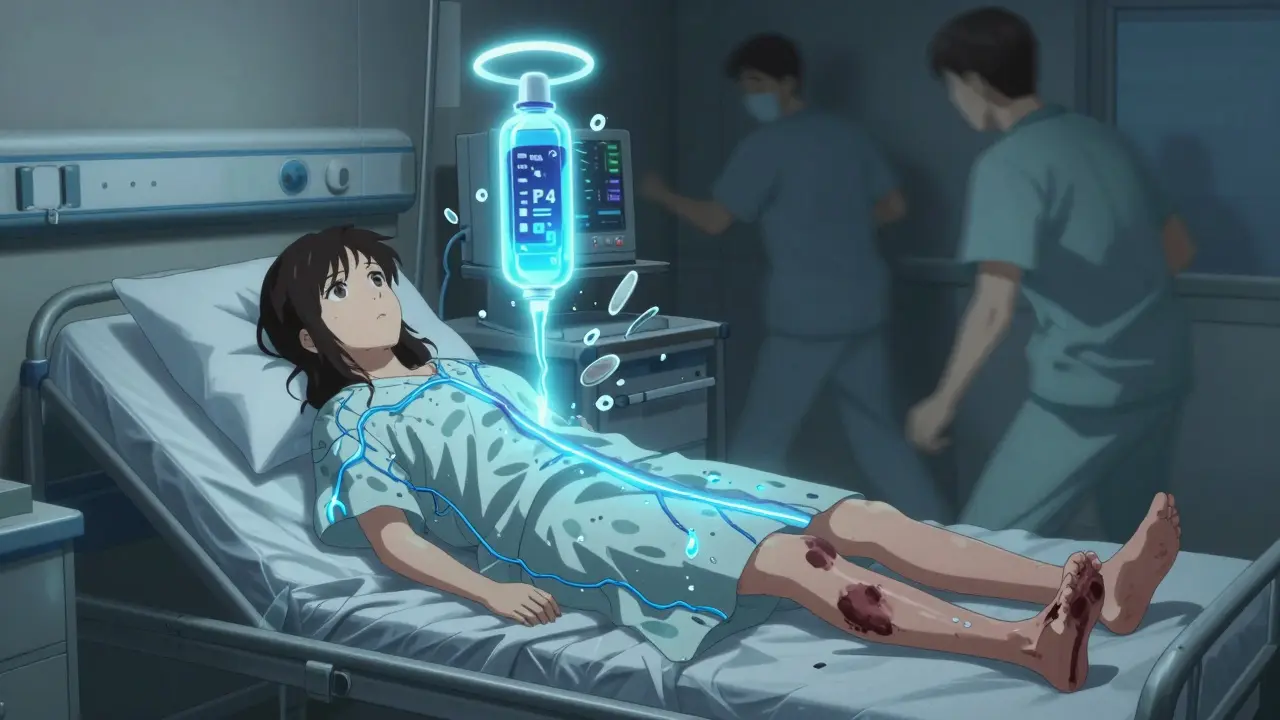

If you’re on blood thinners and you hit your head-even if it feels like a minor bump-head injury isn’t something you can just shake off. The risk of internal bleeding in the brain is real, and it doesn’t always show up right away. You might feel fine at first, but a slow bleed can turn deadly within hours. That’s why the medical community has clear, urgent guidelines for what to do next.
Why Even a Small Head Bump Is Dangerous on Blood Thinners
People on anticoagulants like warfarin, rivaroxaban, apixaban, or aspirin have blood that doesn’t clot as easily. That’s good for preventing strokes or clots, but it’s a problem when trauma happens. A fall, a car door hit, or even slipping on the bathroom floor can cause tiny tears in blood vessels inside the skull. In someone not on blood thinners, those tears might seal themselves. In someone who is, they can grow-sometimes without symptoms at first. Studies show anticoagulated patients are 2 to 3 times more likely to develop intracranial hemorrhage after minor head trauma than those not on these medications. And here’s the scary part: half of these bleeds happen in people who didn’t lose consciousness or show obvious signs of injury. You don’t need to be knocked out to be in danger.When to Get a CT Scan Right Away
Current guidelines from the American College of Emergency Physicians (ACEP) and Washington State Department of Health are clear: if you’re on blood thinners and you’ve had any head impact, get a non-contrast head CT scan immediately. No waiting. No "let’s see how you feel in an hour." You need imaging if you have any of these:- Loss of consciousness-even for a few seconds
- Confusion, dizziness, or trouble remembering what happened
- Any direct blow to the head or neck
- Fall from standing height or higher
- Vomiting more than once
- Age 65 or older
- Signs of a skull fracture (bruising behind the ears, clear fluid draining from nose or ears)
What the CT Scan Shows-and What It Doesn’t
A non-contrast head CT is the gold standard for spotting bleeding in the brain after trauma. It’s fast, widely available, and accurate for detecting fresh blood. But it’s not perfect. A normal CT doesn’t guarantee you’re safe. About 0.5% to 1% of anticoagulated patients with a normal initial CT will develop a delayed bleed within 72 hours. That’s rare, but it happens. One study followed patients who stopped their DOACs after a negative CT-and three days later, one had a stroke from a clot that formed because the medication was paused too soon. That’s why doctors don’t just rely on the scan. They look at your overall picture: your INR level (if you’re on warfarin), whether you’re still feeling off, and if you have other injuries. Some hospitals will keep you for 6 to 24 hours to watch for changes, even if the scan looks clean.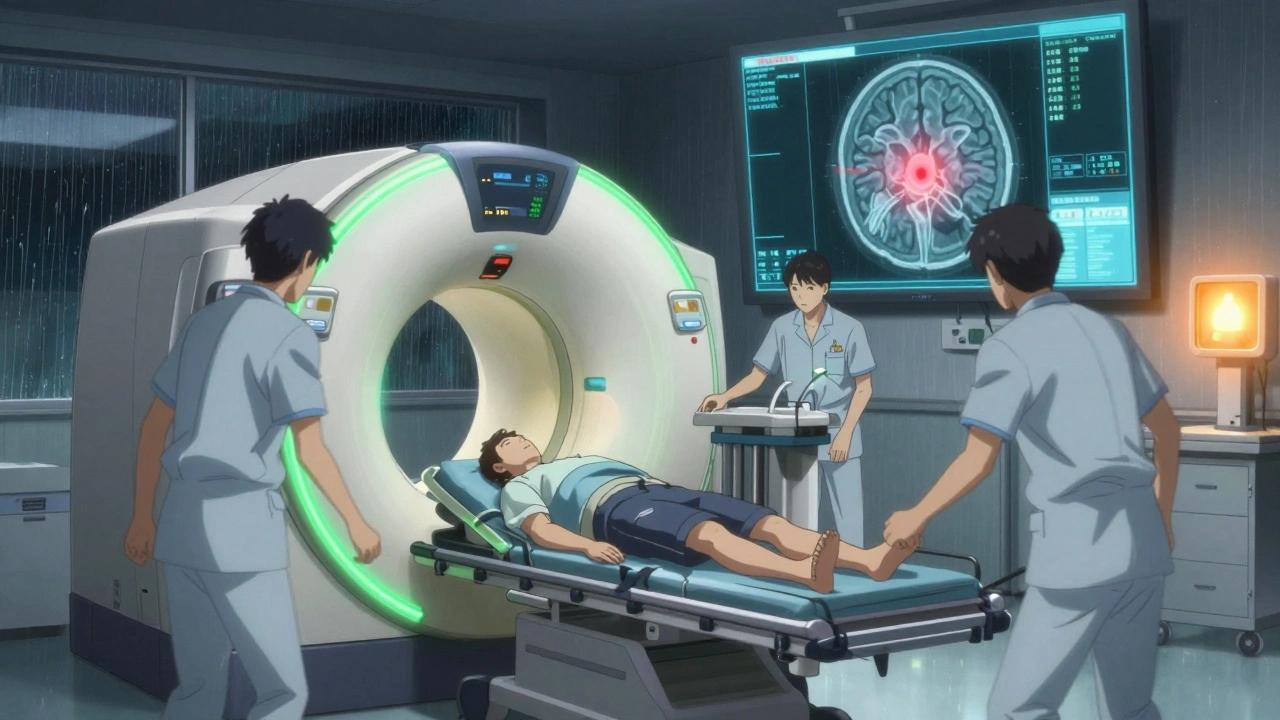
What Happens After the Scan
If the CT shows bleeding, you’ll be admitted immediately. Treatment depends on the type of blood thinner you’re taking. For warfarin, doctors often give vitamin K and prothrombin complex concentrate (PCC) to reverse the effect. For DOACs like rivaroxaban or apixaban, they may use specific antidotes like idarucizumab (Praxbind) or andexanet alfa. If the scan is clear, discharge isn’t automatic. You need to meet strict criteria:- No signs of brain injury on the CT
- No worsening symptoms during observation
- INR under 3.5 (if on warfarin)
- No other injuries needing hospital care
The Big Mistake: Stopping Your Blood Thinners
It’s tempting to think, "I got hit on the head, so I should stop my blood thinner." But that’s dangerous too. Stopping anticoagulants without medical guidance can trigger a stroke or clot. One documented case involved a patient who stopped rivaroxaban after a negative CT-and developed an ischemic stroke three days later. The risk of stopping outweighs the risk of continuing, unless a neurosurgeon or hematologist says otherwise. Your doctors will weigh two risks: bleeding in the brain vs. clotting in the heart or lungs. They won’t make that call alone. They’ll consult specialists and consider your medical history-your reason for being on blood thinners, your age, your fall risk, and your overall health.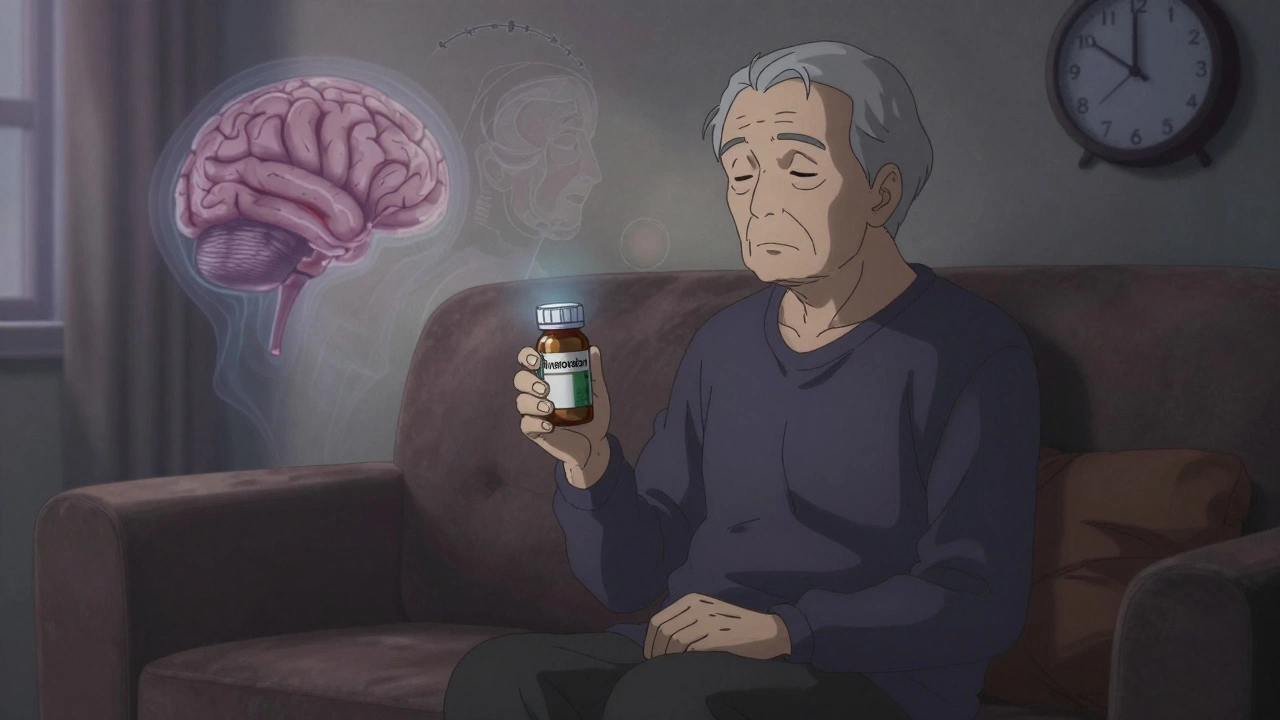
What to Do Right Now
If you’ve hit your head and you’re on blood thinners:- Don’t wait. Go to the nearest emergency department.
- Bring a list of your medications, including dosages and when you last took them.
- Don’t take any more blood thinners until you’ve spoken to a doctor.
- Don’t drive yourself. Have someone take you.
- Don’t assume you’re fine just because you didn’t lose consciousness.
What’s Changing in the Future
Doctors are working on better tools. The FDA-approved Banyan Brain Trauma Indicator, a blood test that checks for brain injury proteins (UCH-L1 and GFAP), is being studied for use in anticoagulated patients. It might one day help avoid unnecessary scans in low-risk cases. Researchers are also trying to build a new version of the Canadian CT Head Rule specifically for people on DOACs. Early results are promising, but it’s not ready yet. Meanwhile, hospitals are starting to use MRI for follow-up in younger patients to avoid radiation. But for the first scan after trauma, CT is still king.Final Thought: Better Safe Than Sorry
Head injuries on blood thinners aren’t like regular bumps. There’s no such thing as "just a little bump." The consequences are too severe to gamble on. If you’re on anticoagulants, treat every head injury like a medical emergency. Get checked. Get scanned. Don’t downplay it. Don’t wait. Don’t stop your meds without a doctor’s say-so. Your brain doesn’t warn you before it bleeds. But the system does-if you listen to it.Do I need a CT scan after a minor head injury if I’m on blood thinners?
Yes. Even if the injury seems minor-like a bump on the head from a fall or a door-you need a non-contrast head CT scan immediately. Guidelines from ACEP and Washington State Health require imaging for all anticoagulated patients with head trauma, regardless of how small it seems. Bleeding can start slowly and become life-threatening without warning.
Can I wait to see if I feel worse before getting scanned?
No. Delaying a CT scan increases the risk of serious complications. Intracranial bleeding can progress silently. Studies show patients who wait for symptoms to worsen have higher rates of poor outcomes. Immediate imaging is the standard of care. Don’t wait for dizziness, vomiting, or confusion to appear.
What if my CT scan is normal? Am I safe to go home?
Maybe-but not right away. Even with a normal scan, you’ll likely be observed for 6 to 24 hours. Some hospitals discharge after 6 hours if you’re stable, have no other injuries, and your INR is under 3.5. But you’ll get detailed instructions on warning signs to watch for, like worsening headache, confusion, or weakness. A delayed bleed can still occur within 72 hours.
Should I stop taking my blood thinner after a head injury?
Never stop your blood thinner without talking to a doctor. Stopping it can cause a life-threatening clot, like a stroke or pulmonary embolism. One patient stopped rivaroxaban after a negative CT and had a stroke three days later. Your medical team will decide whether to pause, reverse, or continue your medication based on your specific risk factors.
Are there alternatives to a CT scan for people on blood thinners?
For the first evaluation after trauma, no. CT is the fastest, most reliable tool to detect bleeding. Blood tests like the Banyan Brain Trauma Indicator are being studied and may help in the future, but they’re not yet used as a replacement. MRI is better for detecting small or delayed bleeds but takes too long for emergency use. CT remains the standard.
What are the warning signs of a delayed brain bleed?
Watch for: worsening headache that doesn’t improve with painkillers, confusion or trouble speaking, weakness or numbness on one side of the body, vision changes, vomiting, seizures, or loss of consciousness. These can appear hours or even days after the injury. If any occur, go to the ER immediately-even if you had a normal CT scan.
Why can’t I just use the Canadian CT Head Rule to decide if I need a scan?
The Canadian CT Head Rule was designed for healthy adults without bleeding risks. It’s not validated for people on blood thinners. Studies show applying it to anticoagulated patients misses up to 15% of dangerous bleeds. That’s why all major guidelines now say: if you’re on anticoagulants, get a CT scan after any head injury-no exceptions.
How long should I be observed after a head injury on blood thinners?
Observation time varies. Some hospitals discharge after 6 hours if all criteria are met. Others keep patients for 24 hours, especially if they’re older, have other health issues, or their INR is elevated. The goal is to catch delayed bleeding, which usually happens within 48 hours. Always follow the hospital’s specific protocol.