When you pick up a prescription and see a different name on the bottle than what your doctor wrote, it’s natural to wonder: are generic drugs copies? Are they just cheap imitations? Or do they actually work the same way?
The short answer? Yes, they work the same - but they’re not just copies in the way most people think.
What Exactly Is a Generic Drug?
A generic drug isn’t a knockoff. It’s not a fake. It’s not a diluted version. It’s a scientifically approved version of a brand-name drug that contains the exact same active ingredient, in the same strength, and delivered the same way - whether it’s a pill, injection, or cream.
The U.S. Food and Drug Administration (FDA) requires generic drugs to meet the same strict standards as brand-name drugs. That means the active ingredient must be identical in chemical structure, dose, and how it’s absorbed by your body. If you take a generic version of lisinopril for high blood pressure, you’re getting the same molecule as you would from the brand-name Zestril.
The only differences? The color, shape, flavor, and inactive ingredients like fillers or dyes. These are changed so generics don’t look exactly like the brand-name version - mostly for trademark reasons. But none of that affects how the drug works in your body.
How Do We Know Generics Work the Same?
The FDA doesn’t just trust manufacturers’ claims. They require proof.
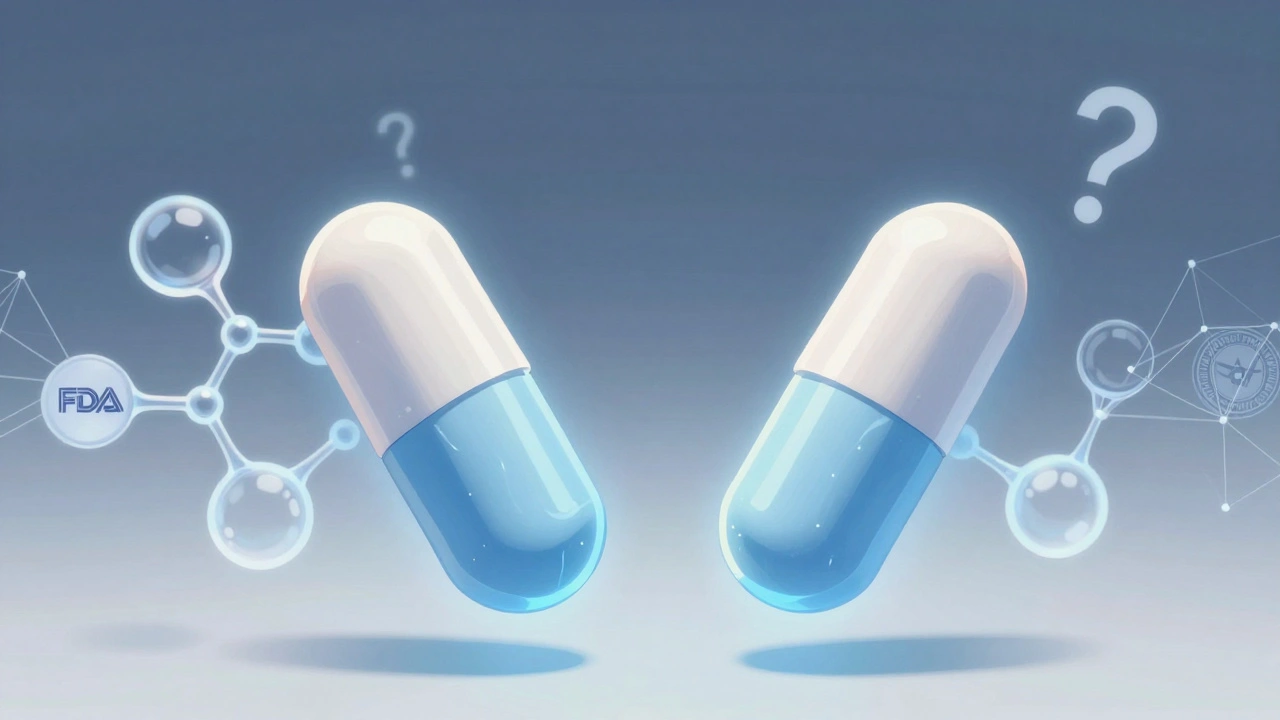
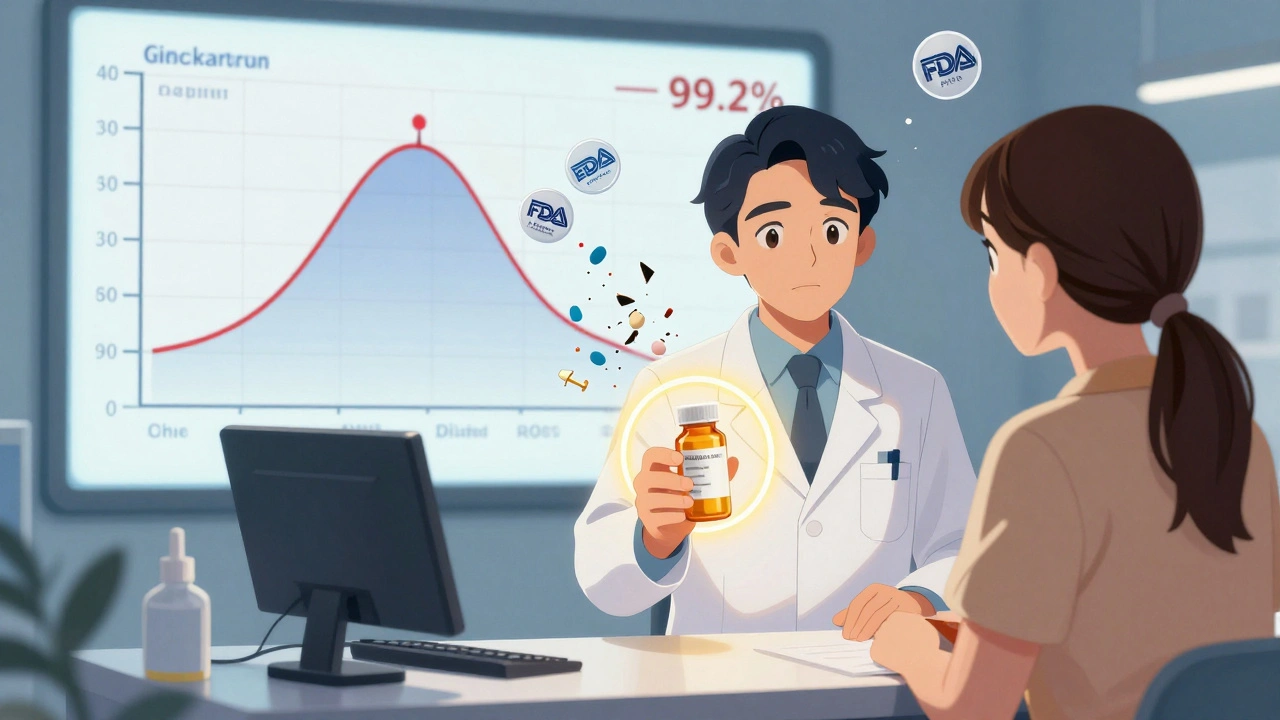
Before a generic drug can be sold, the company must prove bioequivalence. That means the generic must deliver the same amount of active ingredient into your bloodstream at the same rate as the brand-name version. The standard? The concentration of the drug in your blood must fall within 80% to 125% of the brand-name drug’s levels - a range so tight, it’s practically the same.
This isn’t theoretical. In 2022, the FDA reviewed over 2,000 generic applications. Every single one had to pass dissolution tests across multiple pH levels - meaning the drug had to break down the same way in your stomach whether it was sunny or rainy, whether you took it with food or on an empty stomach.
And the results? Generics are consistently within 99.2% of the brand-name drug’s active ingredient content. That’s not a copy. That’s a clone - legally and scientifically approved.
Why Are Generics So Much Cheaper?
Because they don’t have to pay for the original research.
Brand-name drug companies spend billions developing a new drug - testing it in labs, running clinical trials, proving safety, and getting FDA approval. That process can take over a decade and cost more than $2 billion. Once the patent expires (usually 20 years after filing), other companies can step in.
Generic manufacturers don’t repeat those expensive trials. Instead, they use the existing data. They only need to prove their version works the same way - which costs a fraction of the price. That’s why the average generic drug costs 85% less than the brand-name version.
According to the Congressional Budget Office, in 2021, the average generic cost $4.27 per prescription. The brand-name version? $61.85. That’s not a scam. That’s how competition works.
And the impact? In 2022, 90% of all prescriptions filled in the U.S. were generics - but they made up only 23% of total drug spending. That’s $375 billion saved in one year alone.
Are There Any Exceptions?
Yes - but they’re rare.
Some drugs have what’s called a narrow therapeutic index (NTI). That means even tiny changes in blood levels can cause serious problems. For these, a little too little might mean the drug doesn’t work. A little too much could be dangerous.
Examples include warfarin (a blood thinner), levothyroxine (for thyroid conditions), and certain seizure medications like phenytoin. For these, the FDA recommends extra caution. Some doctors and patients prefer to stick with the same brand - not because the generic is less effective, but because consistency matters.
Still, studies show that even with NTI drugs, 92% of substitutions work without issue. The real problem? Not the drug - it’s the switch. If you’re stable on one version, switching back and forth between brands and generics can sometimes cause confusion or small fluctuations. That’s why doctors often recommend staying on the same version once you’re stable.
What About Side Effects? Do Generics Cause More?
Some people report feeling different on generics - more drowsy, more nauseous, or less effective. But is it the drug? Or the filler?
Most of the time, it’s the inactive ingredients. Maybe the generic uses a different dye that causes a mild reaction. Or a different binder that changes how quickly the pill dissolves in your stomach. These are rare, but they happen.
A 2023 review of patient reports on Drugs.com showed 82% of users said generics worked just as well. About 23% noticed minor differences - mostly digestive upset or skin irritation - and most of those were linked to ingredients, not the active drug.
One study from the Epilepsy Foundation found 17% of patients reported breakthrough seizures after switching to a generic antiepileptic. But when the FDA investigated, most cases were tied to missed doses, stress, or other factors - not bioequivalence failure.
The bottom line? If you feel different after switching, talk to your doctor or pharmacist. Don’t assume it’s the drug’s fault. It might be a simple ingredient issue - and there’s often another generic option that works better for you.
Can Pharmacists Switch My Prescription Without Asking?
In 49 states, yes - unless you specifically ask not to.
Most states allow pharmacists to substitute a generic for a brand-name drug automatically, as long as it’s approved by the FDA and the doctor hasn’t written “dispense as written” on the prescription. In 28 states, you can even ask for the brand-name version at the generic price if your doctor says it’s safe.
But here’s the twist: many patients don’t know this. A Brown University survey found 65% of people asked for brand-name drugs because they believed generics were weaker. One in two thought generics contained only 20-80% of the active ingredient. That’s not true. They contain the same - and the FDA tests them to prove it.
Pharmacists spend an average of 3.2 minutes per prescription explaining this. That’s time they could be helping someone else. But if you’re unsure, ask. You have the right to know.
What’s the Real Risk?
The biggest risk isn’t that generics don’t work. It’s that people don’t take them because they’re afraid.
Harvard Medical School found that 25% of patients prescribed brand-name drugs skip doses or stop taking them because of cost. Only 8% of those on generics do the same. That’s the real danger - not the drug, but the delay or refusal to treat.
And the data backs it up. States with mandatory generic substitution laws saw prescription costs drop 12.7% - with no increase in hospital visits or treatment failures. The FDA reviewed 1,842 reports of possible generic-related problems between 2018 and 2022. Only 5.5 cases per year were confirmed as actual bioequivalence failures.
That’s less than 0.3% of all generic prescriptions.
What’s Changing Now?
The generic drug market is growing - fast.
More than $28 billion in brand-name drugs became eligible for generic versions in 2023 alone. Big names like Eliquis and Entyvio are now going generic. That’s good news for patients.
The FDA is also speeding things up. Through its GDUFA IV program, they’re aiming to cut approval times for generics from 38 months down to 10 months by 2027. That means more affordable options sooner.
Biosimilars - complex generics for biologic drugs like insulin or rheumatoid arthritis treatments - are also on the rise. They’re not exact copies like traditional generics, but they’re close enough to be safe and effective. By 2027, they could make up 15% of the market.
Bottom Line: Generics Are Not Copies. They’re Certified Equals.
Generic drugs aren’t copies. They’re not shortcuts. They’re not compromises. They’re the same medicine - approved by the same agency, tested by the same standards, and used by the same millions of people.
If your doctor prescribes a brand-name drug, ask: is there a generic? If your pharmacist switches it, don’t panic. If you feel different, talk to them. But don’t let myths stop you from saving money - and getting the treatment you need.
90% of prescriptions are generics for a reason. They work. They’re safe. And they’re not a gamble. They’re science - with a much better price tag.
Are generic drugs less effective than brand-name drugs?
No. Generic drugs must meet the same FDA standards as brand-name drugs. They contain the same active ingredient, in the same strength, and are absorbed the same way in your body. Studies show they work just as effectively for the vast majority of medications.
Why do generic drugs look different from brand-name drugs?
By law, generic drugs can’t look identical to brand-name versions to avoid trademark infringement. That’s why they may have different colors, shapes, or markings. These differences are only in inactive ingredients like dyes or fillers - they don’t affect how the drug works.
Can I trust generic drugs for chronic conditions like high blood pressure or diabetes?
Yes. Generics are widely used for chronic conditions. For example, 98.7% of atorvastatin (a cholesterol drug) prescriptions are filled with generics, and 99.2% of lisinopril (a blood pressure drug) prescriptions are generic. Studies show no difference in outcomes between generics and brands for these conditions.
Are there any drugs where I should avoid generics?
For drugs with a narrow therapeutic index - like warfarin, levothyroxine, or certain seizure medications - small changes in blood levels can matter. While most patients do fine switching, some doctors recommend sticking with one version to avoid fluctuations. Always talk to your doctor before switching.
Why do some people say generics made them feel worse?
Sometimes, it’s not the active drug - it’s the inactive ingredients. Different fillers, dyes, or coatings can cause minor side effects like stomach upset or skin irritation in sensitive individuals. If you notice a change after switching, tell your pharmacist. There may be another generic version available that works better for you.
Can I ask for the brand-name drug instead of the generic?
Yes. You can ask your doctor to write “dispense as written” or “no substitution” on your prescription. In 28 states, you can also request the brand-name drug at the generic price if your doctor says it’s safe. But remember: the generic is just as effective and costs far less.
How do I know if a generic drug is approved by the FDA?
All FDA-approved generics are listed in the Orange Book, a public database of approved drug products. Your pharmacist can confirm if the generic you’re receiving is approved. Look for the FDA’s approval stamp on the packaging - it’s required.
Do generic drugs take longer to work?
No. Generic drugs must demonstrate the same rate and extent of absorption as the brand-name version. If the brand-name drug starts working in 30 minutes, the generic will too. The FDA requires this proof before approval.
Why are generic drugs cheaper if they’re the same?
Brand-name companies spend billions on research, clinical trials, and marketing. Generic manufacturers don’t repeat those costs. They only prove their version works the same - which is much cheaper. That savings is passed on to you.
Is it safe to switch between different generic brands?
Yes. All FDA-approved generics meet the same bioequivalence standards. Switching between different generic brands is safe for most medications. For NTI drugs, consistency is preferred - but switching between approved generics still carries very low risk.