
Imagine being in a hospital bed with a severe infection, but the most effective antibiotic is exactly the one thing your body refuses to tolerate. For millions of people, a label like "penicillin allergic" stays on their medical chart for decades, often based on a single rash they had when they were five years old. The reality is that most people who think they have a drug allergy aren't actually allergic at all. In fact, about 90% of people who report a penicillin allergy can actually tolerate the drug once a specialist puts them through a proper evaluation. This isn't just about convenience; it's about getting the right medicine without resorting to broader-spectrum drugs that are often more expensive and can lead to antibiotic resistance.
What Exactly is a Drug Allergy?
A drug allergy happens when your immune system overreacts to a medication. Unlike a side effect-where a drug might make you nauseous or dizzy-an allergy involves an immune response. For many, this shows up as an immediate reaction. We're talking about symptoms that hit within an hour of taking the drug: hives, itching, swelling of the lips or face (angioedema), and in severe cases, a drop in blood pressure or a closing throat.
The most common culprit is Penicillin is a group of antibiotics used to treat a wide range of bacterial infections. It's the most frequently reported drug allergy in medical history, affecting roughly 10% of the US population. However, the medical community is finding that many of these "allergies" are actually misdiagnoses or reactions that the body has outgrown over time.
The Problem with NSAIDs and Other Triggers
It's not just antibiotics. Many people struggle with NSAIDs, which are nonsteroidal anti-inflammatory drugs like aspirin and ibuprofen used to reduce pain and inflammation. While penicillin allergies are often IgE-mediated (meaning they involve specific antibodies), NSAID reactions often work differently. Some people might react to a specific drug, while others react to the entire class of medicines that block the COX enzyme.
Whether it's a life-saving chemotherapy drug like paclitaxel or a common painkiller, these reactions can create a massive gap in a patient's care. When a doctor can't use the first-choice medication, they have to move to "second-line" therapies. These alternatives are often more toxic, less effective, or simply more expensive-sometimes adding $500 to a single hospital admission cost.
When You Can't Switch: Enter Drug Desensitization
What happens if there is absolutely no alternative? If you have a severe infection and penicillin is the only drug that will work, but you're allergic, doctors use a process called Drug Desensitization (DDS). DDS is a medical procedure that induces a temporary state of immune tolerance by administering a drug in tiny, increasing doses. It essentially "tricks" the immune system, preventing it from launching a full-scale attack.
It's important to understand that desensitization isn't a permanent cure. You aren't "cured" of your allergy. Instead, you've created a temporary window of tolerance for a single course of treatment. Once that course is over, the tolerance fades, and you'll likely need to go through the process again for the next prescription.

How Desensitization Actually Works
This isn't something you do at home. It happens in a clinical setting with experienced staff and emergency equipment (like epinephrine) standing by. The goal is to move from a microscopic dose to a full therapeutic dose over several hours.
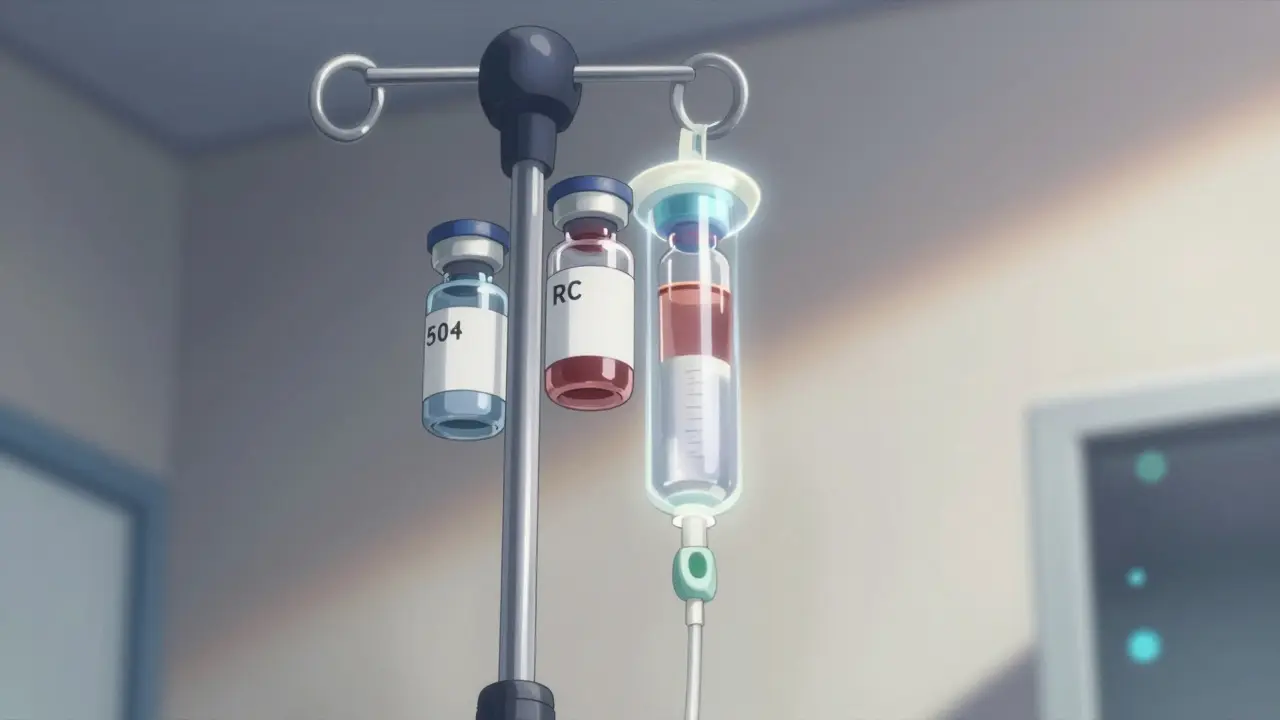
One common approach is the 12-step algorithm. Here is the basic logic they use:
- Solution Preparation: Doctors create three different concentrations. Solution 3 is the full strength, Solution 2 is ten times weaker, and Solution 1 is a hundred times weaker.
- The Start: They begin with a tiny amount-sometimes as little as 1/10,000th of the final dose.
- The Climb: Every 15 to 20 minutes, the dose is doubled. If the patient shows no reaction, they move to the next step.
- The Finish: This continues for 4 to 8 hours until the patient is receiving the full dose of the drug.
Some modern, accelerated protocols can even shrink this window. For certain Beta-lactams-the class of antibiotics including penicillins and cephalosporins-some doctors use a process that finishes in just 2 hours and 15 minutes by tripling the dose every 15 minutes.
| Feature | Beta-Lactams (Penicillins) | NSAIDs (Aspirin/Ibuprofen) |
|---|---|---|
| Primary Goal | Treatment of acute infection | Management of chronic inflammation/pain |
| Typical Method | Rapid IV or oral titration (hours) | Prolonged daily incremental dosing (days) |
| Dosing Example | 12-step doubling algorithm | Starting at 30mg ASA, moving to 325mg |
| Tolerance Duration | Single course of therapy | Can be maintained via daily administration |
Evaluating the Risk: Skin Tests and Challenges
Before jumping into desensitization, doctors first try to determine if the allergy is even real. This usually involves a two-step process: skin testing and a drug challenge.
Skin testing looks for an immediate reaction on the arm. However, it's not perfect. For example, some patients react to a substance called PPL (Prepared Penicillin Polylysine) during the test but would actually be fine with the real medication. Because of this, the gold standard is the "drug challenge." This involves giving a small, controlled dose of the actual drug to see if a reaction occurs. If you pass the challenge, you can stop worrying about the allergy entirely.
Special Considerations for Children
Children are often the best candidates for desensitization, especially those with chronic diseases or cancers where specific medications are non-negotiable. However, most of the existing protocols were designed for adults and then adapted for kids. Pediatric allergists now work closely with infectious disease specialists to create safer, more tailored schedules. Because kids' bodies react differently and their weights vary wildly, precise dosing is even more critical than it is for adults.
When the Process Must Stop
Desensitization is generally safe, but it is a calculated risk. There are "hard stop" triggers where the procedure must be aborted immediately. If a patient develops laryngeal edema (swelling of the throat) or a severe drop in blood pressure that doesn't respond immediately to epinephrine, the process ends. The safety of the patient always outweighs the need for the medication.
Will desensitization cure my drug allergy forever?
No. Desensitization creates a temporary state of tolerance. It allows you to complete one specific course of treatment. Once you stop taking the medication, the tolerance disappears, and you would need to be desensitized again for any future treatments.
How do I know if I have a true penicillin allergy or just a side effect?
A side effect is a predictable response (like an upset stomach), whereas an allergy is an immune response (like hives or shortness of breath). The only way to know for sure is through professional evaluation, which usually includes a skin test and a controlled drug challenge administered by an allergist.
Can I do a desensitization protocol at home?
Absolutely not. Desensitization involves administering a drug that your body is known to react to. This carries a risk of anaphylaxis. It must be performed by experienced medical personnel in a facility equipped with emergency rescue medications and monitoring tools.
Why is it important to clear a "false" penicillin allergy?
Penicillins are often the most effective and narrow-spectrum options for many infections. Avoiding them forces doctors to use broader-spectrum antibiotics, which can be more expensive, have more side effects, and contribute to the global problem of antibiotic-resistant bacteria.
What are the signs that a desensitization is working?
Success is marked by the absence of hypersensitivity symptoms (no itching, swelling, or breathing difficulties) as the dose increases. If you can reach the full therapeutic dose without a reaction, the desensitization is considered successful.
Next Steps and Troubleshooting
If you have a history of drug allergies, your next move depends on your current health needs. For those who are healthy and not currently needing the medication, it might be worth scheduling a consultation with an allergist just to "clear" your record. This prevents confusion and potential delays in emergency situations in the future.
If you are currently facing a treatment plan where the best drug is one you're allergic to, ask your doctor about a referral to an allergy and immunology specialist. Don't assume that an alternative drug is the only option; ask specifically if drug desensitization is a possibility for your specific situation. Be prepared to provide a detailed history of your original reaction-what happened, how long after the dose did it start, and what the symptoms were-as this helps the specialist choose the right protocol.