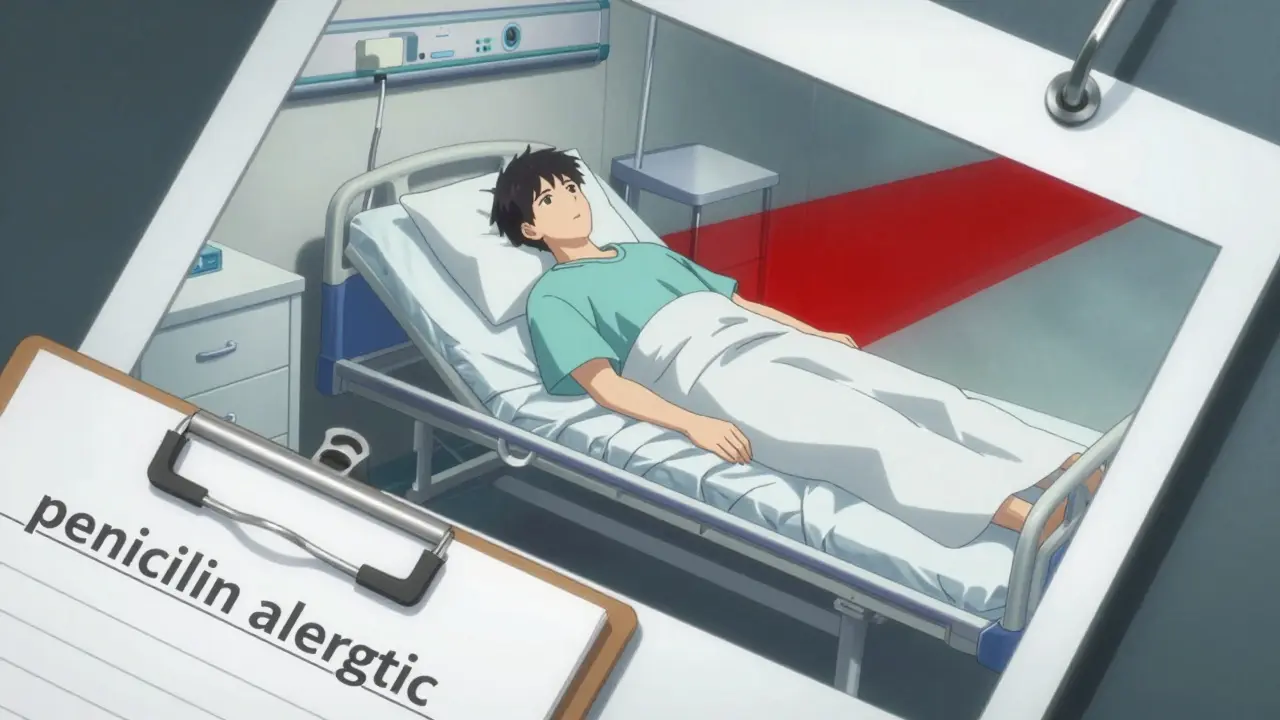
When a patient truly has a confirmed allergy but absolutely needs that specific medication-perhaps because every other alternative is too toxic or simply doesn't work-doctors turn to a process called drug desensitization is a clinical procedure that induces temporary immunological tolerance by administering a drug in tiny, incremental doses. This isn't a cure for the allergy, but it's a way to "trick" the immune system into accepting a drug for a single course of treatment.
The Penicillin Paradox and Beta-Lactams
Penicillins and their cousins, the Beta-lactams (which include cephalosporins like ceftriaxone and cefazolin), are the most common culprits in drug allergy reports. The problem is that many people confuse a side effect-like nausea-with a true allergic reaction. A true immediate-type hypersensitivity happens within an hour of exposure and often includes flushing, swelling (angioedema), or shortness of breath.
To figure out if someone is actually allergic, allergists use a gold-standard approach: skin testing followed by a drug challenge. However, not all tests are created equal. For example, using Prepared Penicillin Polylysine (PPL) is generally discouraged because up to 70% of people who react to PPL can still safely take actual penicillin. The real test is the drug challenge-giving a small dose of the medication under supervision to see if a reaction occurs.
How Desensitization Actually Works
If a patient is confirmed allergic but needs the drug, a desensitization protocol is launched. Think of it like a slow ramp. Instead of hitting the immune system with a full dose, which would trigger a massive release of histamine, the medical team introduces the drug in amounts so small the body barely notices, then slowly increases it.
One of the most respected methods is the 12-step algorithm used at institutions like Brigham and Women's Hospital. This process uses three different solutions of the drug:
- Solution 1: A 100-fold dilution (the weakest).
- Solution 2: A 10-fold dilution.
- Solution 3: The standard therapeutic concentration (the strongest).
The patient starts with a tiny fraction of the dose-sometimes as low as one-ten-thousandth of the target. Every 15 to 20 minutes, the dose doubles. Over the course of 4 to 8 hours, the patient eventually reaches the full therapeutic dose. Some accelerated protocols for beta-lactams have even shortened this to about 2 hours and 15 minutes by tripling the doses every 15 minutes.
| Feature | Beta-Lactams (e.g., Penicillin) | NSAIDs (e.g., Aspirin) |
|---|---|---|
| Primary Goal | Treat severe infection | Manage chronic inflammation |
| Dosing Pattern | Rapid doubling/tripling every 15-20 mins | Daily incremental increases |
| Starting Point | 1/10,000th of therapeutic dose | Approx. 30 mg of ASA (Aspirin) |
| Duration | Hours (Acute) | Days (Prolonged) |
The Specific Case of NSAIDs
Desensitizing someone to NSAIDs (Non-Steroidal Anti-Inflammatory Drugs) like aspirin (ASA) is a different beast. While antibiotic desensitization is often a race against an infection, NSAID desensitization is usually a slower, more prolonged process. Instead of a few hours, this often involves daily administration of the drug.
A typical ASA protocol might start at 30 mg and gradually climb to 60 mg, 100 mg, 150 mg, and finally the standard 325 mg. Because the mechanism of NSAID hypersensitivity is different from the IgE-mediated reactions seen with penicillin, the pacing of the doses must be adjusted to ensure the patient remains stable.
Risks, Rewards, and the "Temporary" Nature of Tolerance
It's crucial to understand that desensitization is not a cure. It creates a temporary window of tolerance. The moment the medication is stopped and a gap in treatment occurs, that tolerance vanishes. If the patient needs the drug again three months later, they have to go through the entire desensitization process from the beginning.
There are also real risks. If a patient develops intractable hypotension (severe drop in blood pressure) or laryngeal edema (throat swelling) that doesn't respond to epinephrine, the protocol must be aborted immediately. This is why these procedures are never done at home; they require a clinical setting with emergency equipment and trained staff who can spot the first signs of a reaction.
Pediatric Considerations: Small Patients, Big Challenges
For a long time, most desensitization data focused on adults. However, children with malignancies or chronic infections often need these same life-saving drugs. The best candidates for this therapy in kids are those with a history of immediate, IgE-mediated allergies. The challenge is that pediatric guidelines are often just scaled-down versions of adult protocols. Experts are now calling for more child-specific standards to optimize safety and efficacy, emphasizing that pediatric allergists must work closely with infectious disease and onco-hematology specialists.
The Bigger Picture: Antibiotic Stewardship
Why go through all this trouble? Because labeling someone as "allergic" when they aren't has a massive ripple effect on healthcare. When a patient is labeled penicillin-allergic, doctors often prescribe broad-spectrum antibiotics. These are "heavy hitter" drugs that are more expensive and can contribute to antibiotic resistance. In fact, some studies suggest that using these alternative drugs can increase healthcare costs by roughly $500 per hospital admission. By accurately diagnosing allergies and using desensitization when necessary, we improve patient outcomes and save the healthcare system money.
Can I do drug desensitization at home?
Absolutely not. Desensitization carries a risk of anaphylaxis. It must be performed by experienced medical personnel in a facility equipped with emergency medications, such as epinephrine, and the ability to manage a critical airway.
If I'm desensitized once, am I cured of the allergy?
No. Desensitization provides temporary tolerance for a single course of therapy. Once you stop taking the drug, the tolerance disappears, and you will likely need to be desensitized again for any future treatments.
How do I know if I have a true penicillin allergy?
The only way to be sure is through a clinical evaluation by an allergist. This typically involves a skin test and, if the skin test is negative, a supervised drug challenge (taking a dose of the drug) to see if a reaction occurs.
What happens if the desensitization process is aborted?
If a severe reaction occurs, such as laryngeal edema or a dangerous drop in blood pressure that doesn't respond to treatment, the procedure is stopped. The medical team will then pivot to emergency stabilization and look for alternative medications that the patient can safely tolerate.
Are there other drugs besides antibiotics that can be desensitized?
Yes. Protocols exist for various medications, including antifungals (like fluconazole and voriconazole), chemotherapy agents (such as paclitaxel and docetaxel), and certain monoclonal antibodies.