

If you're taking warfarin for a blood clot or heart condition, and you're also popping a vitamin E supplement, you might be putting yourself at risk - even if you feel fine. This isn't a myth. It's not just a warning on a label. Real people have bled internally because they didn’t know vitamin E could make warfarin stronger. And it doesn’t take much: vitamin E at doses above 400 IU daily has been linked to dangerous bleeding in multiple studies, even when INR numbers look normal.
How Vitamin E Interacts with Warfarin
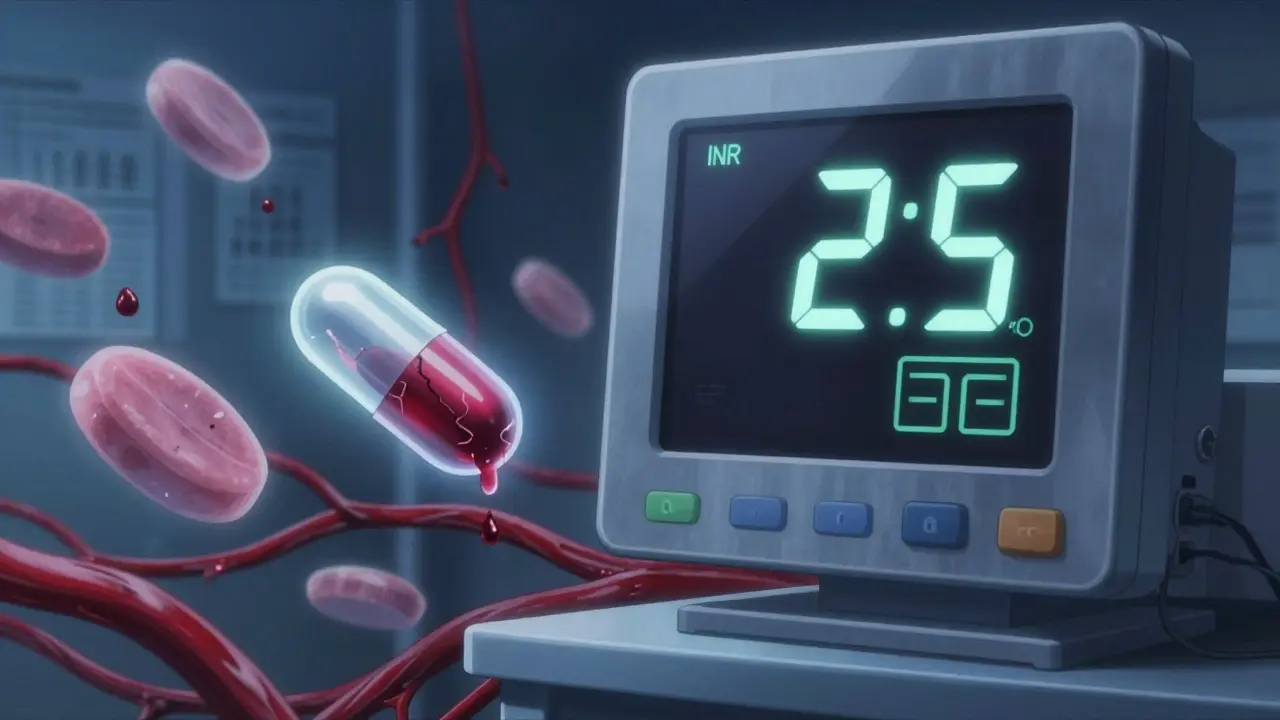
Warfarin works by blocking vitamin K, which your body needs to make clotting factors. Think of it like turning down the volume on your blood’s ability to form clots. Vitamin E doesn’t work the same way, but it has a sneaky side effect: it slows down platelets. Platelets are the first responders when you get a cut. If they’re sluggish, even a small injury can turn into a big problem - especially when warfarin is already thinning your blood. Studies show vitamin E doesn’t always raise your INR (the lab test that measures how long it takes your blood to clot). That’s the trap. You might get your INR checked, it looks fine, and you think you’re safe. But bleeding can still happen. Why? Because vitamin E affects platelets, not just clotting factors. That means your blood doesn’t clot properly even if your INR is in range.The Dose Makes the Danger
Not all vitamin E is risky. If you’re getting 100-200 IU daily from a multivitamin, the risk is low. But once you hit 400 IU, the danger spikes. A 2023 review from the University of California San Diego Anticoagulation Service says to avoid vitamin E above that level entirely if you’re on warfarin. Why? Because that’s the threshold where antiplatelet effects become clinically meaningful. Here’s the twist: some people react to as little as 42 IU daily. That’s less than half a typical supplement. That’s why blanket statements like “vitamin E is safe” are misleading. Genetics matter. Your CYP2C9 and VKORC1 genes control how you metabolize warfarin - and how you respond to vitamin E. If you’re a slow metabolizer, even small doses can pile up and cause bleeding.What the Research Really Says
You’ll find conflicting studies. One from 1996 said vitamin E didn’t affect INR in 21 people. That study lasted only a few weeks. Another study from 2013 followed over 1,000 patients for years. It found that those with higher vitamin E levels in their blood had a much greater risk of major bleeding - including brain bleeds. The difference? Time. The 1996 study missed the delayed effect. Bleeding didn’t show up until week four or later. The 2013 study also found two critical blood level thresholds:- Vitamin E ≥4.49 μmol/mmol cholesterol → higher risk of any bleeding
- Vitamin E ≥5.56 μmol/mmol cholesterol → highest risk of major bleeding
What Clinics Are Actually Doing
A 2017 survey of 250 anticoagulation clinics showed 78% routinely warn patients about vitamin E. Sixty-three percent specifically say: don’t go over 400 IU. Many clinics now require:- Baseline INR before starting vitamin E
- Weekly INR checks for the first month
- Biweekly checks after that if you keep taking it
What About Other Supplements?
You’re not alone if you’re taking other things with warfarin. Fish oil, garlic, ginger, ginkgo, and turmeric are all on the same danger list as vitamin E. They all interfere with platelets. But vitamin E is special because it’s so common. Nearly 1 in 3 American adults take it. Sales hit $287 million in 2022. People take it for “skin health,” “heart protection,” or “antioxidant benefits.” But the American Heart Association says high-dose vitamin E (≥400 IU/day) may increase the risk of hemorrhagic stroke - especially if you’re on anticoagulants.What Should You Do?
If you’re on warfarin:- Stop taking vitamin E supplements unless your doctor says it’s safe.
- Don’t assume “natural” means safe. Supplements aren’t tested like drugs.
- If you’ve been taking vitamin E for months, tell your anticoagulation clinic - even if you feel fine.
- Ask your doctor about checking your vitamin E blood levels if you’ve had unexplained bleeding.
- Stick to food sources: almonds, spinach, sunflower seeds, and avocados are safe and healthy.
Why This Matters More Than You Think
The FDA can’t regulate supplements like it does prescription drugs. That means no mandatory safety testing. No clear dosing limits. No warning labels that say “may increase bleeding risk when taken with warfarin.” So the burden falls on you - and your doctor. This isn’t about fear. It’s about awareness. You don’t need to cut out all supplements forever. But if you’re on warfarin, you need to treat every supplement like a medication. Ask your pharmacist. Ask your doctor. Bring your bottle to your appointment.What About New Blood Thinners?
If you’re on a DOAC like apixaban or rivaroxaban instead of warfarin, the story changes. These drugs don’t rely on vitamin K. So far, there’s no strong evidence that vitamin E interacts with them. But research is still limited. If you’re on a DOAC and considering high-dose vitamin E, talk to your doctor anyway. We don’t have enough data to say it’s completely safe.Bottom Line
Vitamin E isn’t the enemy. But when you’re on warfarin, it becomes a silent risk. You can’t see it. You can’t feel it. Your INR might not catch it. But bleeding doesn’t wait. The safest choice? Avoid vitamin E supplements above 400 IU daily. If you’re already taking it, don’t quit cold turkey - talk to your care team. They can help you adjust safely.Your health isn’t a gamble. Don’t risk a bleed because you thought a supplement was harmless.


