

Medication-Induced Neuropathy Risk Checker
Medication Risk Assessment
Risk Assessment Results
This tool helps you understand the potential risk of medication-induced neuropathy based on your specific medication and symptoms. Remember: This is not a substitute for professional medical advice.
Click the "Check Risk Level" button after selecting your medication and symptoms.
Ever felt a weird tingling in your toes after starting a new pill? Or noticed your fingers going numb without any obvious reason? If you’re on medication - especially for cancer, infections, or heart conditions - these aren’t just "odd sensations." They could be early warning signs of medication-induced neuropathy, a real and often overlooked side effect that affects hundreds of thousands of people every year.
It’s not rare. About 4% of all peripheral neuropathy cases come from drugs. But if you’re getting chemotherapy, that number jumps to 60%. And it’s not just cancer drugs. Antibiotics like isoniazid, heart meds like amiodarone, even statins and antivirals can cause this. The problem? Most people ignore it. They think it’s just stress, aging, or a pinched nerve. But tingling and numbness from meds are often the first signals that your nerves are being damaged - and if you wait too long, the damage might not fully reverse.
How It Starts: The Glove and Stocking Pattern
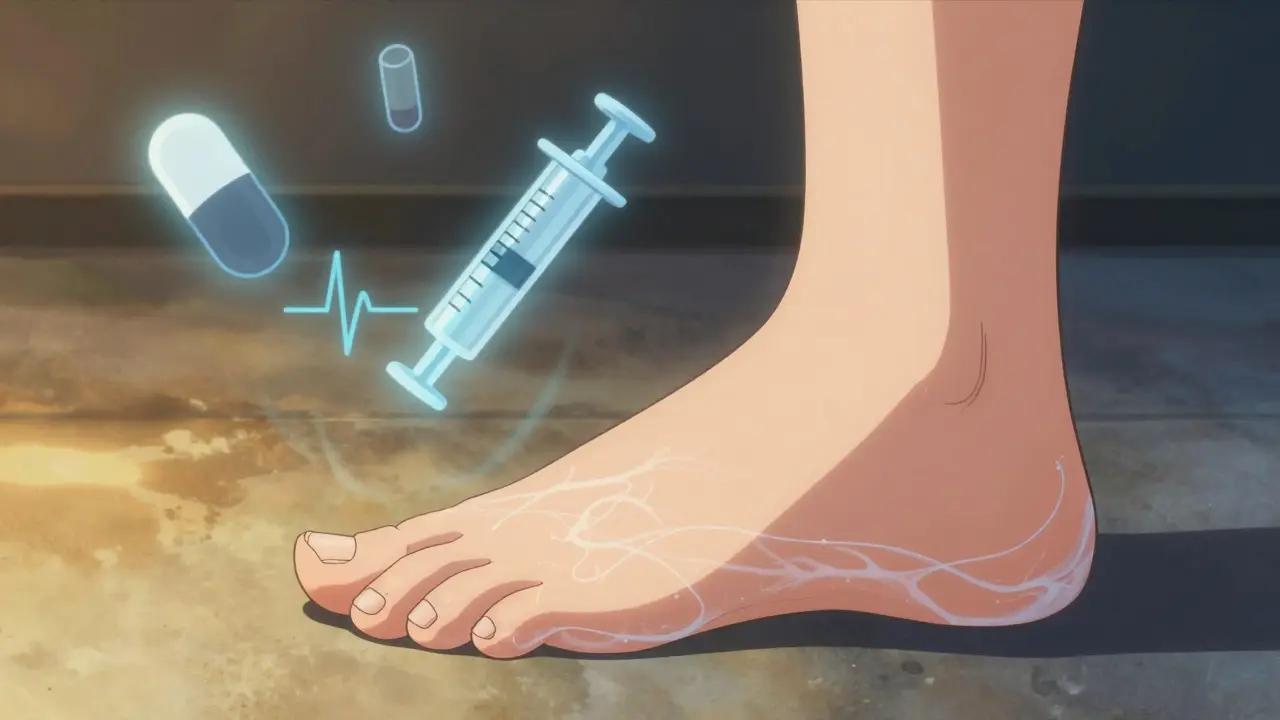
Drug-induced nerve damage doesn’t show up randomly. It follows a clear pattern called the "glove and stocking" distribution. That means symptoms start in your feet and hands - the farthest points from your spine - and slowly creep up your legs and arms. You might notice:
- A buzzing or pins-and-needles feeling in your toes
- Loss of sensation in your fingertips when buttoning shirts
- Feeling like you’re walking on cotton even when you’re barefoot
This pattern happens because the longest nerves in your body - the ones reaching your toes and fingers - are the most vulnerable. They’re the first to get damaged by toxic chemicals in meds. According to the American Academy of Physical Medicine and Rehabilitation, this is often the earliest stage of nerve injury. Catch it here, and you might avoid permanent damage.
Which Medications Are Most Likely to Cause This?
Not all drugs are created equal when it comes to nerve damage. Some are far more likely to cause tingling and numbness than others. Here’s what the data shows:
| Medication Class | Example Drugs | Neuropathy Risk | Key Detail |
|---|---|---|---|
| Chemotherapy | Oxaliplatin, Paclitaxel, Cisplatin | 60-95% | Oxaliplatin can make symptoms worse even after stopping |
| Antibiotics | Isoniazid, Metronidazole | 10-50% | Isoniazid risk drops sharply with vitamin B6 supplements |
| Heart Medications | Amiodarone, Phenytoin | 5-10% | Can damage nerve insulation (myelin) |
| Antivirals | Stavudine, Didanosine | 25-35% | Common in HIV treatment regimens |
| Statins | Atorvastatin, Simvastatin | 1-2% (debated) | Evidence is weak; may be overreported |
For example, nearly everyone who gets oxaliplatin for colorectal cancer feels tingling in their hands or feet during or right after the infusion. It usually fades within hours - but if it keeps happening after multiple cycles, that’s a red flag. Paclitaxel, used for breast and lung cancer, causes numbness that builds slowly over weeks. The good news? Many of these symptoms improve or vanish once the drug is stopped. The bad news? Many patients don’t report it until it’s too late.
Why People Miss the Warning Signs
It’s human nature. When you’re fighting cancer, dealing with TB, or managing high blood pressure, a little tingling in your fingers seems like a small price to pay. But here’s the truth: early symptoms are your best chance to stop the damage.
Dr. Norman Latov from Weill Cornell Medicine says: "Early recognition of mild sensory symptoms is critical because many drug-induced neuropathies are reversible if the offending agent is discontinued promptly." Yet, a 2022 survey from the Foundation for Peripheral Neuropathy found that over half of patients waited three months or longer before their doctor even considered medication as the cause.
Patients often dismiss symptoms. One person on Reddit wrote: "I thought the numbness was just from sleeping funny." Another on a cancer forum said: "My oncologist said it was normal. I didn’t push back. Now I can’t feel my toes." These aren’t isolated stories. They’re common.
The problem is compounded by how doctors are trained. Only 35% of oncology clinics in the U.S. use standardized tools to check for nerve damage. That means a lot of patients slip through the cracks.
What to Do If You Notice Tingling or Numbness
If you start feeling unusual sensations while on medication, don’t wait. Don’t assume it’s nothing. Here’s what actually works:
- Track it. Write down when it happens, where it is, how strong it is (1-10 scale), and if anything makes it better or worse. This gives your doctor real data, not just "I feel weird."
- Don’t stop the med yourself. Some drugs - like chemo or antibiotics for TB - are lifesaving. Stopping without guidance can be dangerous.
- Ask about dose adjustments. Studies show 60-70% of patients can keep taking essential meds if the dose is lowered slightly. That’s often enough to stop nerve damage without losing treatment benefits.
- Request a neurological check. Ask your doctor about the Total Neuropathy Score or the EORTC QLQ-CIPN20 questionnaire. These are simple tools used in hospitals to measure nerve damage.
- Check for vitamin B6. If you’re on isoniazid (for TB), ask if you’re getting enough B6. It can prevent up to 90% of neuropathy in these cases.
And don’t forget daily safety steps. If your feet or hands are numb, you can’t feel injuries. Check your skin every day for cuts, blisters, or sores. Wear shoes indoors. Use non-slip mats in the shower. Numbness increases your risk of falls and infections - especially if you’re diabetic.
When Recovery Is Possible - and When It’s Not
Here’s the most important thing to understand: most drug-induced neuropathy is reversible if caught early.
On PatientsLikeMe, 73% of users who stopped the offending drug at the first sign of tingling reported full or near-full recovery within six months. But those who waited until they lost balance, couldn’t walk, or had constant burning pain? Only 18% got better.
Some drugs leave lasting damage. Oxaliplatin, for instance, can keep getting worse for months after you stop it. Cisplatin and bortezomib can cause permanent numbness in 20-30% of cases if not managed early. But again - if you report tingling in week two instead of month six, your odds change dramatically.
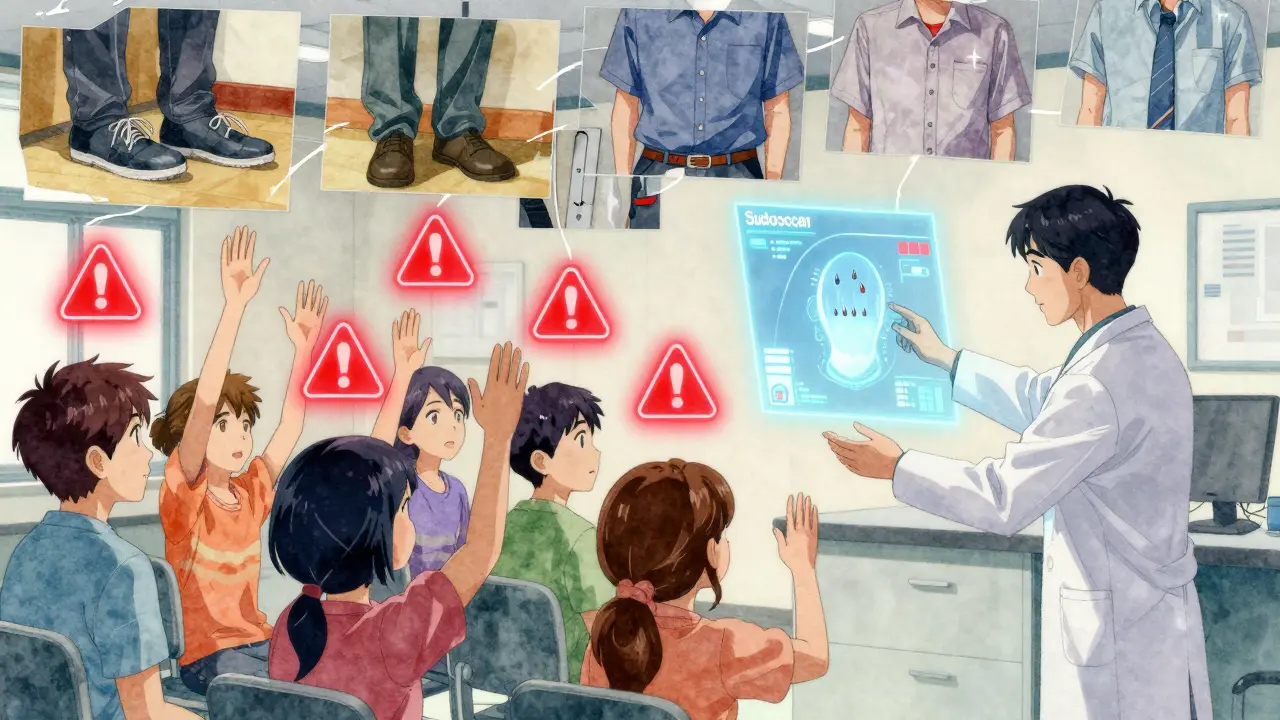
There’s also new hope. In 2021, the FDA approved a device called SudoScan that detects early nerve damage by measuring sweat response - before you even feel symptoms. Clinical trials are testing supplements like acetyl-L-carnitine, which cut symptom severity by 40% in paclitaxel patients. And in the next five years, doctors may start using genetic tests to see who’s at highest risk before they even start a neurotoxic drug.
What’s at Stake
More than 20 million Americans have peripheral neuropathy. Around 800,000 of those cases come from medications. The yearly cost to treat it? Over $1.2 billion in the U.S. alone. But beyond the numbers, there’s quality of life. People with untreated neuropathy lose independence. They can’t walk without help. They can’t hold a spoon. They fall. They get infections. They end up in hospitals.
This isn’t just a side effect. It’s a signal. And like any signal, ignoring it doesn’t make it go away - it just makes the problem worse.
If you’re on a medication that’s known to cause nerve damage - and you’re feeling tingling, numbness, or a strange burning - speak up. Bring your notes. Ask for a nerve check. Push for a dose change. You might be saving your own nerves - and your future mobility - just by noticing a small change and saying something about it.


