
Reduce Sodium: How Lowering Salt Intake Improves Heart Health and Blood Pressure
When you reduce sodium, you’re lowering the amount of salt in your diet to protect your heart and blood vessels. Also known as cutting back on dietary salt, it’s one of the simplest, most proven ways to lower high blood pressure and reduce your risk of heart attack or stroke. Most people eat way more sodium than they need—often without realizing it. The average American consumes over 3,400 mg of sodium a day, but the American Heart Association recommends no more than 2,300 mg, with an ideal limit of 1,500 mg for most adults. That’s less than a teaspoon of salt. And it’s not just the salt shaker. Processed foods, canned soups, packaged snacks, and even bread are loaded with hidden sodium.
When you reduce sodium, you’re directly helping your kidneys manage fluid balance. Too much salt makes your body hold onto water, which increases pressure in your blood vessels. Over time, that pressure damages artery walls, strains your heart, and raises your chance of heart failure. People with kidney disease, diabetes, or existing high blood pressure benefit the most from cutting back. Studies show that just reducing sodium by 1,000 mg a day can lower systolic blood pressure by 5 to 6 mm Hg—enough to make a real difference in long-term health. It’s not about going salt-free. It’s about choosing smarter foods. Cooking at home gives you control. Reading labels helps you spot sodium bombs. Swapping out canned veggies for fresh or frozen ones, skipping the soy sauce, and reaching for herbs instead of salted seasonings all add up.
Many of the posts below show how high blood pressure, a condition closely tied to sodium intake affects heart health, kidney function, and daily life. You’ll find guides on managing medications like metoprolol and understanding how conditions like atrial fibrillation and coronary artery disease connect to what you eat. Others talk about how lifestyle changes—including diet—help people stick to treatment plans during stressful times or after surgery. There’s no magic pill for lowering sodium, but small, consistent changes work. The goal isn’t perfection. It’s progress. And every gram you cut makes your heart thank you.
Salt and Blood Pressure Medications: How Sodium Lowers Drug Effectiveness
- Elliot Grove
- on Nov 20 2025
- 14 Comments
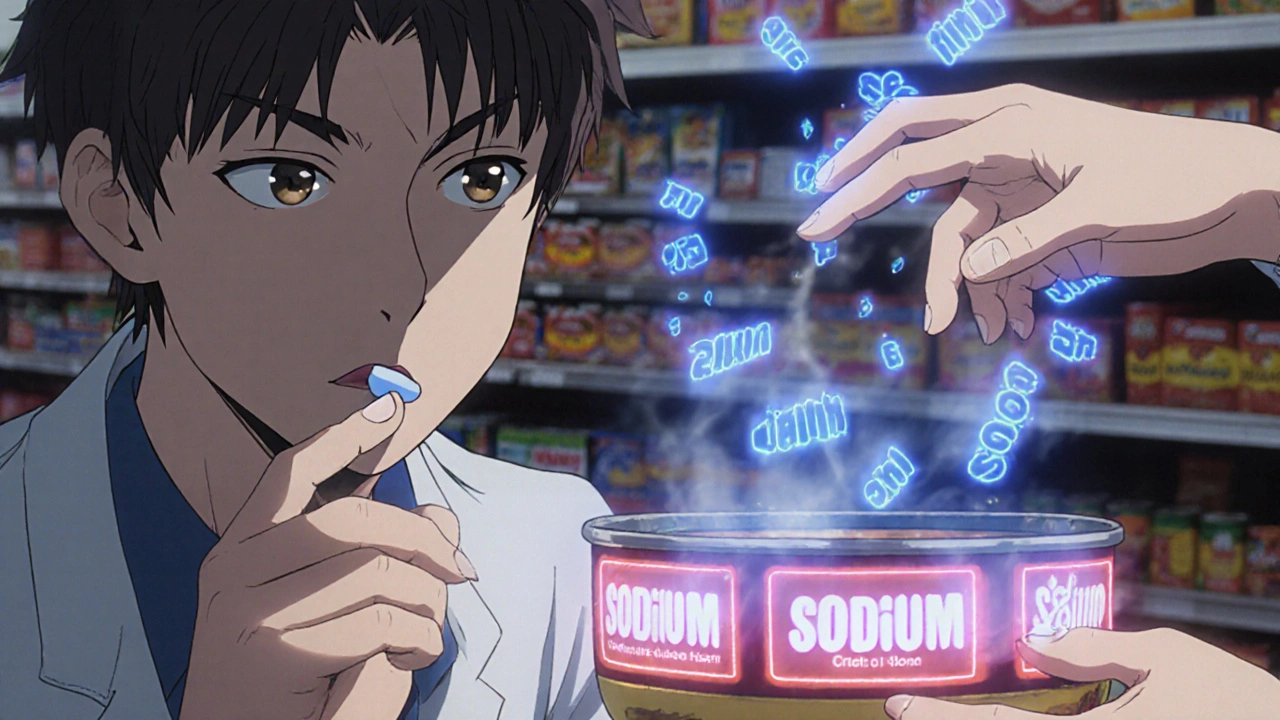
Reducing sodium intake can boost the effectiveness of blood pressure medications, lowering systolic pressure by up to 6 mm Hg - equivalent to starting a new drug. Learn how hidden salt in processed foods undermines treatment and what to eat instead.