
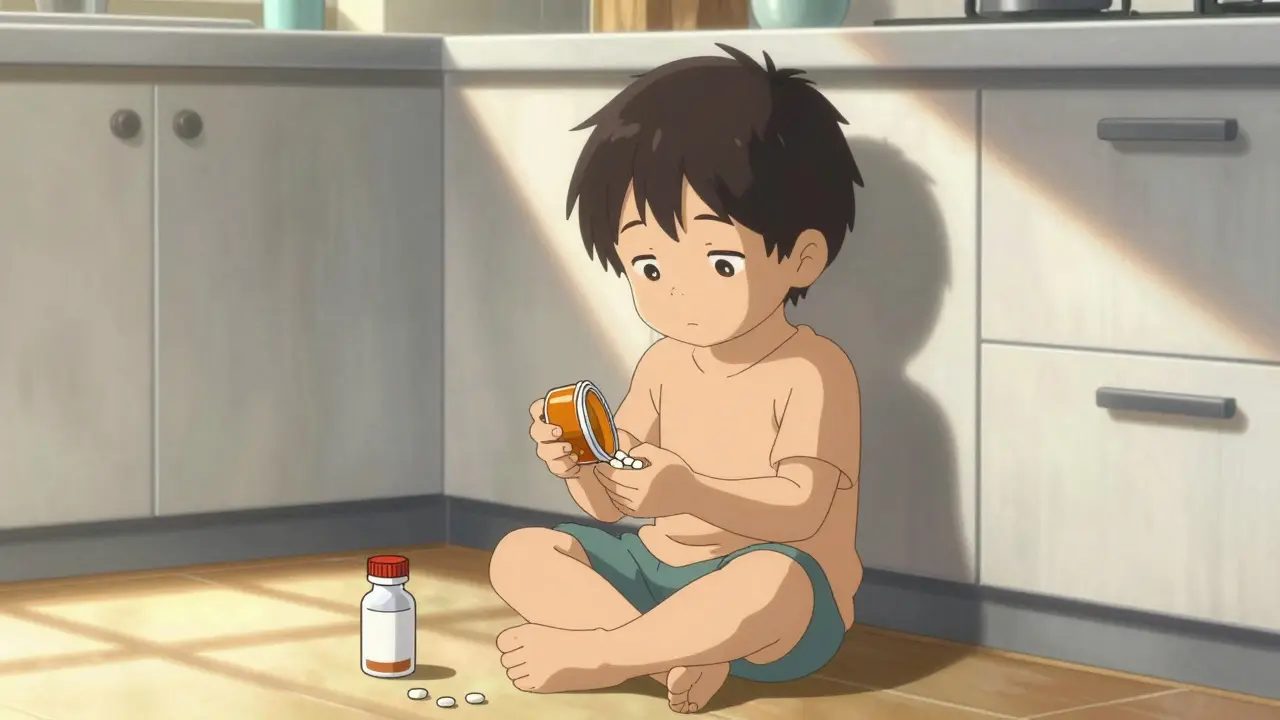
When a child accidentally takes too much medicine, it’s not just a mistake-it’s a medical emergency. Every year, over a million children under six in the U.S. are exposed to medications in ways they shouldn’t be. Many of these cases involve common household drugs like acetaminophen, cough syrups, or ADHD pills. The scary part? Sometimes, there are no obvious symptoms right away. That’s why knowing the warning signs and knowing exactly when to call poison control can save a child’s life.
What Happens When a Child Takes Too Much Medicine?
Children’s bodies process drugs differently than adults. Their liver and kidneys are still developing, so even a small extra dose can build up to dangerous levels. A child might swallow a few extra drops of Tylenol because the dropper looked full. Or maybe they found a pill bottle and thought it was candy. These aren’t rare accidents. In fact, nearly half of all poison control calls involving kids are because of medication mistakes. The real danger isn’t always immediate. With some drugs, the child might seem fine for hours-even a full day-while internal damage is quietly happening. That’s why waiting to see if they "look sick" is one of the biggest mistakes parents make.Key Signs of Medication Overdose in Children
The symptoms depend on what kind of drug was taken. Here’s what to watch for, broken down by category:- Opioids (like oxycodone, hydrocodone, or fentanyl): Look for pinpoint pupils, limpness, unresponsiveness, slow or stopped breathing, gurgling or choking sounds, and cold, clammy skin with bluish lips or fingernails. Fentanyl is especially deadly because even a tiny amount can shut down breathing.
- Acetaminophen (Tylenol, Panadol, or cold medicines): In the first 24 hours, there might be no symptoms at all. But behind the scenes, the liver is being damaged. After a day, vomiting, nausea, belly pain, and jaundice (yellow skin or eyes) may appear. By then, it’s often too late without treatment.
- Stimulants (ADHD meds like Adderall or Ritalin): These can cause rapid heartbeat, high blood pressure, extreme agitation, hallucinations, seizures, or even stroke. A child might become hyperactive, confused, or have trouble speaking.
- Cough and cold medicines: Often contain antihistamines or decongestants. Signs include drowsiness, dry mouth, flushed skin, fast heartbeat, confusion, or seizures. Some products have multiple active ingredients, which increases overdose risk.
- Antidepressants or seizure medications: May cause dizziness, tremors, loss of coordination, vomiting, or changes in heart rhythm. In severe cases, coma or cardiac arrest can occur.
One of the most dangerous myths is that "if they’re still awake, they’re okay." That’s not true. A child can be breathing normally one minute and stop breathing the next. That’s why you can’t wait to see symptoms before acting.
When to Call Poison Control
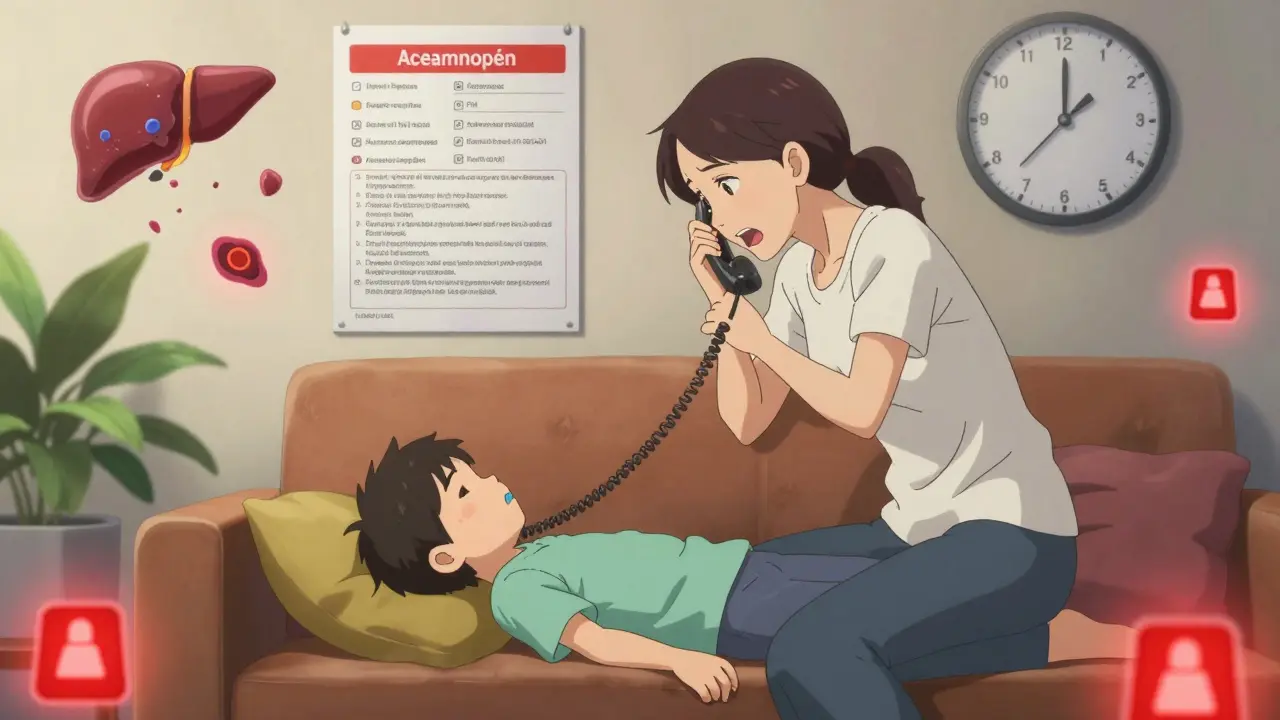
Call Poison Control (1-800-222-1222) immediately if you suspect your child has taken too much of any medication-even if they seem fine. The experts on the other end can tell you whether it’s a true emergency, what to watch for, and whether you need to go to the hospital. They’ve seen thousands of cases and know what to do.Don’t wait for vomiting, drowsiness, or other signs. Don’t try to find answers online. Don’t call your pediatrician first if you’re unsure. Poison Control is free, available 24/7, and trained to handle these exact situations.
When to Call 911
If your child has any of these symptoms, call 911 right away:- Unresponsive or can’t be woken up
- Stopped breathing or breathing is very slow/shallow
- Seizures or uncontrollable shaking
- Lips or fingernails turning blue or gray
- Swelling of the face, lips, or tongue
- Severe chest pain or racing heartbeat
In these cases, every second counts. Emergency responders can give life-saving treatments like naloxone (for opioid overdoses) or start breathing support. If you have naloxone at home and suspect an opioid overdose, give one dose now while someone else calls 911. You can give more doses every 2-3 minutes if there’s no response.
Why Waiting Is So Dangerous
For acetaminophen, the window for effective treatment is narrow. If you get to the hospital within 8 hours of the overdose, a drug called N-acetylcysteine (NAC) can prevent liver failure almost 100% of the time. After 16 hours, that effectiveness drops to just 40%. That means a child who seems fine at 6 p.m. could be in liver failure by midnight. And it’s not just Tylenol. Many cold medicines, flu remedies, and painkillers also contain acetaminophen. Parents often don’t realize they’re giving double the dose by mixing products. One study found that 70% of pediatric acetaminophen overdoses happen because caregivers didn’t know two different medicines had the same active ingredient.What to Do Right Now
If you think your child has overdosed:- Don’t make them vomit. Don’t give them anything to drink unless instructed.
- Find the medicine bottle. Look at the name, strength, and how much was taken.
- Call Poison Control immediately: 1-800-222-1222.
- If they’re unresponsive or having trouble breathing, call 911 and start CPR if you’re trained.
- If you have naloxone and suspect opioids, give it now.
Keep the medicine bottle with you when you go to the hospital. The medical team will need to know exactly what was taken, when, and how much.
How to Prevent This From Happening
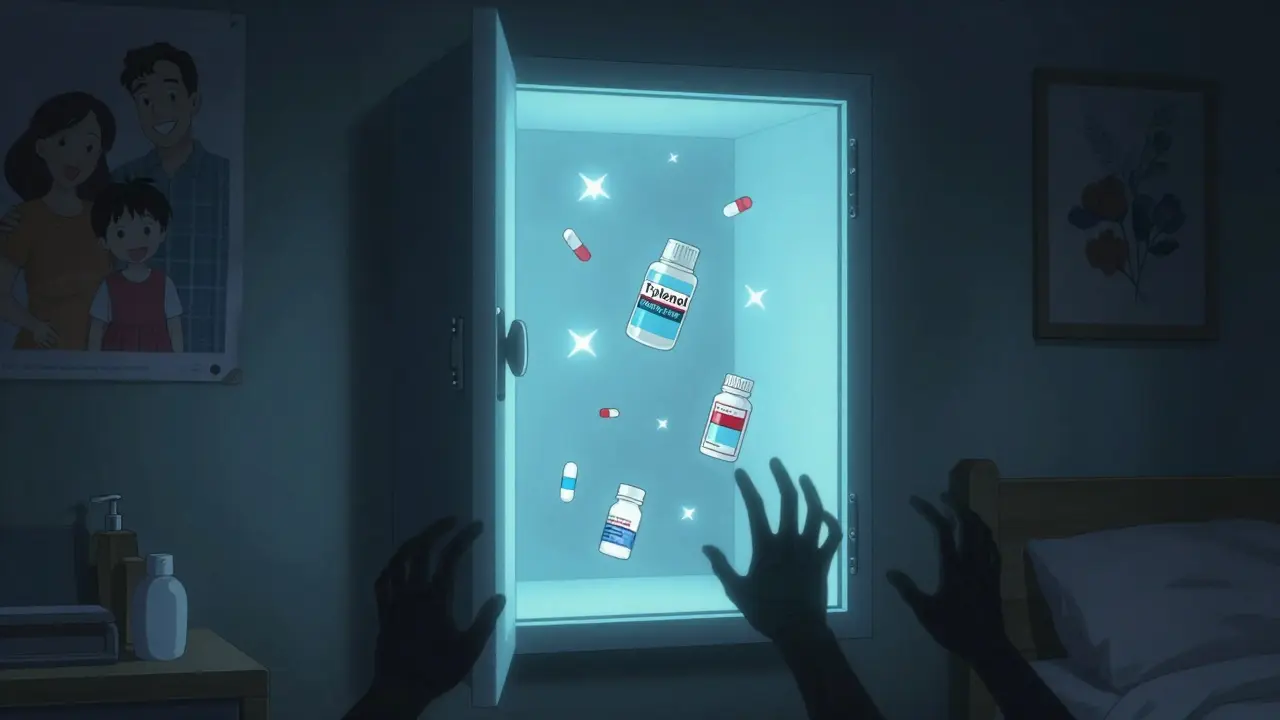
Most pediatric overdoses are preventable. Here’s what works:- Lock up all medicines. Keep them in a locked cabinet-not just out of reach. Kids are smarter than we think. Even child-resistant caps can be opened by determined children.
- Never call medicine "candy." That teaches kids to associate pills with treats.
- Use the right measuring tool. Don’t use kitchen spoons. Use the dosing cup or syringe that came with the medicine. Many overdoses happen because people guess the dose.
- Check labels. Always read the active ingredients. If two medicines both say "acetaminophen," don’t give both.
- Watch visitors. Grandparents, babysitters, or friends might give medicine without knowing your child’s dosage history.
The CDC says 60% of childhood poisonings happen in the child’s own home. That means the biggest risk isn’t strangers or unsafe neighborhoods-it’s everyday medication storage.
What’s Changing to Help
New rules are coming to make medicines safer. In 2020, the FDA required liquid acetaminophen to come with unit-dose packaging. Since then, accidental overdoses in kids have dropped by 19%. By 2025, all liquid medications will need standardized dosing labels and tools to prevent confusion. That’s a big step forward.Meanwhile, Poison Control’s online tool, webPOISONCONTROL®, now helps families get instant advice for non-emergency cases. It’s helped over 120,000 people since 2023. But it’s not a substitute for calling 911 when symptoms are serious.
Final Thought: Don’t Wait
If you’re even a little unsure whether your child took too much medicine-call Poison Control. It’s free. It’s fast. And it’s designed for exactly this situation. Waiting for symptoms to show up is like waiting for a fire to spread before calling 911. By then, the damage is done.Keep the Poison Control number saved in your phone. Post it on the fridge. Teach older siblings how to use it. In a crisis, seconds matter more than perfect answers. And sometimes, the best thing you can do is call before you even know if it’s an emergency.
What should I do if my child took medicine but seems fine?
Call Poison Control immediately. Many drugs, especially acetaminophen, cause no symptoms for hours-even while causing serious internal damage. Waiting to see if they "look sick" can delay life-saving treatment. Poison Control experts can tell you whether it’s an emergency and what steps to take next.
Can I wait to call my pediatrician instead of Poison Control?
No. Poison Control is specifically trained for drug overdoses and has access to real-time toxicology databases. Your pediatrician’s office may not be open, or they may need to refer you to Poison Control anyway. Calling 1-800-222-1222 gets you expert help in seconds, not hours.
Is it safe to give my child syrup to make them vomit?
No. Inducing vomiting can cause more harm, especially if the substance is corrosive or if the child is unconscious. It can lead to choking, lung damage, or worsening the overdose. Only follow instructions from Poison Control or emergency responders.
How common is acetaminophen overdose in kids?
Acetaminophen is the most common single substance involved in pediatric poisonings, accounting for over 12% of all cases reported to poison centers. Most overdoses happen because parents combine cold medicine with pain relievers that both contain acetaminophen, not realizing they’re doubling the dose.
Does child-resistant packaging really work?
Child-resistant packaging helps-but not enough. About 20% of poisonings still happen even with these caps. Kids as young as two can open them. That’s why locking medicines in a cabinet is the only reliable way to prevent access.
What’s the best way to store medicines at home?
Store all medications in a locked cabinet, out of sight and reach-even if they’re used daily. Keep them away from countertops, nightstands, or purses. Never leave pills on a table after giving them to your child. The safest place is a high cabinet with a child lock.
Can I use the same dosing tool for different medicines?
No. Each medicine comes with its own dosing device because concentrations vary. Using a spoon from one bottle for another can lead to dangerous overdoses. Always use the syringe or cup that came with the medicine, and never guess the dose.
Are herbal supplements safe for kids?
No. Herbal supplements, vitamins, and CBD products are not regulated like medicines and can cause serious harm. In 2022, over 4,500 children were exposed to medical marijuana products alone. Treat all supplements like medicine-lock them up and never give them without a doctor’s advice.


