
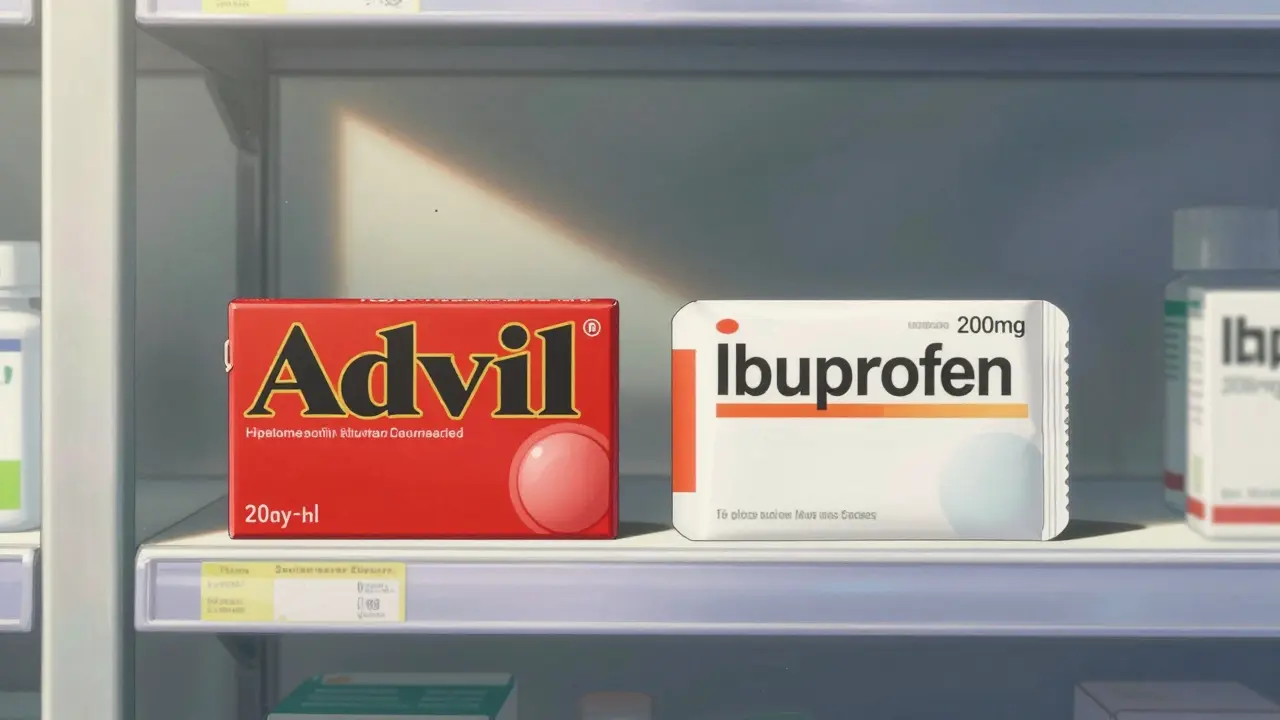
How much have you spent this year on pain relievers, allergy pills, or heartburn medicine? If you’re still reaching for the name-brand box every time, you might be paying way more than you need to. The truth? Store brand OTC medications work just as well as the ones with fancy logos - and they often cost 80% less.
They’re the Same Medicine, Just Cheaper
Look at the bottle of Advil and the one labeled ‘Ibuprofen’ from your local pharmacy. They might look different - different colors, shapes, packaging - but the active ingredient? Identical. Same amount. Same way it works in your body. That’s not marketing hype. It’s federal law. The FDA requires every store brand medication to prove it delivers the same active ingredient at the same strength, in the same form, and at the same rate as the brand-name version. This isn’t a suggestion. It’s a strict bioequivalence standard: the drug must enter your bloodstream within 80-125% of the brand-name drug’s absorption rate. Studies show the average difference in absorption between generic and brand-name ibuprofen or acetaminophen is just 3.5%. That’s less than the natural variation you’d see between two pills from the same brand. Pharmacists know this. In fact, a 2021 University of Chicago study found that 89% of pharmacists and 82% of doctors use store-brand OTC meds for themselves and their families. If they trust it for their kids’ fevers and their own headaches, why wouldn’t you?What’s Actually Different?
The only real differences between store brands and name brands are in the inactive ingredients - things like dyes, fillers, flavors, and preservatives. These don’t affect how well the medicine works. But they can affect how it feels. For example, if you’re sensitive to red dye or corn starch, you might have a reaction to one brand but not another. That’s rare - only about 0.7% of users report issues, according to FDA adverse event data - but it happens. If you switch from Tylenol to a generic acetaminophen and get a rash or upset stomach, it’s likely because of something extra in the pill, not the painkiller itself. Liquid medications are another area where people notice differences. A Consumer Reports survey found that some users prefer the taste of name-brand cough syrup over generic versions. That’s purely about flavor. The dextromethorphan - the active ingredient that suppresses coughs - is exactly the same.How Much Can You Actually Save?
Let’s say you take ibuprofen three times a week for back pain. A 100-count bottle of Advil costs about $12. A 100-count bottle of the store brand? Around $2.50. That’s $9.50 saved per bottle. Do that every month, and you’re saving over $100 a year - just on one medication. Same goes for allergy meds. Claritin (loratadine) runs $18 for 30 tablets. The CVS Health or Walmart Equate version? About $3. That’s $15 saved per month. Over a year, that’s $180 you could put toward groceries, a gym membership, or your next vacation. According to IQVIA’s 2023 report, store brands make up 67% of all OTC medication units sold in the U.S. - meaning most people are already switching. Name brands still take in more total revenue because they’re priced higher, not because they’re better.
How to Make Sure You’re Getting the Right One
It’s simple. Open the package. Look at the Drug Facts label - the first thing listed is always the active ingredient. Compare that to the name brand. If it says ‘ibuprofen 200 mg’ on both, you’re good. The rest - the brand name, the logo, the color - doesn’t matter. Don’t assume all store brands are the same. Different retailers have different formulations. A CVS Health ibuprofen might use different fillers than a Target Up & Up version. If you find one that works for you, stick with it. But don’t be afraid to try others if the price drops. Also, watch out for duplicate ingredients. Many people take multiple OTC meds at once - like a cold tablet plus a pain reliever - and accidentally double up on acetaminophen. That’s dangerous. Always check the active ingredients list on every bottle. The FDA says 23% of people accidentally overdose on acetaminophen this way.What About Quality and Safety?
You might worry that cheaper means lower quality. That’s not true. The FDA inspects generic drug factories just as often as brand-name ones - about 3,500 inspections a year. The same standards apply. The same testing. The same safety checks. Retailers aren’t cutting corners. Walmart’s Equate line has over 1,200 OTC products. Target’s Up & Up has nearly 1,000. CVS Health’s private label makes up 37% of their OTC sales. These aren’t small-time operations. These are major companies with billion-dollar budgets investing in formulation improvements. In 2023 alone, retailers spent $1.2 billion upgrading store-brand OTC meds. And now, some stores are going even further. CVS started putting QR codes on their store-brand packaging in late 2023. Scan it, and you’ll see the full ingredient list, manufacturing info, and even batch testing results. Walgreens now offers free pharmacist consultations just for store-brand questions.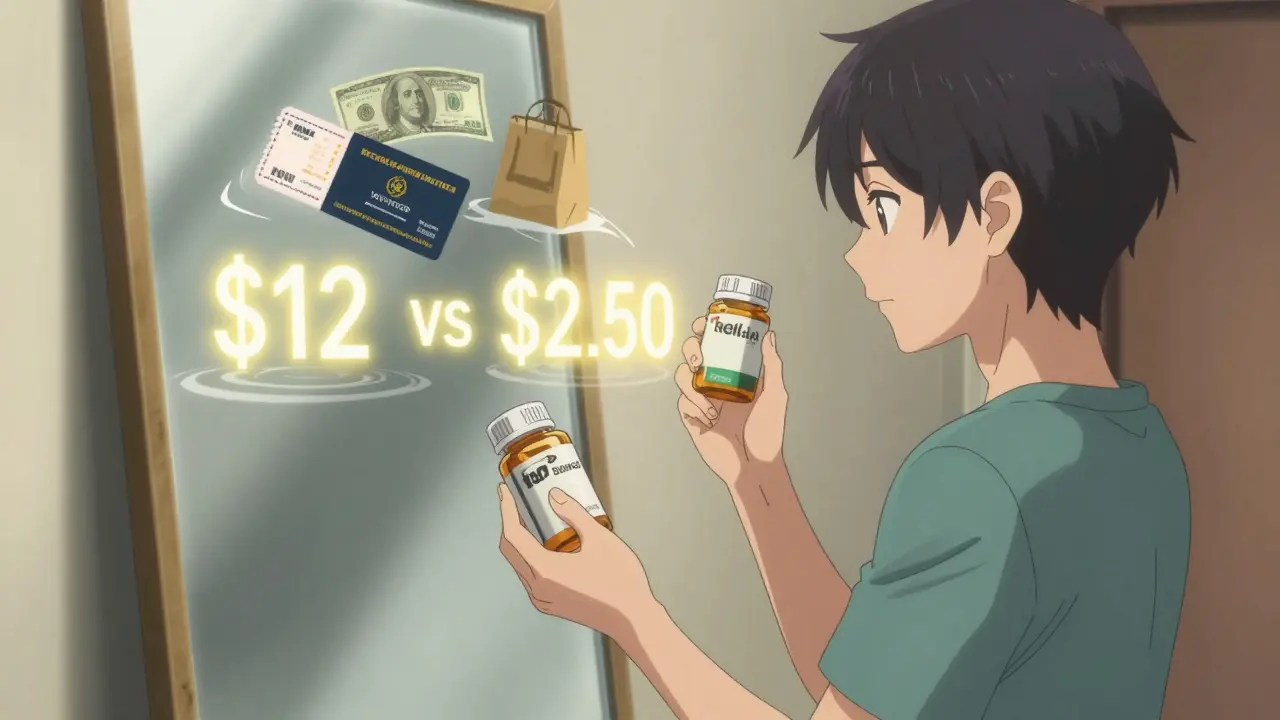
When to Stick With Name Brands
There are rare cases where a name brand might be worth the extra cost. If you’ve tried a store brand and your symptoms don’t improve - or you get side effects like dizziness, nausea, or skin irritation - switch back. It’s not because the medicine is weaker. It’s because your body might react to a specific filler or dye. Also, if you’re managing a chronic condition and your doctor has specifically recommended a brand, follow that advice. But for most people - the ones buying painkillers, antacids, or allergy pills - there’s no medical reason to pay more.Real People, Real Results
On Reddit’s r/pharmacy thread, over 200 people shared their experiences. Eighty-nine percent said they couldn’t tell any difference between store and name brands for common meds like ibuprofen and loratadine. One Walmart customer wrote: ‘I’ve used CVS brand ibuprofen for five years. Couldn’t tell any difference from Advil.’ Amazon reviews for store-brand OTC meds average 4.3 stars. Name brands? 4.4. The same percentage of people gave one-star reviews for both - and in both cases, the complaints were about ‘no effect,’ not side effects or poor quality. The real difference? The money in your wallet.Final Tip: Try It for One Month
Pick one OTC medicine you buy regularly - maybe your daily pain reliever or your seasonal allergy pill. Switch to the store brand. Keep the receipt. Track how you feel. At the end of the month, compare your savings to your experience. Chances are, you’ll save $20-$50 and notice zero difference in how the medicine works. And if you do notice something odd? Go back to the name brand. No harm done. The bottom line? You’re not sacrificing safety, effectiveness, or quality when you choose store brands. You’re just choosing to spend your money smarter.Are store brand OTC medications as safe as name brands?
Yes. Both store brand and name brand OTC medications must meet the same FDA safety and effectiveness standards. They’re tested the same way, made under the same quality controls, and inspected equally. The only differences are in inactive ingredients, packaging, and price.
Why do store brands cost so much less?
Store brands don’t spend money on advertising, celebrity endorsements, or fancy packaging. They also don’t need to recoup the cost of clinical trials - since they’re using already-proven active ingredients. That lets retailers pass the savings directly to customers.
Can I switch between different store brands?
Yes, as long as the active ingredient and strength are the same. But if you find one that works well for you - like a specific CVS or Walmart version - stick with it. Different retailers use different fillers, and your body might respond better to one formulation over another.
Do pharmacists recommend store brands?
Yes. A 2023 survey by Pharmacy Times found that 92% of pharmacists confidently recommend store brands to patients. Many pharmacists use them themselves for their own families.
What if I have an allergic reaction to a store brand?
If you develop a rash, stomach upset, or other reaction after switching, it’s likely due to an inactive ingredient - like a dye or preservative - not the active drug. Go back to the name brand or try a different store brand. Check the ingredient list carefully next time.
Are store brands good for kids and seniors?
Absolutely. Pediatricians and geriatric specialists routinely recommend store-brand acetaminophen, ibuprofen, and antihistamines. The active ingredients are identical, and dosing is the same. The lower cost makes it easier for families and fixed-income seniors to afford necessary medications.


