
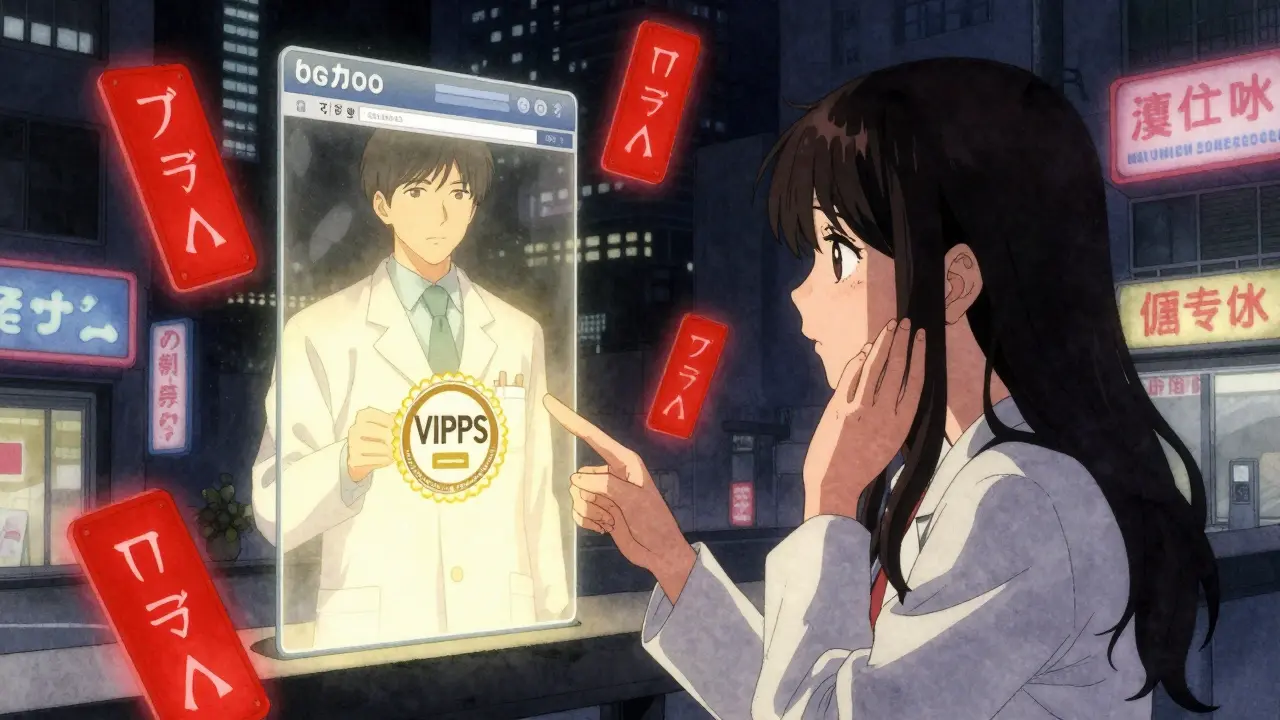
Every year, millions of people in the U.S. buy medications online. Some get the real thing. Others get pills with no active ingredient, wrong dosages, or dangerous contaminants. The difference between safety and risk? License. A licensed pharmacy isn’t just a website with a fancy logo-it’s a business held accountable by state law, inspected, and monitored to keep you safe.
You might think, "I’ve ordered from this site before and it worked." But counterfeit drugs don’t always look fake. They can have the same color, shape, and even packaging as the real thing. The FDA estimates that 1% to 3% of the $575 billion U.S. prescription drug market comes from unlicensed sources. That’s $5.75 billion to $17.25 billion in fake or unsafe meds. And it’s not just happening overseas. Some online pharmacies claim to be U.S.-based, but they’re not licensed anywhere.
What Makes a Pharmacy Licensed?
A licensed pharmacy doesn’t just have a business license. It must be approved by the state board of pharmacy where it operates. Each state has its own rules, but they all require the same core things: a licensed pharmacist in charge, a physical address you can visit or call, a secure system for handling prescriptions, and compliance with federal and state drug laws.
Pharmacists must pass the North American Pharmacist Licensure Examination (NAPLEX) with a score of at least 75 out of 150. Many states also require a separate exam on local pharmacy laws, like California’s CPJE. The license isn’t a one-time thing. It must be renewed annually, and pharmacies are subject to surprise inspections. If a pharmacy is caught selling without a license, it can be shut down immediately.
Legitimate pharmacies also follow strict rules about controlled substances. They track every opioid, stimulant, or sedative they dispense. If a pharmacy is dispensing large quantities of these drugs without proper documentation, regulators will catch it. According to the National Association of Boards of Pharmacy (NABP), unlicensed pharmacies are 8.2 times more likely to be involved in controlled substance diversion than licensed ones.
How to Verify a Pharmacy: 5 Steps You Can Do in 5 Minutes
You don’t need to be a pharmacist to check if a pharmacy is legit. Here’s what to do:
- Check for a valid prescription requirement. Legitimate pharmacies will never sell prescription drugs without a valid, up-to-date prescription from a licensed doctor. If a site lets you buy pills with a quick online "consultation" or no prescription at all, walk away.
- Find their physical address. Type the pharmacy’s address into Google Maps. Look for a real building, not a PO box or a warehouse with no signage. Legitimate pharmacies have a storefront or a professional facility you can visit. If the address leads to a residential home or an empty lot, it’s a red flag.
- Verify their license with your state board. Go to your state’s board of pharmacy website. In California, you can search by pharmacist name or license number at www.pharmacy.ca.gov. In Florida, it’s free and instant through the Department of Health portal. Most states have online verification tools. Look for the license status: "Active" is good. "Inactive," "suspended," or "expired" means don’t trust them.
- Look for NABP’s VIPPS seal. The Verified Internet Pharmacy Practice Sites (VIPPS) program, run by NABP, certifies online pharmacies that meet strict standards. You’ll see the VIPPS logo on their site. Click it. It should link directly to NABP’s verification page showing the pharmacy’s active status. If the logo doesn’t link anywhere or leads to a random page, it’s fake.
- Check if a pharmacist is available to answer questions. Legitimate pharmacies have a pharmacist on staff who can speak with you about your medication, side effects, or interactions. If the site only has a chatbot or automated email, that’s not enough.
A 2023 University of Florida study found that 92% of consumers could verify a pharmacy’s legitimacy in under five minutes using their state’s website. The hardest part? Knowing where to look. Many people miss this step because they assume the website is trustworthy just because it looks professional.
Why State Licenses Vary-and How It Confuses People
Here’s the problem: pharmacy licensing isn’t the same everywhere. In California, you pay $409 a year to renew a pharmacy license. In Texas, it’s $100. Some states require fingerprint background checks ($65.75 average), while others accept online checks ($35.25). This inconsistency makes it harder for consumers to know what to look for.
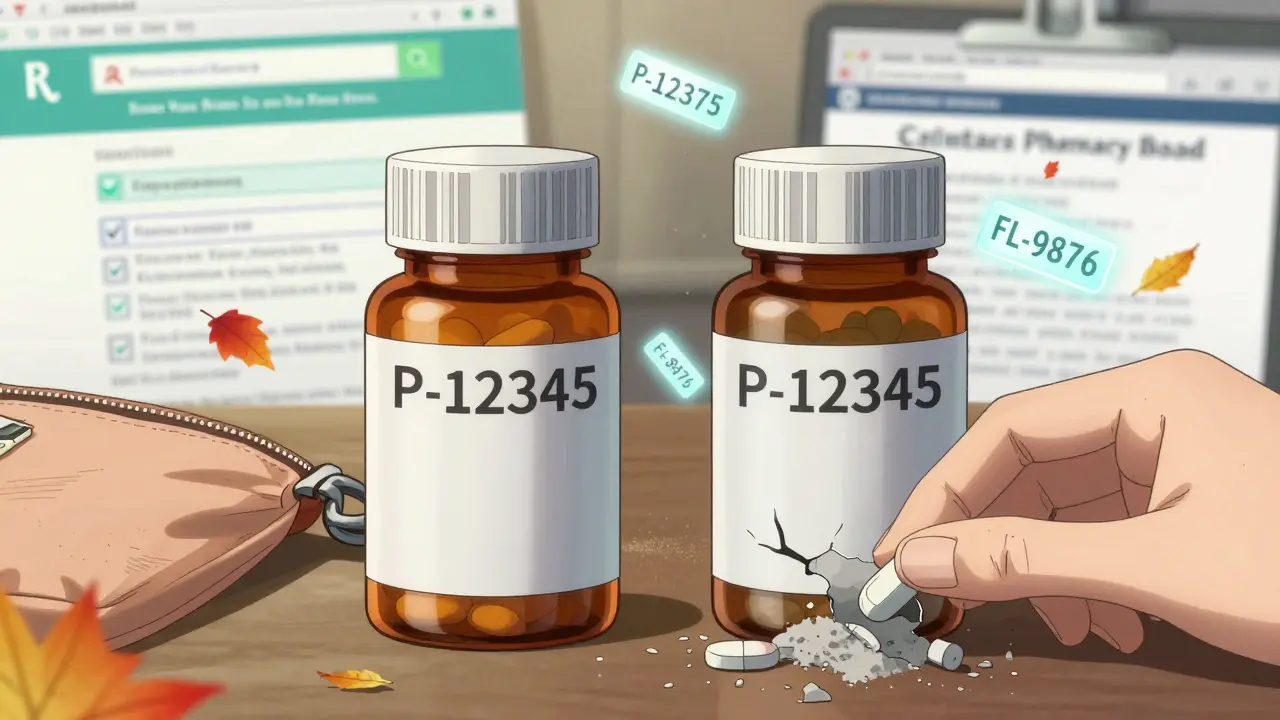
For example, California’s license number format starts with "P-" followed by numbers. But their verification portal says: "Enter the number only-do not use the prefix." If you type "P-12345," the system says "no results found." That’s not user-friendly. A Reddit thread from February 2024 had 147 comments, and 41% of people said they got stuck because of confusing license number formats.
Multi-state pharmacies face even more hurdles. If a pharmacy ships to five different states, it needs five separate licenses. That’s expensive and time-consuming. To fix this, the Verified Pharmacy Program (VPP) lets pharmacies apply once for multi-state operations. But it costs $1,850 to set up. Only 312 pharmacies have enrolled as of December 2023.
Meanwhile, NABP’s Verify program offers a centralized database that pulls data from 43 states in real time. For $125 a year, pharmacists can check license status across states. But if you’re just a consumer, you don’t need to pay. Your state’s board website is free.
The Rise of Fake Seals and Scam Websites
Scammers are getting smarter. They copy official logos, use HTTPS encryption, and even create fake customer reviews. One Better Business Bureau case from July 2023 involved a website that displayed a fake NABP accreditation seal. The consumer paid $850 for diabetes medication-only to find out the pills had no active ingredient.
The FDA’s Operation Safety Script crackdowns in 2023 found that 1 in 4 online pharmacies selling prescription drugs had no valid license. Many of them used fake seals, fake addresses, and fake pharmacist names.
How do you spot the fakes? Look at the details. Legitimate VIPPS seals are clickable and lead to NABP’s official verification page. Fake seals are images that don’t link anywhere. If the website doesn’t list a physical address, a phone number, or a licensed pharmacist’s name, it’s not real.
Also, be wary of pharmacies that offer "discounted" brand-name drugs without a prescription. If the price is too good to be true, it is. Real pharmacies follow strict pricing rules. They don’t sell $500 insulin for $50.
What Happens When You Use an Unlicensed Pharmacy?
Most people assume they’ll just get a cheaper pill. But the risks are serious:
- Wrong dosage. A 2022 NABP enforcement report found that unlicensed pharmacies dispensed pills with 50% too much or too little active ingredient.
- Contaminated drugs. Some fake pills contain fentanyl, rat poison, or industrial chemicals. The CDC linked over 1,200 overdose deaths in 2023 to counterfeit oxycodone pills sold online.
- No pharmacist oversight. If you have a reaction, you can’t call someone for help. Legitimate pharmacies have pharmacists on duty to answer questions.
- Identity theft. Some fake pharmacies collect your credit card and personal health data and sell it.
Real-world example: Maria Chen, a California resident, checked her pharmacy’s license in March 2024 and discovered the pharmacist-in-charge had resigned six months earlier. The pharmacy was still operating without a licensed pharmacist-a violation of California law. She switched pharmacies and avoided a potential medication error.
What’s Changing in 2024 and Beyond
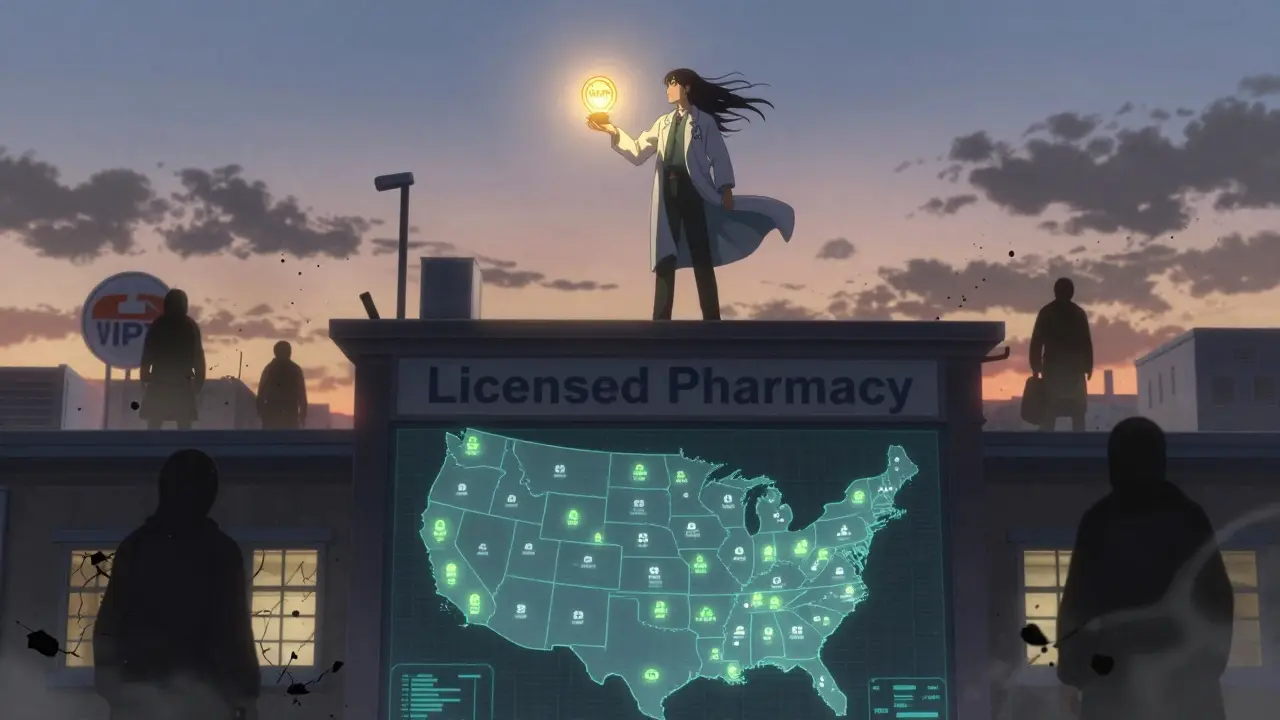
Regulators are catching up. In January 2024, California started requiring out-of-state pharmacies shipping to residents to provide an 800 number for direct pharmacist access. The FDA launched a $15 million initiative to detect fake online pharmacies and aims to cut consumer harm by 40% by 2026.
NABP’s InterConnect system now updates license statuses in real time across 43 states. That means if a license is suspended today, it shows up in the system within hours-not weeks.
But experts warn that digital pharmacies are evolving faster than regulations. Dr. Kevin T. Fuji from Pacific University College of Pharmacy says verification systems need to adapt twice as fast to keep up with new scams. By 2027, NABP predicts national licensure standards will cut verification complexity by 60%.
For now, the best defense is you. Know the signs. Check the license. Don’t trust logos. If you’re unsure, call your state board of pharmacy. They’re there to help.
How do I know if an online pharmacy is licensed in my state?
Go to your state’s board of pharmacy website-most have a "Verify a License" tool. Enter the pharmacy’s name or license number. Look for "Active" status. If you can’t find the site, search for your state name + "board of pharmacy." For example, "California Board of Pharmacy." All legitimate pharmacies must be licensed in the state where they operate, even if they ship nationally.
Is NABP Verify worth paying for as a consumer?
No. NABP Verify is a subscription service for pharmacists and pharmacies to monitor license status across states. Consumers don’t need to pay. You can verify a pharmacy for free using your state’s board website or by checking for the VIPPS seal on the pharmacy’s site. The VIPPS seal, when clicked, links to NABP’s official verification page, which is free to use.
Can I trust a pharmacy just because it has a .pharmacy domain?
A .pharmacy domain is a good sign-it means the pharmacy was verified by NABP before being allowed to use it. But it’s not foolproof. Scammers can still register .pharmacy domains if they meet basic requirements. Always double-check by clicking the VIPPS seal or verifying the license through your state board. The domain is one layer, but not the only one.
What should I do if I think I received counterfeit drugs?
Stop using the medication immediately. Contact your pharmacist or doctor. Report the pharmacy to the FDA through their MedWatch program at fda.gov/medwatch. Also file a report with your state board of pharmacy. Keep the packaging and pills as evidence. The FDA tracks these reports to identify and shut down illegal operations.
Do brick-and-mortar pharmacies ever operate without a license?
Rarely, but it happens. Most state boards conduct regular inspections. If a pharmacy is operating without a license, it’s usually because it failed to renew, was under investigation, or is a new business that hasn’t completed the process. If you’re unsure, ask to see their current license displayed in the pharmacy. By law, it must be visible to customers. If it’s not there, walk out and report it.
Next Steps: What to Do Today
If you’ve ever bought medication online, take five minutes now. Go to your state’s board of pharmacy website. Type in the name of the pharmacy you used. See if it’s active. If you can’t find it, call them. Ask if they’re licensed in your state.
If you’re a regular user of a mail-order pharmacy, check if they have the VIPPS seal. Click it. Does it take you to NABP’s official site? If not, stop using them.
Counterfeit drugs don’t always make you sick right away. Sometimes the harm shows up months later. But the fix is simple: verify before you buy. It takes less time than checking your email. And it could save your life.


