When you’re tearing down walls or packing up boxes for a move, your medications shouldn’t be an afterthought. A pill bottle left on a kitchen counter during a renovation, or tucked in the back of a moving truck, could end up in the wrong hands-or lose its effectiveness before you even use it. In Australia, over half of households have at least one prescription medication on hand. Many of these are powerful enough to cause harm if accessed by children, pets, or even adults who mistake them for something else. During home renovations or moves, the usual safety rules go out the window-unless you plan ahead.
Keep Medications in a Cool, Dry Place
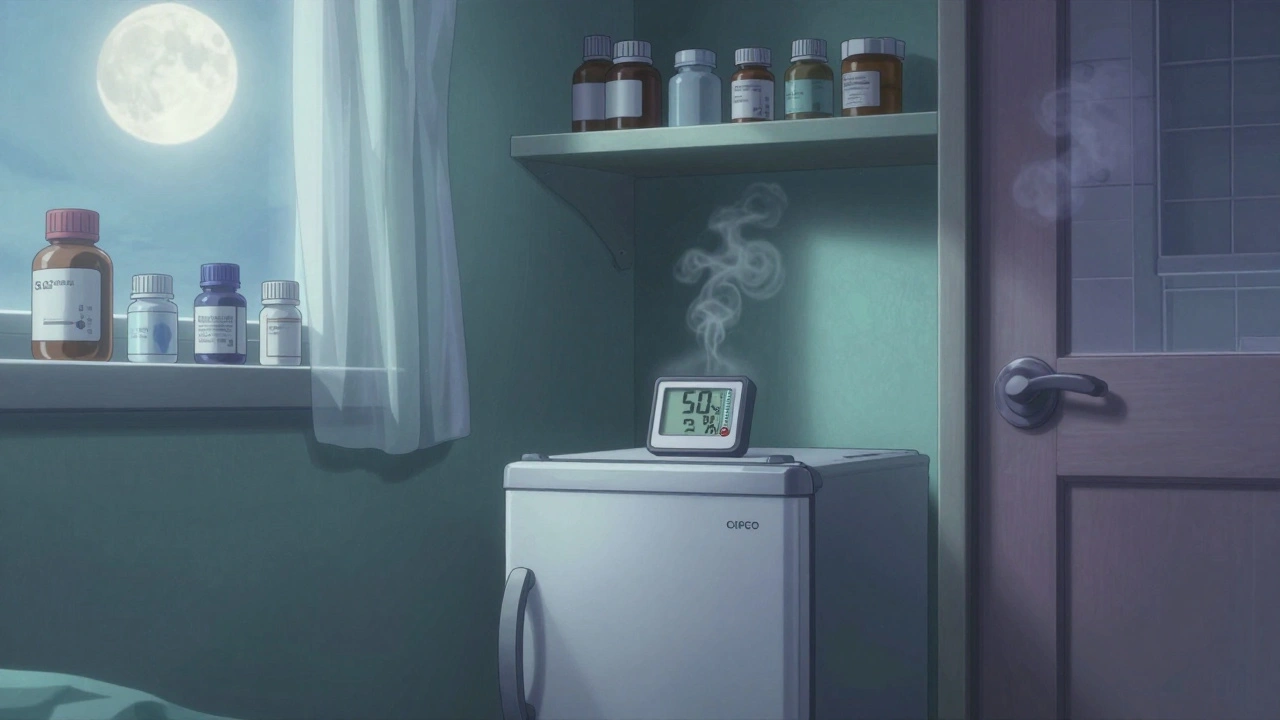
Medications don’t handle heat, humidity, or sunlight well. That bathroom cabinet you’ve been using? It’s one of the worst places for them. Steam from showers, moisture from sinks, and fluctuating temperatures can break down pills and liquids, making them less effective-or even dangerous. The same goes for storing them near a radiator, oven, or in a car during a move.Most medications need to stay between 15°C and 25°C. That’s room temperature, not hot attic or freezing garage territory. If you’re renovating your bedroom or kitchen where your meds usually live, find a new spot that’s cool, dry, and out of direct sunlight. A locked cupboard in a hallway, laundry room, or unused guest room works best. Avoid basements-they’re often damp-and don’t put them in a shed or garage, even temporarily.
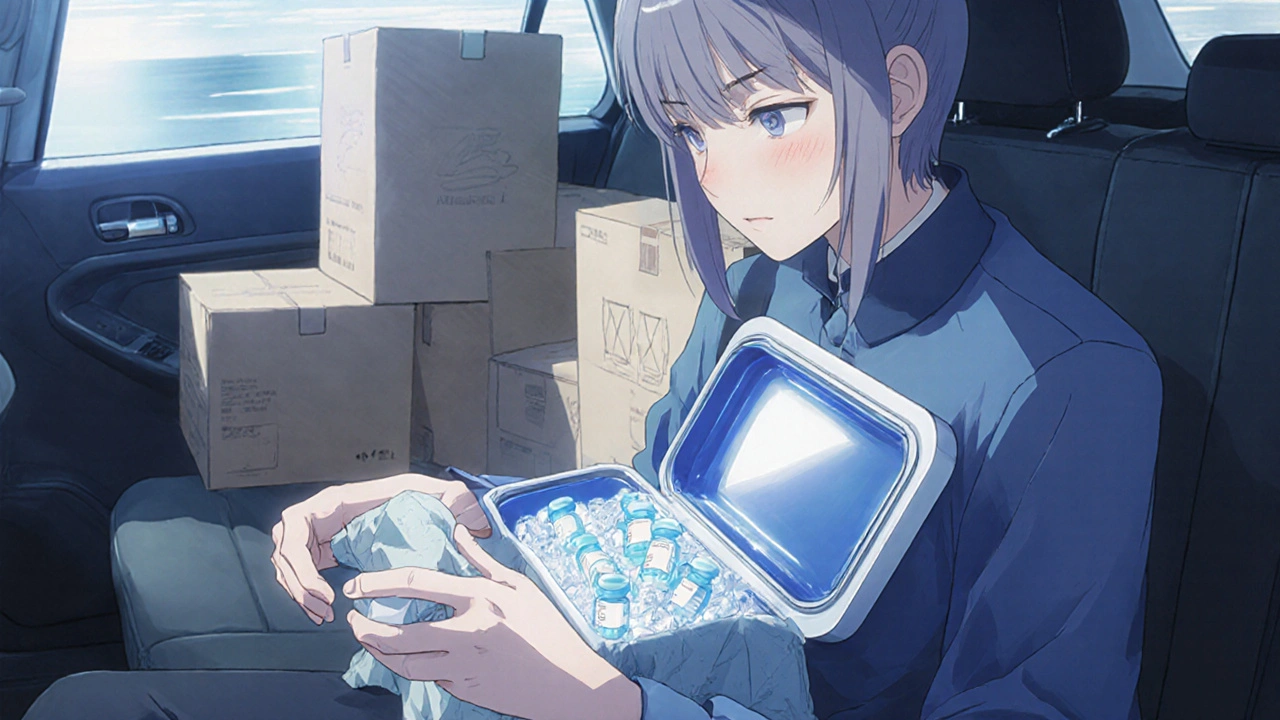
For refrigerated meds like insulin, penicillin, or certain biologics, you need 2°C to 8°C. During a move, use a small insulated cooler with ice packs. Don’t let them freeze-frozen insulin is ruined, and you won’t be able to tell by looking at it. If you’re moving across town, keep them with you in the passenger seat, not the trunk. If you’re moving interstate, consider calling your pharmacy ahead of time. Some offer temporary refrigerated storage or can ship your meds directly to your new place.
Lock Them Up-Even Temporarily
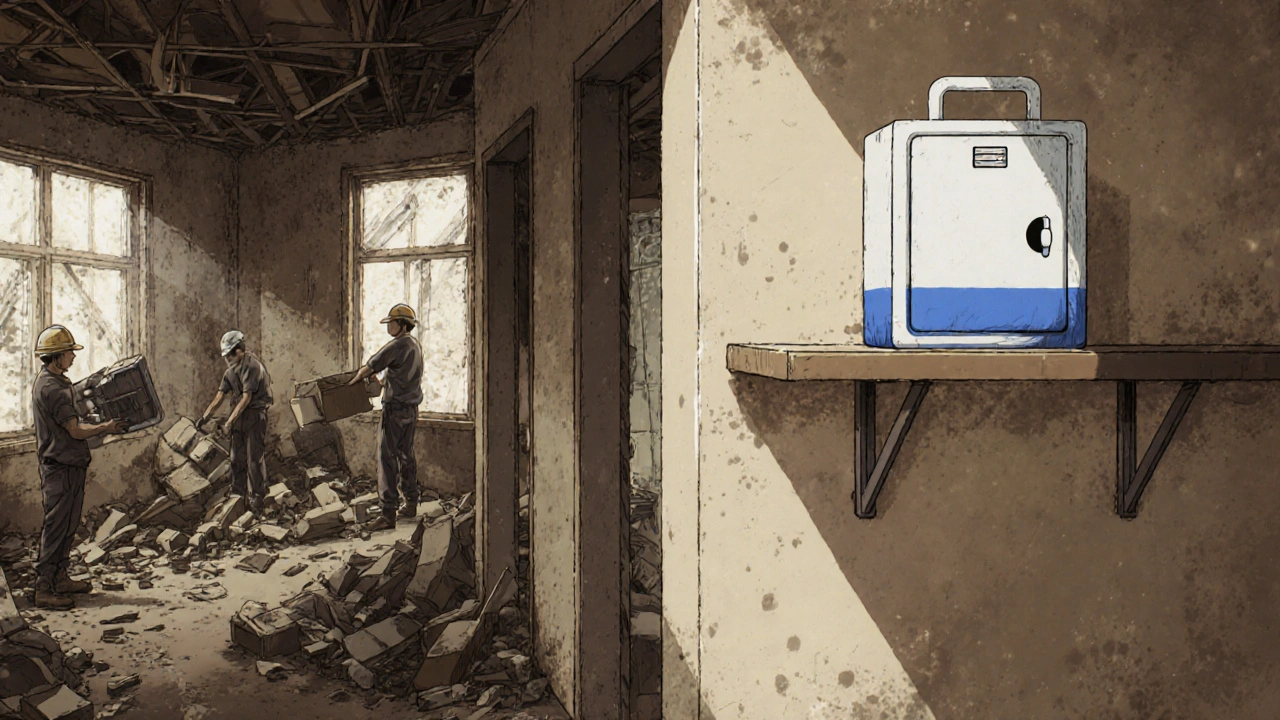
During renovations, your home becomes a construction zone. Workers, visitors, and even curious kids might stumble across unsecured meds. The same goes for moving day, when boxes are everywhere and nothing feels safe.Don’t rely on a drawer or shelf that’s “high enough.” Use a locked box. It doesn’t have to be expensive. A small gun safe, a locked fireproof box, or even a padlocked toolbox will do. If you don’t have one, buy a cheap medicine lockbox from a pharmacy or online retailer. These are designed to keep kids out and are often small enough to fit in a backpack or suitcase.
Keep your meds in their original bottles. That’s not just for safety-it’s the law. The label has your name, the drug name, dosage, and expiry date. If you toss pills into a random container, you risk giving the wrong medicine to someone-or taking the wrong one yourself. If you’re packing for a move, put each bottle in its own small plastic bag, then into the locked box. Label the box clearly: “Medications-Do Not Open.”
Sort and Clean Out Before You Move
Moving is the perfect time to clear out expired, unused, or unnecessary meds. Don’t just pack everything you’ve ever been prescribed. That old painkiller from last year’s back injury? The antibiotics you never finished? The sleep aid you stopped taking after two weeks? Get rid of them properly.The safest way? Use a medicine take-back program. In Australia, many pharmacies, hospitals, and local councils run drop-off bins for unwanted medications. You can find one near you through the Department of Health website. Just drop in your old pills, patches, or liquids-no questions asked.
If there’s no drop-off near you, dispose of them at home. Take the pills out of their bottles. Mix them with something unappetizing-used coffee grounds, cat litter, or dirt. Put the mixture in a sealed plastic bag, then toss it in the trash. Never flush meds down the toilet unless the label says to. Only a few strong opioids like fentanyl patches or certain painkillers should be flushed. The rest? Trash it the right way.
And if you’re unsure? Call your pharmacist. They’ll tell you what’s safe to throw out and what needs special handling.
Plan for Daily Medications During the Move
If you take meds every day-like blood pressure pills, thyroid medicine, or insulin-don’t pack them with the rest of your stuff. Keep them with you. In your purse, your coat pocket, or a small bag you carry into the new house before the movers arrive.Bring at least a week’s supply with you, even if you’re moving just down the street. Things go wrong on moving day. Boxes get lost. The new place isn’t ready. You might not have power for your fridge. You might need to stay in a hotel. Don’t risk running out.
Also, bring a list. Write down every medication you take: name, dose, time of day, and why. Include your doctor’s name and phone number. If you have an emergency, this list could save your life. Keep it in your wallet or phone notes.
What About Controlled Substances?
If you’re taking opioids, benzodiazepines, or other controlled drugs, extra caution is needed. These are high-risk for misuse, theft, or accidental overdose. Keep them locked at all times-even more strictly than other meds.Don’t let anyone else handle them. Not your partner, not your kids, not the cleaner. Even if you trust them, accidents happen. If you’re moving and need to transport these, carry them yourself. Never leave them in a moving van, even for an hour.
Some pharmacies offer special secure storage for controlled substances. Ask yours if they have a locked drop-off or delivery option. In some cases, your doctor might be able to issue a new prescription to your new pharmacy before you move, so you don’t have to carry the pills at all.
Check Expiry Dates After You Settle
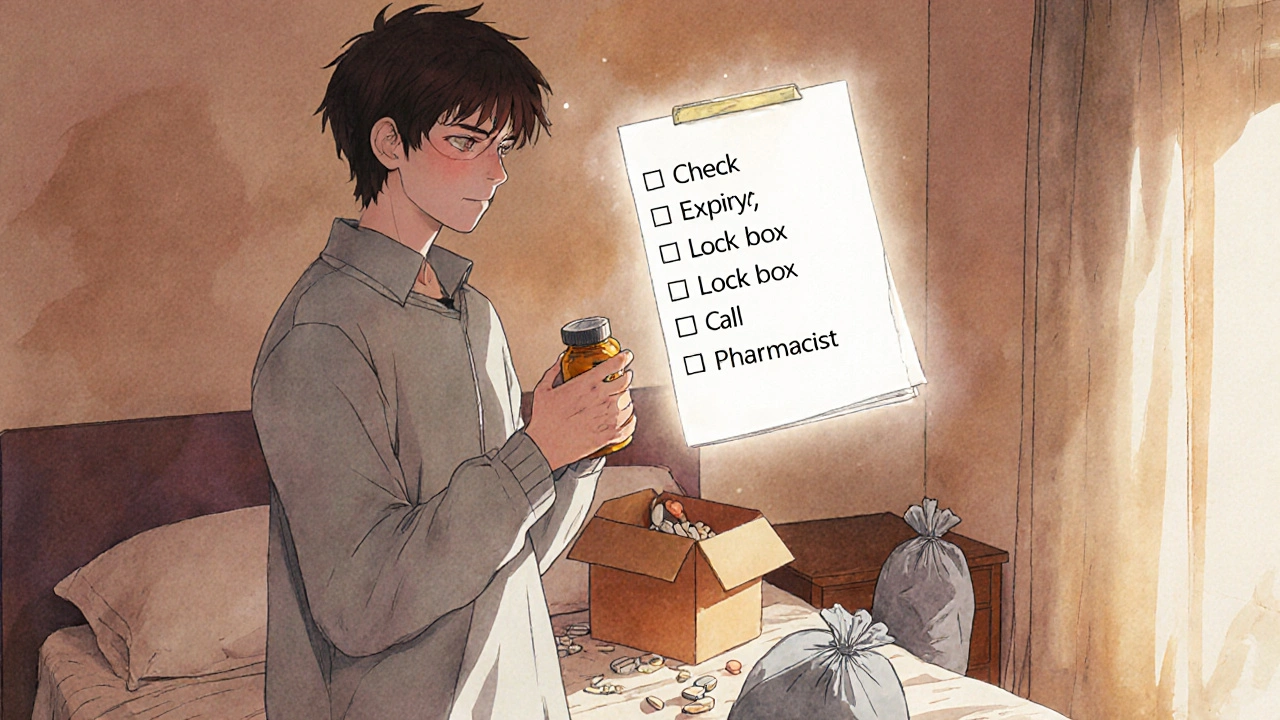
Once you’re in your new home, don’t just toss your meds back into the old cabinet. Recheck everything.Look at the expiry dates. Even if they’re not expired, if they’ve been stored in a hot car or damp garage during the move, they may have degraded. Pills that look cracked, discolored, or smell funny? Don’t take them. Liquids that have changed color or smell odd? Throw them out.
If you’re unsure, take a photo of the bottle and call your pharmacist. They can tell you if it’s still safe. Better safe than sorry.
What If You’re Renovating Your Whole House?
If you’re doing a full-home renovation and you’re living elsewhere, your meds need a home too. Rent a small storage locker with climate control. Look for one that keeps temperatures between 15°C and 25°C. Many storage companies offer these for medical supplies.Or, ask a trusted friend or family member to hold onto your meds in their locked cabinet. Give them a copy of your medication list and instructions. Make sure they know not to open the box unless it’s an emergency.
Never store meds in a rented storage unit without climate control. Heat and humidity will ruin them. And never leave them in a rental car or van for more than a few hours.
Final Checklist
- ✅ Sort through all meds-discard expired or unused ones properly
- ✅ Keep all meds in original bottles with labels
- ✅ Pack meds in a locked box, not a random drawer or box
- ✅ Keep daily meds with you during the move
- ✅ Use a cooler with ice packs for refrigerated meds
- ✅ Avoid bathrooms, kitchens, garages, and cars as storage
- ✅ Use a medicine take-back bin if available
- ✅ Recheck all meds after settling in
- ✅ Call your pharmacist if you’re unsure about anything
Medications are not just stuff. They’re your health. Treat them like it.
Can I store medications in the garage during a move?
No. Garages get too hot in summer and too cold in winter. Most medications degrade quickly in extreme temperatures. Even if the garage seems fine, humidity and sunlight can ruin pills and liquids. Always store meds indoors, in a climate-controlled space.
What if I don’t have a locked cabinet?
Buy a cheap medicine lockbox from a pharmacy or online. They’re small, portable, and designed for this exact purpose. If you can’t buy one, use a locked toolbox, a fireproof safe, or even a locked drawer in a bedroom that won’t be touched during the move.
Should I flush old medications down the toilet?
Only if the label says to. Most medications should never be flushed. Only a few strong opioids like fentanyl patches or certain painkillers require flushing to prevent misuse. For everything else, mix them with coffee grounds or cat litter, seal them in a bag, and throw them in the trash.
Can I move insulin in a regular cooler?
Yes-but make sure it’s not freezing. Use a small insulated cooler with ice packs, but don’t let the insulin touch the ice. Wrap it in a towel or put it in a plastic bag first. Keep it in the passenger seat, not the trunk. Never freeze insulin-it’s ruined if you do.
What should I do if I’m moving interstate?
Call your pharmacy ahead of time. Ask if they can transfer your prescriptions to a new pharmacy near your destination. Some pharmacies offer overnight shipping for meds. If you need refrigerated meds, ask if they can send them in a temperature-controlled package. Always bring at least a week’s supply with you.
Is it safe to pack medications with my clothes?
Only if they’re in their original bottles and packed in a locked container. Never put pills loose in a suitcase. Heat from the dryer, moisture from damp clothes, or pressure from heavy items can damage them. Always keep meds separate and secure.
How do I know if my medication has gone bad?
Look for changes: pills that are cracked, discolored, or smell odd. Liquids that are cloudy, have particles, or smell wrong. Patches that are sticky or dried out. If anything looks off, don’t take it. Call your pharmacist and send a photo. Better safe than sorry.
Can I leave my medications with a friend during renovations?
Yes-but only if they’re willing to keep them locked up and out of reach. Give them your medication list and instructions. Make sure they know not to open the box unless it’s an emergency. Never leave them with someone who doesn’t understand the risks.