
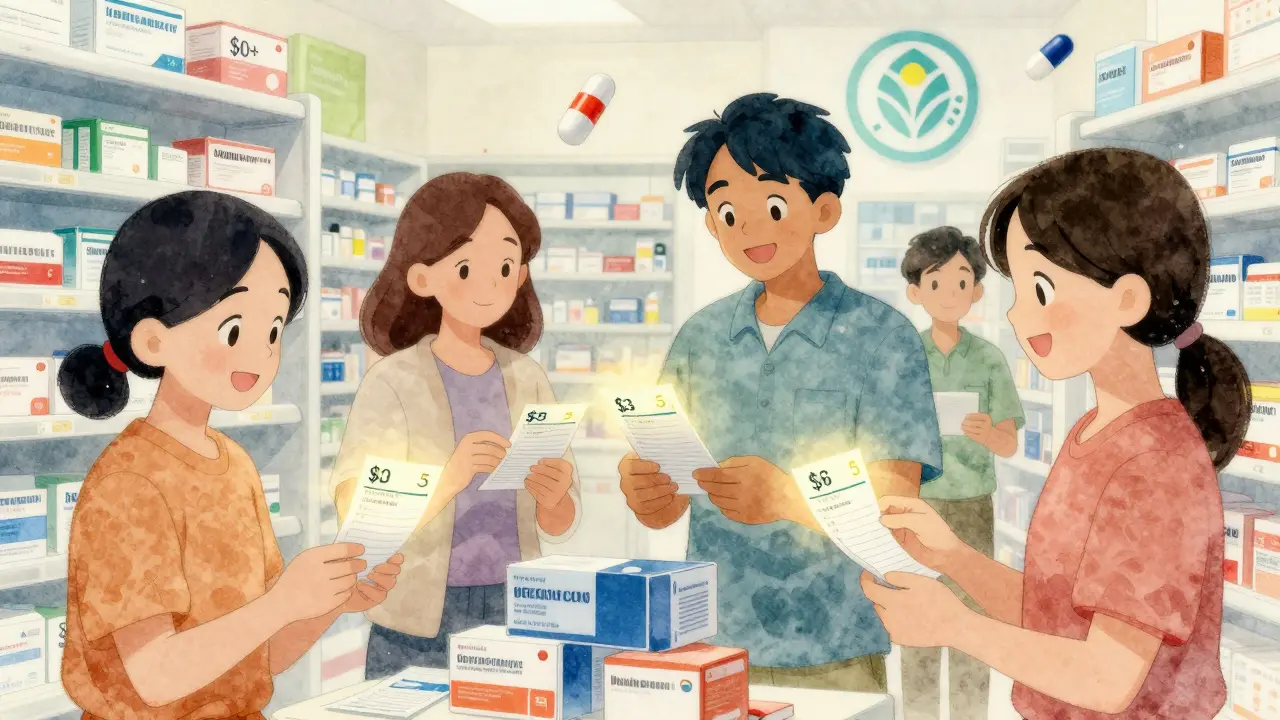
For millions of low-income Americans, the difference between taking a medicine and skipping it often comes down to one thing: cost. Medicaid, the U.S. health program for people with limited income, helps cover prescriptions - but not all drugs cost the same. The real hero behind affordable care? Generic drugs. These are the exact same medicines as brand-name drugs, just without the marketing, patents, or price tags. And they’re saving Medicaid patients thousands of dollars every year.
Generics Make Up 90% of Medicaid Prescriptions - But Only 18% of the Cost
In 2023, 90 to 91% of all prescriptions filled through Medicaid were for generic drugs. That’s not a coincidence. It’s by design. Generic drugs work the same way as brand-name ones. They have the same active ingredients, same dosage, same safety profile. But they cost far less because manufacturers don’t need to recoup billions spent on research and advertising.
Here’s the striking part: even though generics make up nearly all the prescriptions, they only account for 17.5-18.2% of total Medicaid spending on drugs. That means for every dollar spent on prescription drugs through Medicaid, less than 20 cents goes to generics. The rest? That’s mostly brand-name drugs, especially expensive specialty ones.
The math is simple. A generic drug might cost $5 at the pharmacy counter. The brand-name version? Often $50 or more. Medicaid beneficiaries pay an average copay of just $6.16 for generics. For brand-name drugs? $56.12. That’s nearly nine times more. For someone living paycheck to paycheck, that difference isn’t just money - it’s whether they get their asthma inhaler, diabetes pills, or blood pressure medicine.
The Medicaid Drug Rebate Program: How the System Keeps Prices Low
Medicaid doesn’t just rely on competition to keep prices down. It has a powerful tool: the Medicaid Drug Rebate Program (MDRP). Since 1990, drug companies have been required to give rebates to Medicaid in exchange for having their drugs covered. Think of it like a bulk discount - but one enforced by law.
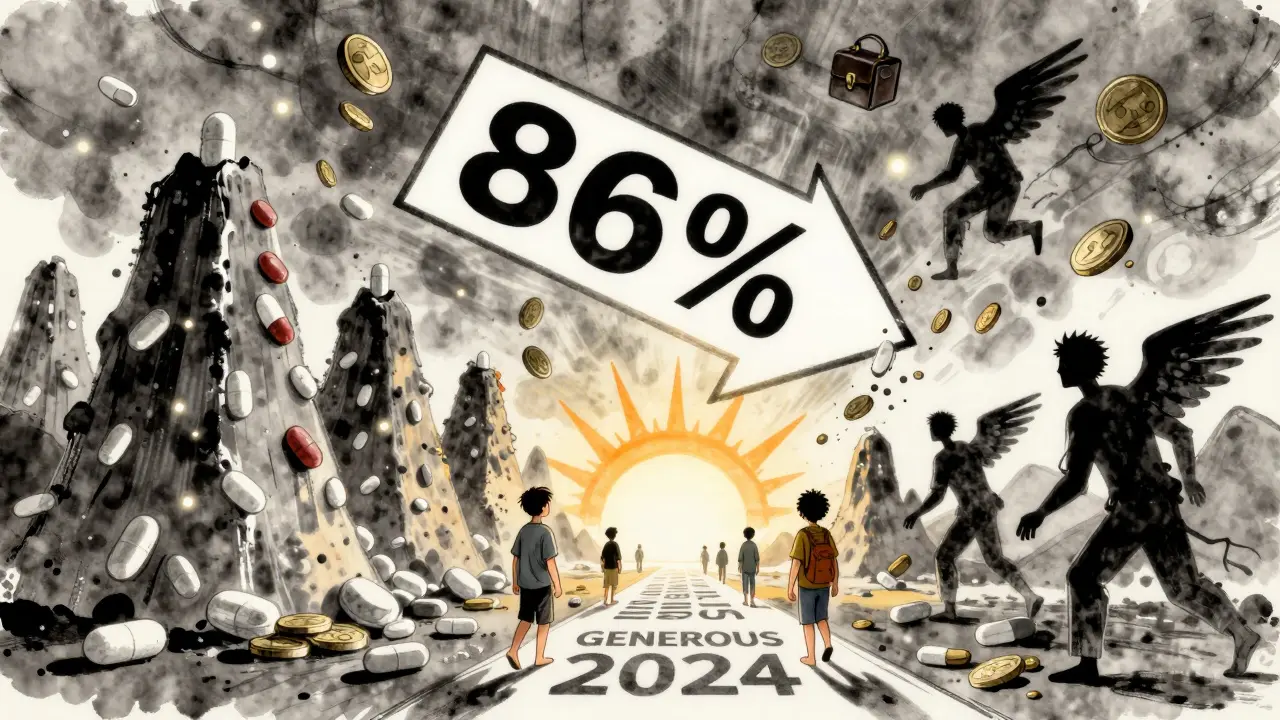
In 2023 alone, these rebates cut $53.7 billion off gross Medicaid drug spending. That’s more than half of what was originally billed. For generic drugs, the average rebate was 86% of the retail price. That means if a generic drug cost $10, Medicaid paid less than $1.40 after the rebate. No other federal program - not even the Department of Veterans Affairs - gets prices this low.
And it’s not just about the rebate. Medicaid also negotiates directly with manufacturers, and because it covers so many people, it has serious leverage. A 2021 Congressional Budget Office study found Medicaid got better prices than any other major government health program. That’s why, despite rising drug costs across the country, Medicaid patients still pay less than most.
Real People, Real Savings - And a Few Hurdles
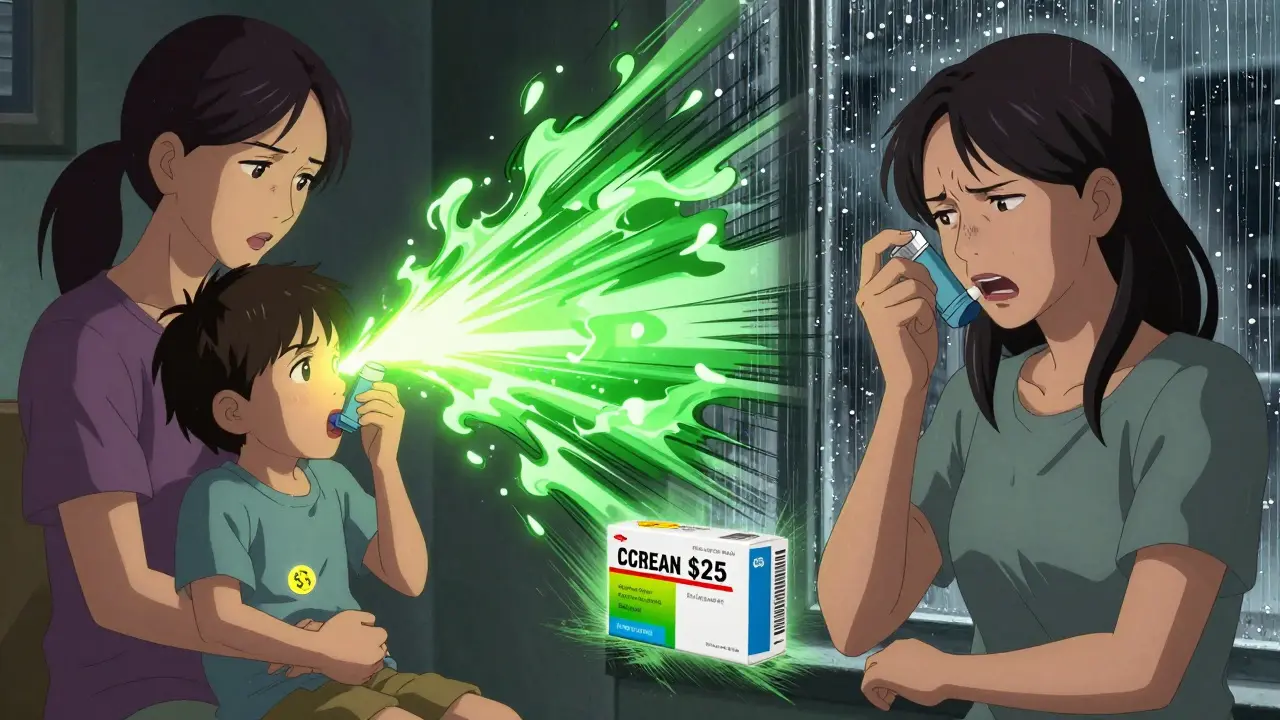
For many Medicaid enrollees, generics aren’t just a statistic - they’re life-changing. One mother in Ohio told her story on Reddit: her daughter’s asthma inhaler switched from brand to generic. Her copay dropped from $25 to $3. That’s not just savings - that’s peace of mind.
But it’s not always smooth. Some patients report long delays getting approval for certain generics. Prior authorization - a process where pharmacies must get permission before dispensing a drug - still affects 15-20% of prescriptions. One user wrote, “I waited three weeks for my generic insulin because the state system kept rejecting it.”
And while generics are cheap, the system isn’t perfect. Pharmacy Benefit Managers (PBMs), middlemen who handle drug payments between insurers and pharmacies, sometimes take huge cuts. An Ohio audit in 2025 found PBMs collected 31% of fees on $208 million in generic drug sales - money that could’ve gone back into lowering patient costs.
Still, the numbers don’t lie. In 2022, generics and biosimilars saved the U.S. healthcare system $408 billion. Since 2009, that total has hit $2.9 trillion. For Medicaid patients, that translates to thousands of dollars saved annually on medicines they need to survive.
Why Brand-Name Drugs Still Drive Up Costs
Here’s the catch: while generics dominate in volume, expensive drugs are dominating in spending. In 2021, drugs costing more than $1,000 per claim made up less than 2% of prescriptions - but over half of Medicaid’s total drug spending.
These are usually specialty drugs for rare conditions, cancer, or autoimmune diseases. Many are still under patent, so no generics exist. Others are “high-cost generics” - generics that, despite being off-patent, still cost hundreds of dollars because of supply shortages or lack of competition.
Medicaid’s net spending on drugs jumped from $30 billion in 2017 to $60 billion in 2024. That’s a 100% increase in just seven years. The problem isn’t the generics. It’s the rising cost of the few drugs that don’t have cheaper alternatives.
That’s why the Centers for Medicare & Medicaid Services (CMS) launched the GENEROUS Model in 2024. It’s a pilot program trying to fix how Medicaid handles high-cost drugs - by improving formularies, reducing unnecessary prescriptions, and pushing for more generic switches where possible.
How Patients Can Maximize Their Savings
If you’re on Medicaid, here’s what you need to know:
- Generics are automatically substituted unless your doctor says otherwise. You don’t have to ask - but you should confirm.
- Always check your state’s formulary. Some states cover more generics than others.
- Ask your pharmacist: “Is there a cheaper generic available?” Sometimes, even if a drug is generic, there’s another version with a lower copay tier.
- Know your copay tiers. Most states have 3-4 tiers: generic (lowest), brand-name (mid), specialty (highest). Stick to Tier 1 whenever possible.
- If you’re denied a drug, appeal. Medicaid requires states to cover medically necessary drugs - even if they’re not on the formulary.
Most states use managed care organizations (MCOs) to deliver pharmacy benefits. That means rules vary. In Texas, prior authorization might take 24 hours. In California, it could take a week. Know your state’s system.
What’s Next? Biosimilars and Beyond
The future looks promising. More biologic drugs - complex, expensive treatments for conditions like rheumatoid arthritis and cancer - are losing patent protection. That means biosimilars, which are like generics for biologics, are starting to enter the market.
By 2027, biosimilars could save the U.S. healthcare system $100 billion a year. Medicaid will be one of the biggest beneficiaries. Experts estimate that if Medicare’s new drug price negotiation rules were extended to Medicaid, it could save another $15-20 billion over ten years.
But the real win? Keeping generics affordable. As long as manufacturers keep producing them and Medicaid keeps enforcing rebates, low-income patients will keep getting the medicines they need - without going broke.
Do all Medicaid patients pay the same copay for generics?
No. While the national average is $6.16, copays vary by state and plan type. Some states charge $0 for generics, especially for children and pregnant women. Others may charge up to $10. Managed care plans often have different rules than fee-for-service Medicaid. Always check your state’s Medicaid handbook or call your local office.
Can I switch from a brand-name drug to a generic without asking my doctor?
In most cases, yes. Pharmacists are allowed to substitute generics unless the prescription says "Do Not Substitute" or the drug is on a state’s non-substitutable list. But if you’re unsure, ask your pharmacist. They’ll tell you if the generic is approved for your condition and if any changes are needed.
Why are some generic drugs still expensive?
Some generics cost more because there’s little competition - maybe only one or two manufacturers make them. Others are affected by supply chain issues, like raw material shortages or manufacturing shutdowns. In rare cases, companies raise prices after a competitor exits the market. If a generic you rely on suddenly costs more, ask your pharmacist about alternatives or file a complaint with your state’s Medicaid office.
Does Medicaid cover all generic drugs?
Medicaid must cover all medically necessary drugs, but each state creates its own formulary - a list of approved drugs. Most formularies include hundreds of generics, but not every one. Some drugs may require prior authorization or step therapy (trying a cheaper option first). If a drug you need isn’t covered, your doctor can request an exception.
Are there alternatives to Medicaid for cheaper generics?
Some discount programs like GoodRx or the Mark Cuban Cost Plus Drug Company offer lower prices for certain generics - but only if you’re uninsured or paying out-of-pocket. For Medicaid patients, these usually don’t save money because Medicaid already has the lowest negotiated prices. In fact, using a discount card while on Medicaid can sometimes void your coverage. Stick with your Medicaid pharmacy unless you’re certain the alternative is cheaper - and always check with your pharmacist first.


