Medication Swelling Assessment Tool
Step 1: Select the medication you're taking
Step 2: Choose when swelling began
Step 3: Check all relevant symptoms
Step 4: Click "Assess Risk" for guidance
Swelling in your hands or feet might seem like a minor annoyance-maybe you wore tight shoes, or you stood too long. But if it shows up after starting a new medication, it could be a sign something more serious is happening inside your body. This isn’t just about discomfort. It’s about your health. Medication-induced swelling is more common than most people realize, and knowing when to act can prevent complications that could have been avoided.
Why Your Hands or Feet Are Swelling
Not all swelling is the same. There are two main types you need to know about, and they come from very different kinds of drugs.The first kind is vasodilator-induced edema. This happens when certain medications make your blood vessels widen too much, especially in your legs. Fluid leaks out into the surrounding tissue, causing puffiness. This is most common with calcium channel blockers like amlodipine. If you’re on 10 mg of amlodipine daily, about 1 in 7 people will notice swelling in their ankles or feet. The swelling usually shows up after a few weeks, gets worse by the end of the day, and feels better after lying down overnight. It’s often pitting-press your finger on the swollen area, and it leaves a dent.
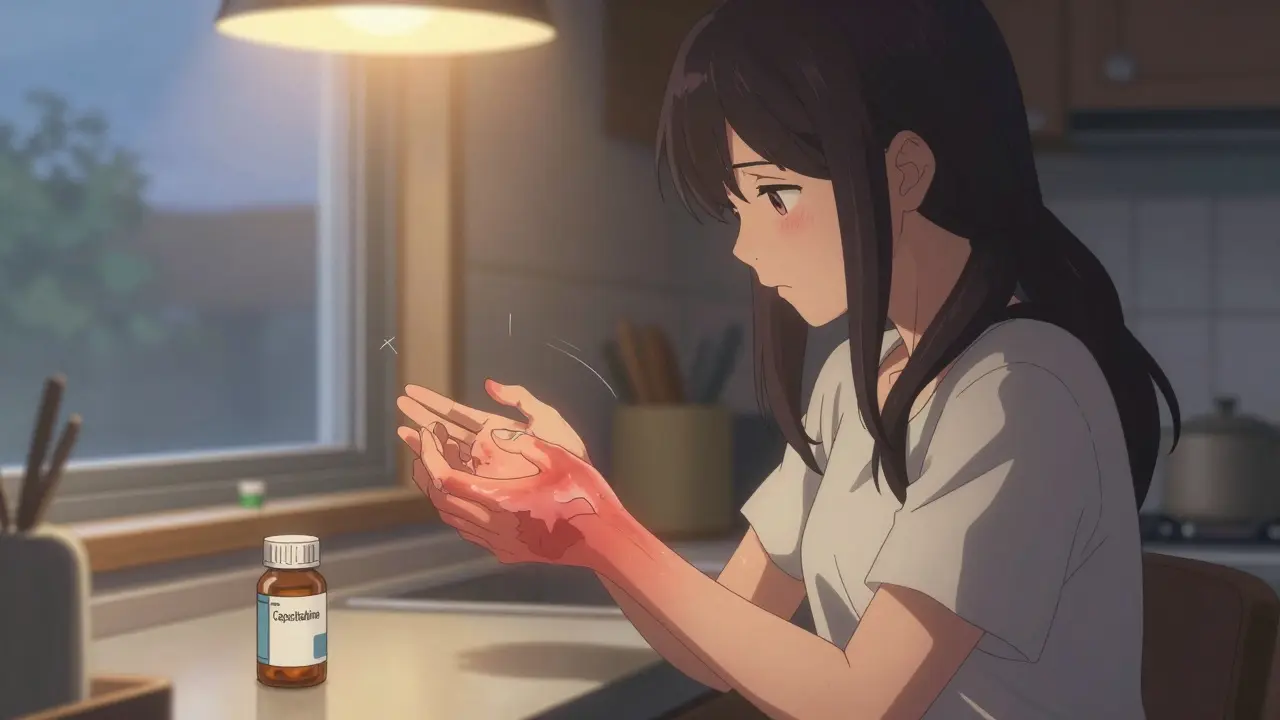
The second kind is hand-foot syndrome (also called palmar-plantar erythrodysesthesia). This one hits the palms of your hands and soles of your feet. It starts with redness, tingling, or numbness, then can turn into painful swelling, peeling skin, or even blisters. This is mostly linked to chemotherapy drugs like capecitabine. In fact, up to 60% of people taking it develop some level of hand-foot syndrome. Unlike the swelling from blood pressure meds, this isn’t just about fluid-it’s a reaction in the skin itself.
Other medications can also cause swelling. NSAIDs like ibuprofen or naproxen, steroids like prednisone, and even some diabetes drugs like pioglitazone can lead to fluid retention. These work by messing with your kidneys’ ability to flush out sodium. The result? Your body holds onto water, and it shows up in your feet, ankles, or even your hands.
When Swelling Is a Red Flag
Not every bit of puffiness means you need to rush to the doctor. But some signs are urgent. Here’s when you should call right away:- Swelling on just one side-like only your right ankle-is a warning sign for a blood clot. Deep vein thrombosis (DVT) can lead to a pulmonary embolism, which is life-threatening.
- Swelling with chest pain or shortness of breath-this could mean your heart is struggling to pump fluid properly. Heart failure can worsen quickly if ignored.
- Rapid weight gain-more than 2 pounds in 24 hours or 5 pounds in a week. That’s not just water weight. It’s your body holding onto dangerous amounts of fluid.
- Skin changes-ulcers, open sores, dark discoloration, or blisters on your hands or feet. These aren’t just irritation. They’re tissue damage.
- Swelling that starts within 72 hours of starting a new medication. Studies show there’s a 78% chance it’s directly caused by the drug.
For hand-foot syndrome specifically, if you can’t hold a toothbrush, turn a doorknob, or walk without pain, you’re likely at Grade 2 or higher. That’s not something to wait out. Oncology guidelines say you need to contact your cancer care team within 24 hours.
What Doctors Do When You Report Swelling
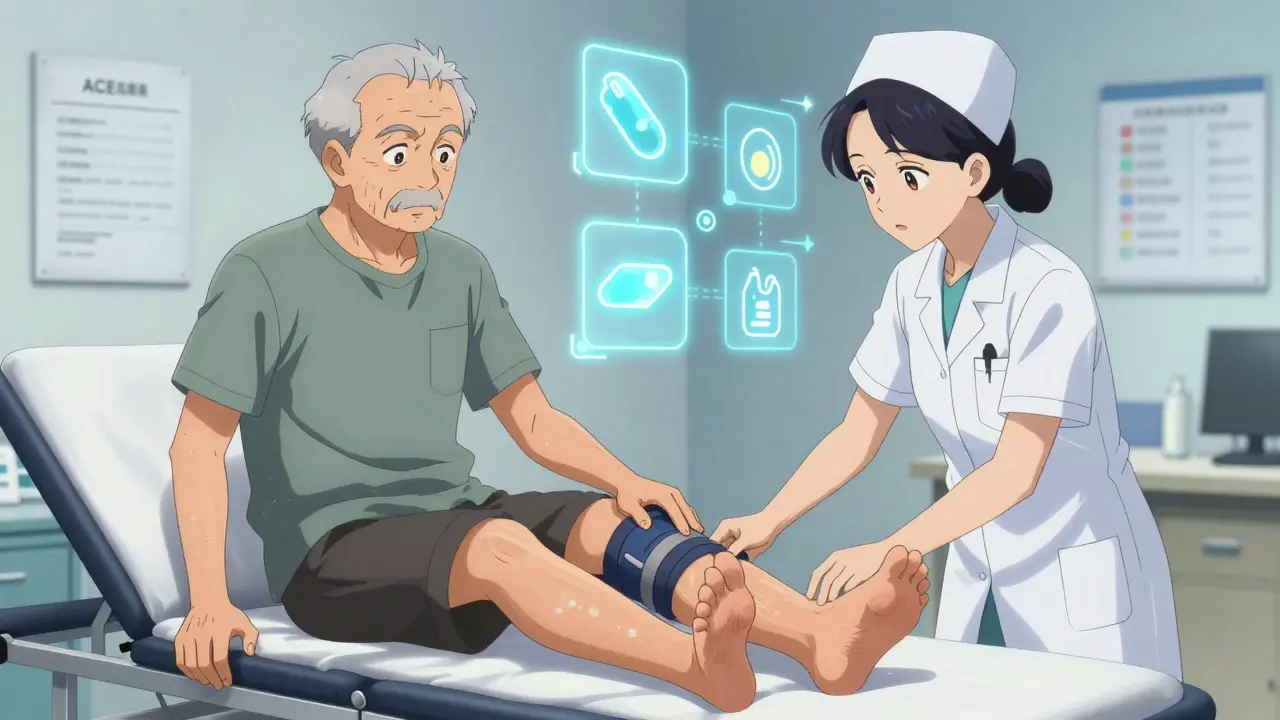
Your doctor won’t just tell you to “elevate your feet.” They’ll figure out what’s causing it and adjust your treatment accordingly.If it’s from a blood pressure medication like amlodipine, the most common fix is switching to another class of drug-like an ACE inhibitor or ARB. About 85% of people see their swelling disappear within two weeks after switching. Sometimes, adding a low-dose ACE inhibitor helps reduce the swelling without stopping the original drug. About 60-70% of patients improve that way.
For hand-foot syndrome from chemotherapy, the main approach is lowering the dose of the drug causing it. Sometimes, treatment is paused for a week or two to let your skin heal. Vitamin B6 (pyridoxine) is often suggested, but studies show it doesn’t reliably help. Topical creams like urea 10% are used by some cancer centers, but the evidence is mixed. One study showed a 32% drop in cases, while others found no benefit.
Non-drug strategies still matter. Elevating your legs above heart level for 30 minutes, three times a day, can reduce swelling by 15% in just two days. Wearing compression stockings (20-30 mmHg) helps too-studies show they cut swelling severity by 40%. Cutting salt to under 2,300 mg per day can reduce fluid retention by 20-25%. And don’t underestimate movement. Gentle walking or swimming improves circulation and helps your body drain excess fluid.
What Doesn’t Work (And Why)
There’s a lot of advice out there-some helpful, some misleading. Here’s what the science says about common fixes:- Vitamin B6 for hand-foot syndrome: It’s widely recommended, but a major review of eight studies found no real benefit. The effect was no better than a placebo.
- Arnica gel: One small study showed a 28% reduction in symptoms compared to placebo. But it’s not part of standard guidelines yet. More research is needed.
- Diuretics (“water pills”): These are often prescribed for swelling, but they don’t fix the root cause. If your kidneys are holding onto salt because of a medication, diuretics can make you dizzy or dehydrated without solving the problem.
- Waiting it out: About 55% of people delay calling their doctor because they think swelling is “normal.” But 18% of those cases led to preventable complications-like infections from broken skin or worsening heart failure.
Even when you do everything right, swelling doesn’t always go away. About 45% of people on calcium channel blockers still have swelling after trying all the recommended fixes. In those cases, the drug has to be stopped permanently.
Real People, Real Stories
Online patient forums tell the real story behind the numbers. On Drugs.com, 78% of people on amlodipine say they couldn’t wear their regular shoes anymore. Nearly two-thirds said the swelling kept them awake at night. On Reddit, users describe “sock marks that last all day” from pregabalin. One person wrote, “I couldn’t hold a toothbrush. My hands felt like they were on fire.”But there are also success stories. One user switched from amlodipine to losartan and saw their ankle swelling vanish in five days-without losing blood pressure control. That’s the goal: relief without sacrifice.

What You Can Do Today
If you’re on a medication and notice swelling:- Check when it started. Did it begin within the last week? That’s a strong clue it’s drug-related.
- Take a photo. Compare it to how your hands or feet looked before. Changes are easier to spot visually.
- Track your weight. Weigh yourself at the same time each day, in the same clothes. A sudden jump is a red flag.
- Don’t ignore tingling or numbness in your palms or soles. It’s not just “getting older.”
- Call your doctor before the swelling gets worse. Don’t wait for it to become painful.
Most importantly: don’t stop your medication on your own. That can be dangerous. Instead, talk to your doctor. They can adjust your dose, switch your drug, or add a treatment that helps-without risking your underlying condition.
Prevention Is Possible
You don’t have to wait for swelling to happen. Starting medications at lower doses can cut your risk significantly. For example, beginning amlodipine at 2.5 mg instead of 10 mg reduces swelling by 60%. For chemotherapy patients, applying urea cream twice daily to hands and feet can lower the chance of hand-foot syndrome by 25%.Education makes a huge difference. Patients who learn early warning signs are over three times more likely to seek help in time. Ask your pharmacist or doctor: “What side effects should I watch for?” Don’t assume they’ll tell you unless you ask.
Swelling from medication isn’t something you have to live with. It’s a signal. Listen to it. Act on it. And remember-your body knows when something’s wrong. You just need to trust it enough to speak up.
Can hand and foot swelling from medication go away on its own?
Yes, in many cases. If the swelling is caused by a medication like a calcium channel blocker or NSAID, it often improves once the drug is stopped, switched, or the dose is lowered. Studies show that 89% of cases resolve within four weeks of proper intervention. But it won’t go away if you keep taking the same drug. Waiting too long can lead to skin breakdown or chronic swelling.
Is swelling in my feet always from my blood pressure meds?
No. While calcium channel blockers are a top cause, other drugs like steroids, NSAIDs, and diabetes medications can also cause fluid retention. Even if you’re on blood pressure meds, another drug you’re taking might be the culprit. A doctor can help sort this out by reviewing your full medication list.
Should I stop taking my medication if my hands swell?
Never stop a prescribed medication without talking to your doctor first. Stopping suddenly can be dangerous-for example, stopping a blood pressure drug can cause a dangerous spike in blood pressure. Instead, contact your doctor. They can adjust your treatment safely, often without losing the benefits of the drug.
How long does it take for swelling to improve after switching meds?
Most people see improvement within one to two weeks after switching to a different medication. For example, switching from amlodipine to losartan leads to complete resolution in about 85% of cases within two weeks. Swelling from hand-foot syndrome may take longer, especially if it’s linked to chemotherapy, because healing skin takes time.
Can compression socks help with medication-induced swelling?
Yes. Graduated compression stockings (20-30 mmHg) have been shown to reduce swelling severity by about 40% in clinical trials. They work by helping blood and fluid move back toward your heart. They’re especially helpful for swelling caused by vasodilators like calcium channel blockers. Make sure they fit properly-too tight can cut off circulation.
Is hand-foot syndrome only from chemotherapy?
Most commonly, yes. Hand-foot syndrome is strongly linked to chemotherapy drugs like capecitabine, fluorouracil, and liposomal doxorubicin. But rare cases have been reported with other drugs, including some targeted therapies and even high-dose vitamin B6 supplements. If you’re not on chemo but have red, swollen, peeling palms or soles, tell your doctor-it’s still worth investigating.
Why do some people get swelling and others don’t?
It depends on genetics, kidney function, age, and other medications. Older adults and people with existing heart or kidney issues are more likely to develop swelling. Some people metabolize drugs differently, making them more sensitive to side effects. It’s not about being “weak”-it’s about biology.
Can diet affect medication swelling?
Yes. Eating too much salt makes fluid retention worse. Reducing sodium to under 2,300 mg per day can reduce swelling by 20-25%. Avoid processed foods, canned soups, and salty snacks. Drinking enough water helps your kidneys flush out excess sodium. Staying hydrated is key-even though it sounds counterintuitive.