
When a brand-name drug’s patent runs out, you’d think generics would flood the market right away. But that’s not how it works. In the U.S., a generic maker might wait years-even after the patent expires-because of legal tricks, data protections, and court battles. In Europe, the rules are different. In Japan, they’re stricter. And in some low-income countries, patients wait over a decade longer just to get affordable versions of life-saving medicines. This isn’t about patents alone. It’s about exclusivity periods-a patchwork of rules that control when generics can actually reach shelves.
Patents aren’t the whole story
Most people think a 20-year patent means 20 years of monopoly. But that’s not how pharmaceuticals work. Drug development takes 10 to 15 years just to get from lab to pharmacy. By the time a new drug hits the market, the patent might have only 6 to 10 years left. That’s why countries added extra layers of protection. In the U.S., the FDA grants something called Patent Term Extension (PTE). It can add up to 5 years to a patent, but only if the total protected time after approval doesn’t go beyond 14 years. So if a drug got approved in 2018 and had 8 years left on its patent, it could get 6 more years-but only up to 14 years post-approval. That means the real clock stops at 14, not 20. The EU does something similar with Supplementary Protection Certificates (SPCs). They can add up to 5 years, but the combined patent + SPC time can’t exceed 15 years from the drug’s first marketing authorization. That’s one year less than the U.S. limit. And both systems only apply to the first approval of a new active ingredient. If a company tweaks the dosage or delivery method later, they can’t get another extension.What’s data exclusivity-and why does it matter?
Even if a patent expires, generics still can’t copy the original drug’s clinical trial data. That’s called data exclusivity. It’s a separate barrier. In the U.S., a new chemical entity gets 5 years of data protection. During that time, the FDA can’t rely on the brand-name company’s studies to approve a generic. After 5 years, generics can submit their own data-but they still have to prove safety and effectiveness, which takes time and money. The EU uses a more complex system: 8+2+1. That means:- 8 years of data exclusivity (no generic can reference the original data)
- 2 years of market exclusivity (no generic can be sold, even if data is submitted)
- 1 extra year if the originator adds a new, significant medical benefit during the first 8 years
The U.S. wildcard: 180-day exclusivity and patent challenges
The U.S. has one unique feature: the 180-day exclusivity period for the first generic company that successfully challenges a patent. This is part of the Hatch-Waxman Act from 1984. It’s meant to reward the first challenger by giving them a head start on the market-no other generics can enter for six months. But here’s the catch: this system has been exploited. Some brand-name companies pay generic makers to delay their entry. These are called “pay-for-delay” deals. In 2013, the Supreme Court ruled in FTC v. Actavis that these deals could be illegal if they’re anti-competitive. But they still happen. In 2023, 78% of U.S. pharmacists reported seeing delayed generic availability because of these settlements. The process is also expensive. Generic companies must file a Paragraph IV certification-basically, a legal notice saying they believe the patent is invalid or won’t be infringed. That triggers a lawsuit. The average cost to run a patent challenge? $2 to $5 million per drug. That’s why only a few big players like Teva, Mylan, and Sandoz dominate the U.S. generics market. Smaller companies can’t afford the risk.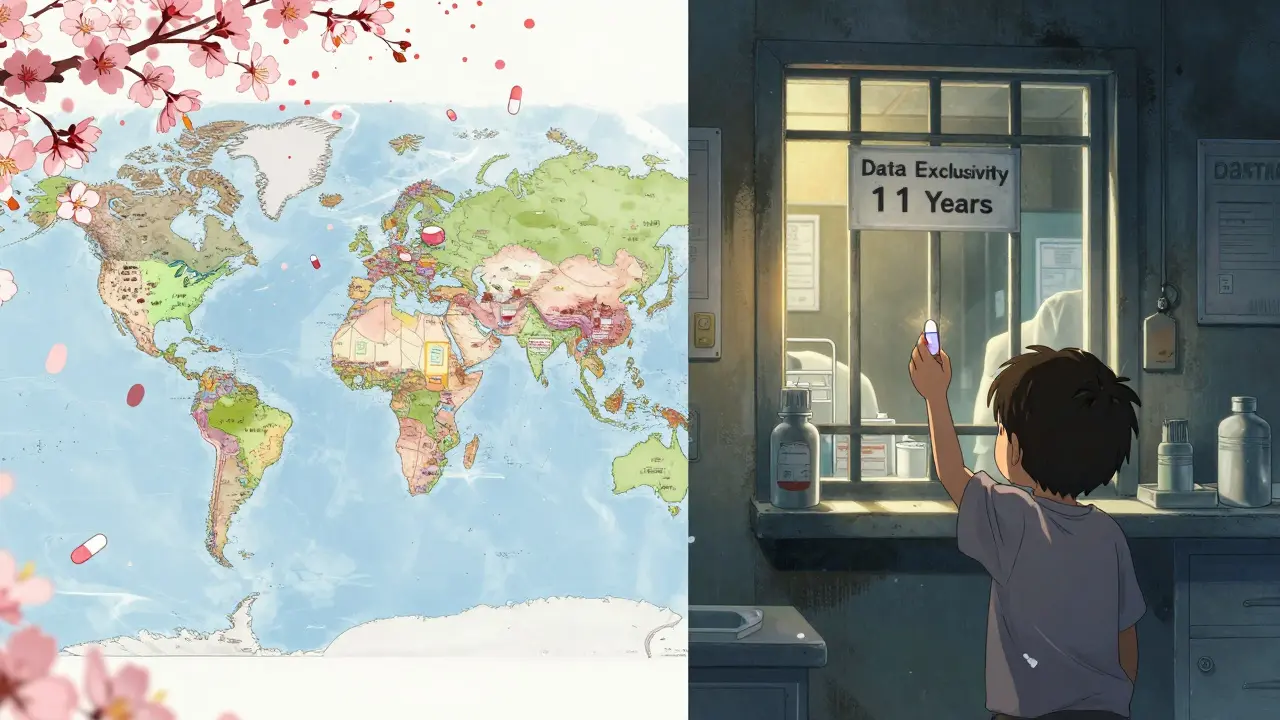
How originators stretch exclusivity
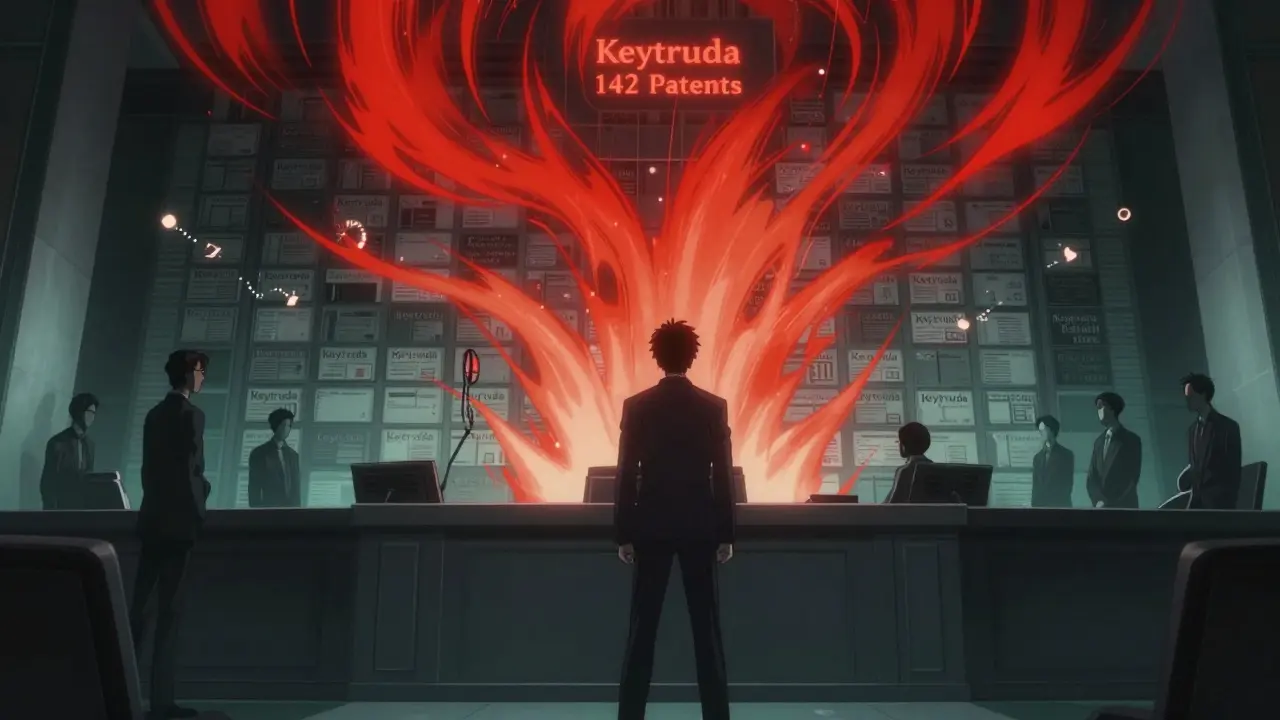
Brand-name companies don’t just rely on one patent. They build patent thickets. A single drug might have dozens of patents covering everything: the chemical structure, the pill coating, the manufacturing process, even the way it’s taken. According to LexisNexis PatentSight, the top 20 drugmakers hold an average of 137 patents per drug. Merck’s Keytruda, for example, had its effective market protection extended from 8.2 years to 12.7 years through strategic patent filings. That’s not just innovation-it’s legal engineering. And it works. In 2023, over 140 patents were listed in the FDA’s Orange Book for a single drug. That’s not a typo. One drug. 142 patents. These tactics delay generic entry even when the original patent expires. The FDA can’t approve a generic if it’s still blocked by any listed patent. So generics have to either challenge them all-or wait until the last one falls.Global disparities: Who gets generics first?
The difference between rich and poor countries is stark. In high-income nations, generic versions of a drug typically appear 12.7 years after approval. In low-income countries? It’s 19.3 years. Why? Because trade deals like CETA and others force developing nations to adopt data exclusivity rules they can’t afford. Health Action International documented that in South Africa, HIV medications were blocked from generic entry for up to 11 years after patents expired-all because of EU trade agreements that included data exclusivity clauses. That’s not just a delay. That’s lives lost. Meanwhile, countries like India and Brazil have used compulsory licensing to bypass patents for essential medicines. India, in particular, has become a global hub for affordable generics because it doesn’t grant product patents for drugs made before 2005. That’s why 80% of the world’s generic HIV drugs come from India.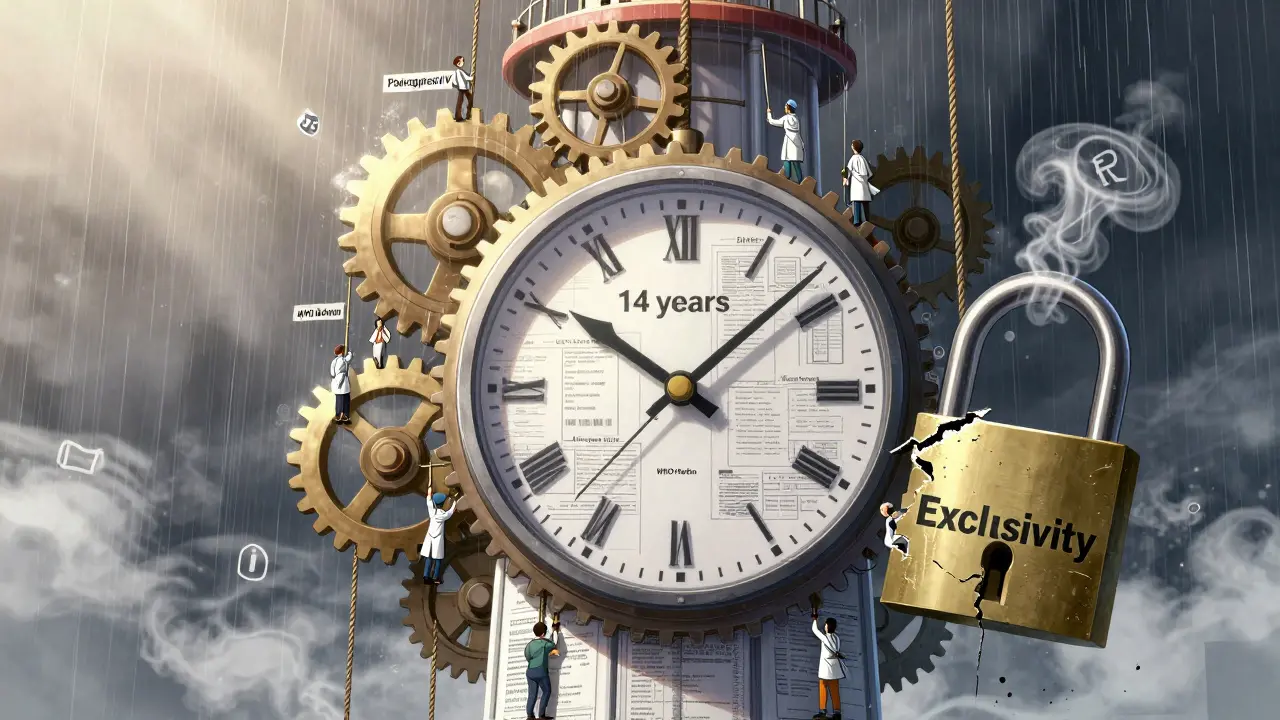
What’s changing in 2026?
The pressure is building. The U.S. is pushing the Preserve Access to Affordable Generics and Biosimilars Act to ban pay-for-delay deals. The EU is proposing to cut data exclusivity from 8 to 5 years for some drugs, while protecting true innovation. Japan plans to speed up its patent review system. And the WHO is calling for a global rebalancing-arguing that exclusivity periods should reflect actual R&D costs, not corporate profits. But the industry pushes back. PhRMA says without strong protections, innovation will die. They point to the $2.3 billion average cost to bring a drug to market-and the 14% failure rate in late-stage trials. Without exclusivity, they argue, no one will invest. Yet the numbers tell another story. In 2023, $356 billion in branded drug sales were set to expire by 2028. That’s a massive opportunity for generics. But if exclusivity keeps getting stretched, those savings never reach patients.What does this mean for you?
If you’re a patient, this affects your out-of-pocket costs. A brand-name drug can cost $10,000 a year. The generic? $300. That’s a 97% drop. But if the generic is blocked by a patent extension or data exclusivity, you pay the high price longer. If you’re a healthcare provider, you see the delays. You know the drugs that should be affordable aren’t. You watch patients skip doses because they can’t afford the brand. And if you’re in policy or business, you’re navigating a minefield. Generic companies need to know which patents to challenge, which countries to enter first, and how long to wait. Originators need to protect their revenue while avoiding lawsuits. Governments need to balance innovation with access. There’s no perfect system. But the current one is broken in places. Too many delays. Too many loopholes. Too many people paying too much for too long.How long do generic drug patents last?
Patents themselves last 20 years from the filing date, thanks to the TRIPS Agreement. But because drug development takes so long, most drugs have only 6-10 years of real market protection left when approved. Countries add extra protections-like Patent Term Extensions in the U.S. or SPCs in the EU-to give companies more time. These can extend protection to 14-15 years after approval, sometimes longer with other exclusivities.
What’s the difference between patent expiry and exclusivity expiry?
A patent expiry means the legal monopoly on the drug’s chemical structure ends. Exclusivity expiry is different-it’s when generic makers can finally use the original company’s clinical trial data to get approval. Even if the patent is gone, if data exclusivity is still active, the FDA or EMA can’t approve a generic. That’s why some drugs stay expensive long after patents expire.
Why do some countries have longer exclusivity than others?
It’s mostly about trade agreements and political pressure. Wealthy countries like the U.S. and EU members have strong pharmaceutical lobbies that push for longer exclusivity. Developing countries often get forced into these rules through trade deals, even when they can’t afford to pay for expensive drugs. India and Brazil have pushed back, using compulsory licensing and shorter data exclusivity to keep generics affordable.
Can a generic drug enter the market before the patent expires?
Yes-but only if the generic company challenges the patent legally. In the U.S., they file a Paragraph IV certification, claiming the patent is invalid or won’t be infringed. That triggers a lawsuit. If they win, they get 180 days of exclusive market access. In the EU, there’s no equivalent system, so generics usually wait until all patents expire.
Do patent extensions hurt access to medicine?
Yes, especially in low-income countries. When a drug’s exclusivity is extended by 5 or 10 years, it delays generic entry. That means patients pay higher prices longer. For chronic conditions like HIV, diabetes, or cancer, that delay can be deadly. Experts like Dr. Ellen ‘t Hoen say data exclusivity in trade deals is one of the biggest barriers to global medicine access today.
What’s the future of generic drug exclusivity?
Pressure is growing to shorten exclusivity periods, especially for non-innovative drugs. The EU is considering cutting data exclusivity from 8 to 5 years. The U.S. is trying to ban pay-for-delay deals. The WHO wants exclusivity tied to real R&D costs, not corporate profits. But big pharma is fighting hard. The outcome will shape whether millions can afford life-saving drugs-or keep paying high prices for years longer than necessary.


