
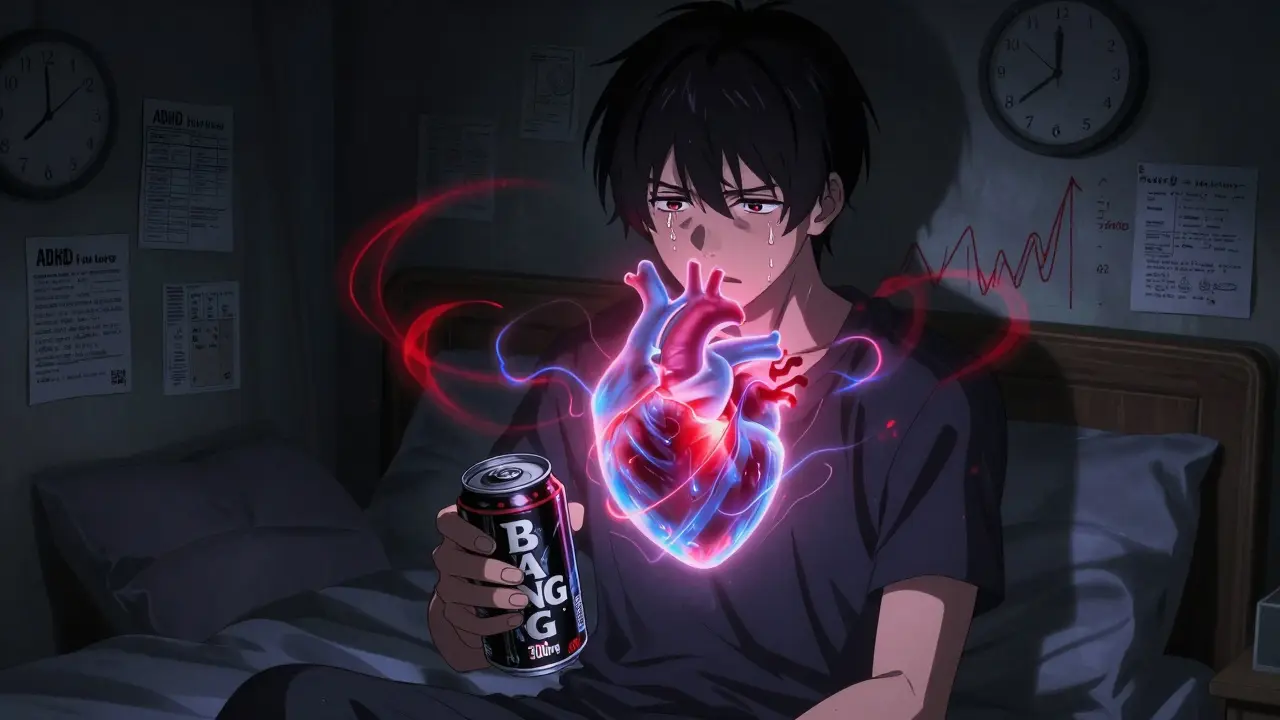
When you down an energy drink before a workout, or pop an Adderall to get through a long workday, you might think you’re just boosting focus and energy. But what if your heart is paying the price? Combining energy drinks with stimulant medications like Adderall or Ritalin doesn’t just double the buzz-it can push your blood pressure and heart rate into dangerous territory. And it’s not just rare cases. These risks are real, documented, and growing.
What’s Really in Energy Drinks?
Energy drinks aren’t just sugary coffee replacements. A single 16-ounce can of Monster Energy contains 160 mg of caffeine. Bang Energy? 300 mg. That’s more than three cups of coffee. But caffeine isn’t the only player. Most also include guarana-a plant seed that’s 3.6% to 5.8% caffeine by weight-so you’re getting even more than what’s listed on the label. Then there’s taurine, bitter orange (synephrine), and other stimulants that aren’t regulated like drugs.These ingredients don’t just add up-they multiply. A 2015 Mayo Clinic study found that a single 240 mg caffeine energy drink spiked adrenaline levels by 74.8% in healthy young adults. That means your heart is beating harder and faster, your blood vessels tighten, and your blood pressure climbs. For some, systolic pressure jumped by more than 15 points within 30 minutes.
Stimulant Medications: The Hidden Danger
If you’re taking prescription stimulants for ADHD-like Adderall (amphetamine salts) or Ritalin (methylphenidate)-you’re already on a cardiovascular tightrope. These medications are designed to increase alertness by stimulating the central nervous system. They raise heart rate by 3 to 13 beats per minute and systolic blood pressure by 2 to 7 mmHg, according to FDA labeling.Now add an energy drink on top of that. The effects aren’t just additive-they’re synergistic. Your body gets hit with caffeine from the drink, plus amphetamines or methylphenidate from the pill. Both trigger the same pathways: norepinephrine and dopamine surges. The result? Your heart is working overtime, and your blood pressure can spike unpredictably.
Doctors in San Antonio and Boston have reported young patients with no prior heart issues developing new-onset hypertension after daily energy drink use-especially when combined with ADHD meds. One case in a 2023 Harvard Heart Letter described a 19-year-old who suffered a heart attack after consuming three Monster Energy drinks in two hours, while also taking Adderall. The autopsy showed no structural heart problems-just extreme, uncontrolled stress on the cardiovascular system.
How Much Is Too Much?
The FDA says 400 mg of caffeine per day is safe for most healthy adults. But that’s not a target-it’s a ceiling. And it doesn’t account for stimulant medications. For teens, the American Academy of Pediatrics recommends no more than 100 mg per day. Yet, 30% to 50% of adolescents still consume energy drinks regularly, according to CDC data.Here’s the problem: many people don’t realize how quickly they cross the line. A 16-ounce energy drink (300 mg) + one Adderall XR (20 mg) = 500 mg of combined stimulant load. That’s over the FDA’s daily limit before you even have breakfast. And if you’re drinking another one at lunch? You’re flirting with overdose.
And it’s not just about quantity. Timing matters. Drinking an energy drink right after taking your stimulant pill means both hit your bloodstream at the same time. That’s when the biggest spikes happen. Studies show blood pressure surges peak within 30 to 60 minutes after consumption.
Real People, Real Consequences
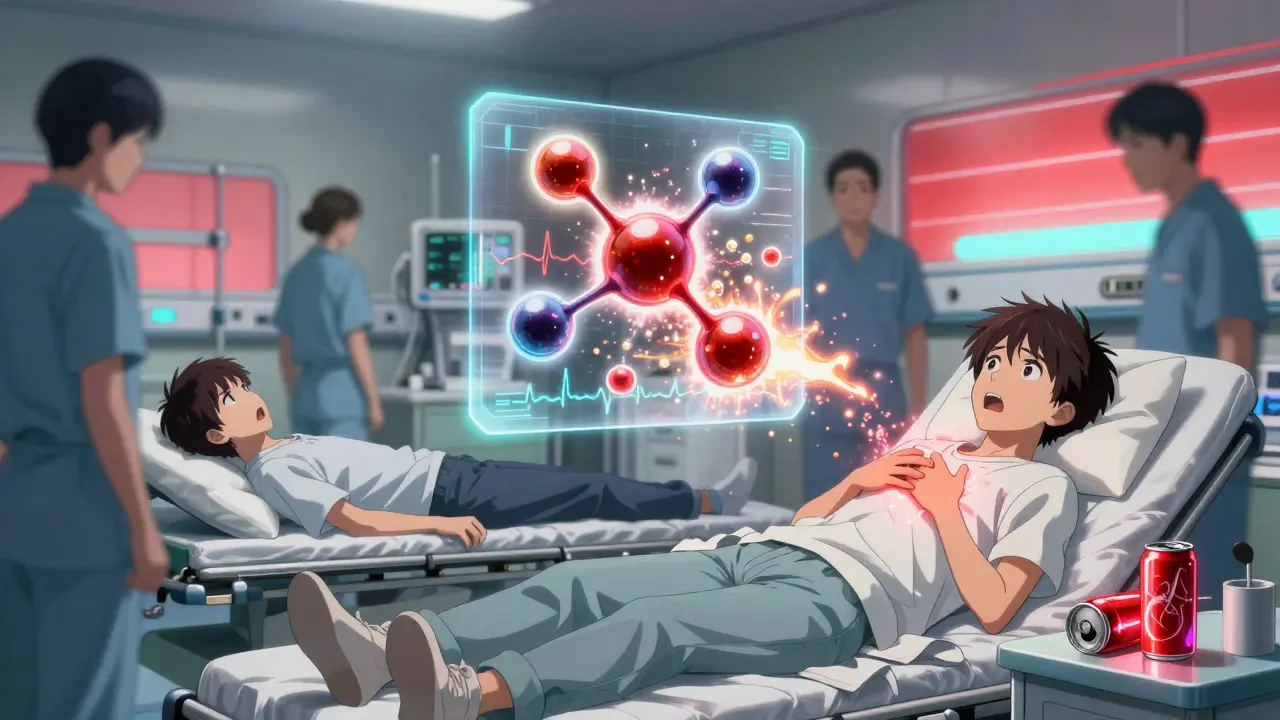
Reddit threads like r/Healthyhooha are full of stories. One user, u/BloodPressureWatcher, documented his BP jumping from 120/80 to 145/95 after one 300 mg energy drink. Another, u/HeartPalpitations, described heart palpitations lasting three hours after two Monster cans. These aren’t outliers-they’re common.Emergency rooms see it too. Between 2017 and 2023, caffeine-related ER visits for middle schoolers more than doubled. In 2022-2023, pediatric exposure cases to energy drinks rose 24.2%, according to America’s Poison Centers. Most of those cases were unintentional-kids grabbing drinks from the fridge, thinking they’re just soda.
And then there are the severe cases: coronary vasospasm, aortic dissection, cardiac arrest, QT prolongation. These aren’t theoretical. They’re in medical journals. A 2021 review in PMC found that arrhythmias made up 35% of all cardiac events linked to energy drinks. Many of those patients were young, otherwise healthy, and combining stimulants.
Who’s at Highest Risk?
You might think this only affects people with existing heart disease. But that’s not true. The biggest danger is for people who don’t know they have a problem. High blood pressure often has no symptoms. A 2024 UC Davis Health study found that regular energy drink use leads to endothelial dysfunction-damage to the lining of blood vessels-which is an early sign of heart disease.Older adults are more vulnerable. Their arteries are stiffer. Their hearts don’t recover as quickly. Dr. Pieter Cohen from Harvard Medical School says stimulants “may be more worrisome in older people, who are more vulnerable to heart problems.”
People with anxiety disorders, thyroid issues, or undiagnosed arrhythmias are also at higher risk. And if you’re exercising while drinking energy drinks? That’s a recipe for disaster. Your heart is already working hard from physical exertion-then you pour fuel on the fire.
What Should You Do?
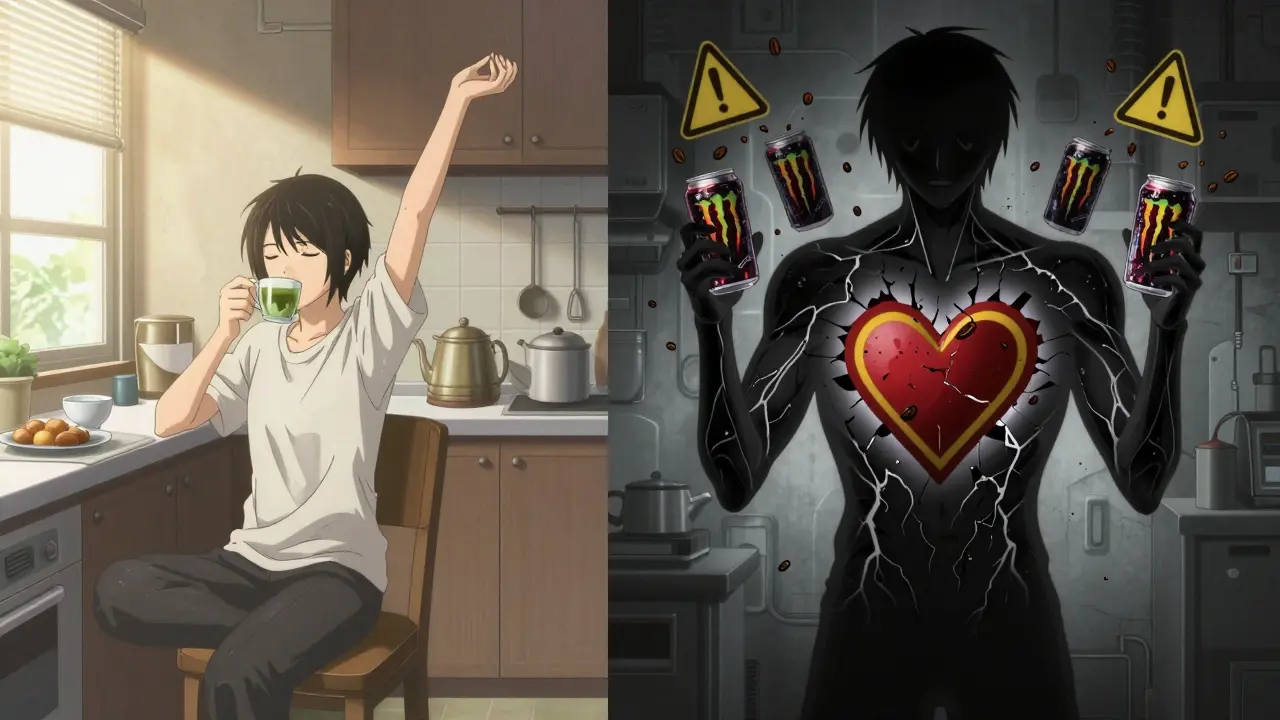
If you’re taking stimulant medication and drinking energy drinks, stop. Seriously. The risks aren’t worth it. You don’t need the extra boost. Your medication already gives you focus. The energy drink just adds danger.If you’re a regular energy drink consumer and want to cut back, don’t quit cold turkey. Withdrawal can cause headaches, fatigue, and irritability for up to nine days. Instead, reduce slowly. Swap one drink a week for water or unsweetened tea. Track your symptoms. Notice if your heart races less, if your sleep improves, if your blood pressure drops.
And if you’re on stimulant meds, talk to your doctor. Ask: “Is my current dose safe if I occasionally have caffeine?” Some doctors may adjust your prescription if you’re reducing caffeine. Others might recommend switching to non-stimulant ADHD treatments like atomoxetine or behavioral therapy.
Warning Signs You Can’t Ignore
If you experience any of these after consuming energy drinks or stimulants, seek help immediately:- Chest pain or pressure
- Heart palpitations lasting more than a few minutes
- Severe headache or dizziness
- Difficulty breathing
- Vision changes or sudden confusion
These aren’t “just anxiety.” They’re signs your heart is under extreme stress. Emergency rooms see these symptoms daily. Don’t wait until it’s too late.
The Bigger Picture
Energy drink sales hit $77.6 billion globally in 2023. The industry markets these as performance enhancers-for students, athletes, shift workers. But behind the sleek cans and bold claims, the science tells a different story. The American Heart Association now recommends complete avoidance of energy drinks for anyone with known cardiovascular disease.Regulators are catching up. Canada requires warning labels on drinks with over 180 mg of caffeine. The FDA has issued warning letters to manufacturers for inaccurate labeling-some drinks contain up to 20% more caffeine than stated. Lawsuits are piling up. In 2022, a California court case involved a 19-year-old who had a heart attack after three Monster Energy drinks in two hours.
The truth? Energy drinks aren’t harmless fun. When mixed with stimulant medications, they create a perfect storm for heart trouble. No amount of marketing can change that.
Can energy drinks cause a heart attack?
Yes, especially when combined with stimulant medications or consumed in large amounts. There are documented cases of young, otherwise healthy people suffering heart attacks after drinking multiple energy drinks. The combination of high caffeine, other stimulants like synephrine, and added stress on the heart can trigger arrhythmias, coronary spasms, or even acute myocardial infarction-even in people with no prior heart history.
Is it safe to drink energy drinks while taking Adderall or Ritalin?
No, it’s not safe. Both energy drinks and stimulant medications increase heart rate and blood pressure by stimulating the same nervous system pathways. Combining them can cause dangerous spikes in blood pressure, rapid heart rhythms, or even cardiac arrest. Medical experts, including the American Heart Association, strongly advise against mixing these substances.
How much caffeine is too much if I’m on stimulant medication?
There’s no safe threshold when combining stimulant meds with caffeine. The FDA’s 400 mg daily limit for healthy adults doesn’t apply if you’re taking Adderall or Ritalin. Even 100 mg of caffeine-about one small energy drink-can push your heart rate and blood pressure into risky territory. Many doctors recommend avoiding all caffeine if you’re on daily stimulant therapy.
Do sugar-free energy drinks have less risk?
Not really. Sugar-free energy drinks still contain the same high levels of caffeine and stimulants like guarana, taurine, and synephrine. The absence of sugar doesn’t reduce the cardiovascular strain. In fact, some people drink more of these because they think they’re “healthier,” increasing their total stimulant intake without realizing it.
What are safer alternatives to energy drinks for focus?
If you need focus, stick to your prescribed medication and support it with healthy habits: get enough sleep, stay hydrated, eat balanced meals, and take short breaks. For a mild boost, try black coffee (100-150 mg caffeine max), green tea, or a short walk. Avoid relying on energy drinks entirely-they’re not a sustainable solution and carry serious health risks.


