
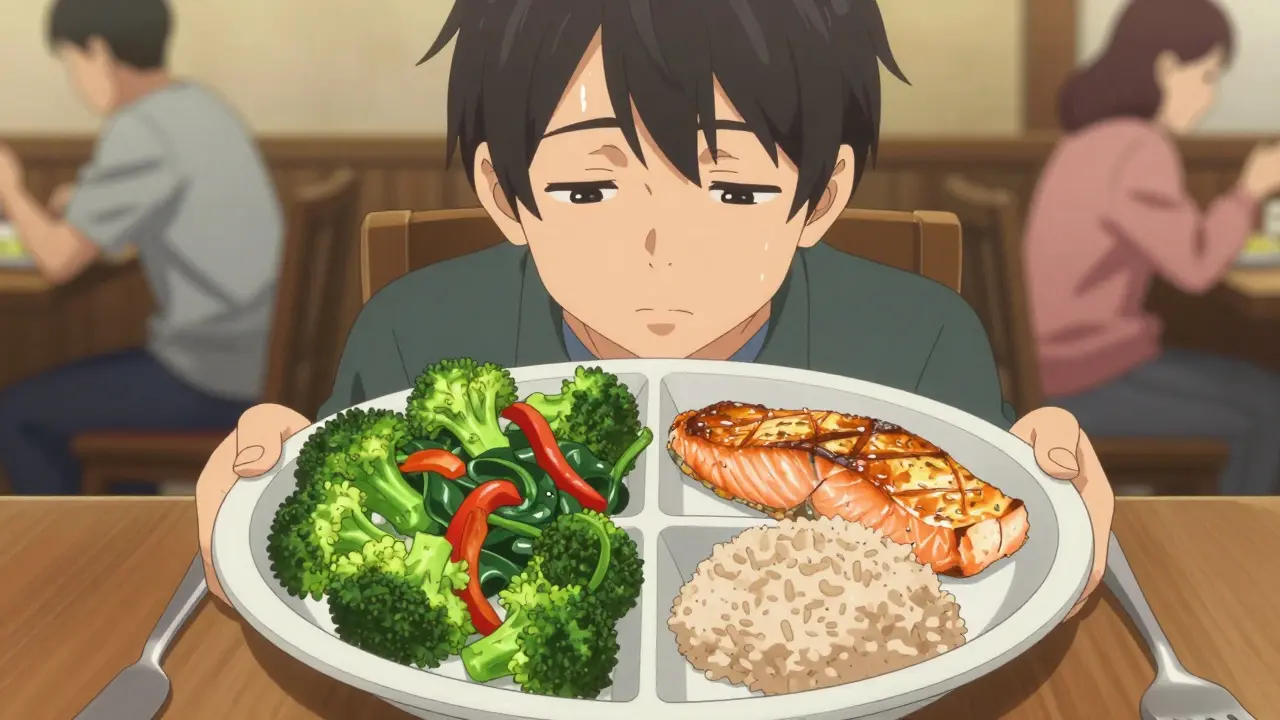
Going out to eat doesn’t have to mean giving up control over your blood sugar. With the right strategy, you can enjoy a meal at your favorite restaurant without crashing your glucose levels. The key isn’t avoiding carbs entirely-it’s choosing the right ones and keeping portions in check. Most people with diabetes worry about restaurant meals because portions are huge, sauces are loaded with hidden sugar, and menus aren’t always clear about what’s really in the food. But here’s the truth: you can eat out successfully if you know what to look for and how to ask for it.
Use the Plate Method-No Math Needed
The Diabetes Plate Method is one of the simplest, most effective tools for eating out. It doesn’t require counting grams or using an app. Just picture a nine-inch plate. Fill half of it with non-starchy vegetables: broccoli, spinach, peppers, asparagus, or a side salad. These are low in carbs and high in fiber, which helps slow down sugar spikes. Then, split the other half: one quarter for lean protein like grilled chicken, fish, or tofu, and the last quarter for carbs-rice, pasta, potatoes, or bread. Stick to that quarter. That’s about 15 to 30 grams of carbs from that side alone, depending on your personal target.Most restaurants serve way more than this. A typical serving of mashed potatoes or rice might be a full cup-double what you should have. Ask for a half portion, or ask to split it with someone. You’ll still feel full, but your blood sugar won’t go haywire.
Watch Out for Hidden Carbs
The biggest trap isn’t the obvious stuff like fries or bread. It’s what’s hiding in plain sight. Sauces, dressings, glazes, and gravies are loaded with sugar and starch. A tablespoon of teriyaki sauce can have 6 grams of carbs. A creamy mushroom sauce? That’s another 8 to 10 grams. Even "healthy" options like barbecue sauce or honey-glazed chicken can pack 15 grams or more per serving.Always ask for sauces and dressings on the side. That way, you control how much you use. Two tablespoons max. If you’re unsure, skip it. A grilled salmon with lemon and herbs tastes just as good without the sweet glaze. Same goes for stir-fries-ask for them cooked in oil, not sugary sauces. Many Asian restaurants will gladly make a dish with soy sauce only, no added sugar.
Also, watch out for words like "crispy," "breaded," "creamed," or "au gratin." These mean extra flour, breadcrumbs, or cheese sauce-each adding 10 to 15 grams of carbs. A "breaded chicken breast" might have 40 grams of carbs just from the coating. Go for grilled or baked instead.
Fast Food? It’s Possible-Just Be Smart
Fast food isn’t off-limits, but it’s the hardest place to get it right. A Big Mac has 46 grams of carbs. A chicken sandwich? Around 40. But you can still make good choices.Opt for grilled chicken salads (without croutons or heavy dressing). Skip the bun and ask for the burger or sandwich wrapped in lettuce. Many places now offer lettuce wraps. A taco salad with beans and grilled chicken, minus the tortilla shell, can be a solid option. Avoid fried sides like hash browns or onion rings. Go for a side salad or fruit cup instead. Even at Starbucks or Dunkin’, you can choose a plain Greek yogurt with berries instead of a muffin or breakfast sandwich.
Check nutrition info online before you go. Most major chains list carb counts now. You’ll find that a Chipotle burrito bowl with brown rice, black beans, grilled chicken, veggies, and salsa comes in around 50 grams of carbs-manageable if it’s your only carb source for the meal. Skip the tortilla and the sour cream to cut 20 grams.
Buffets Are the Biggest Risk
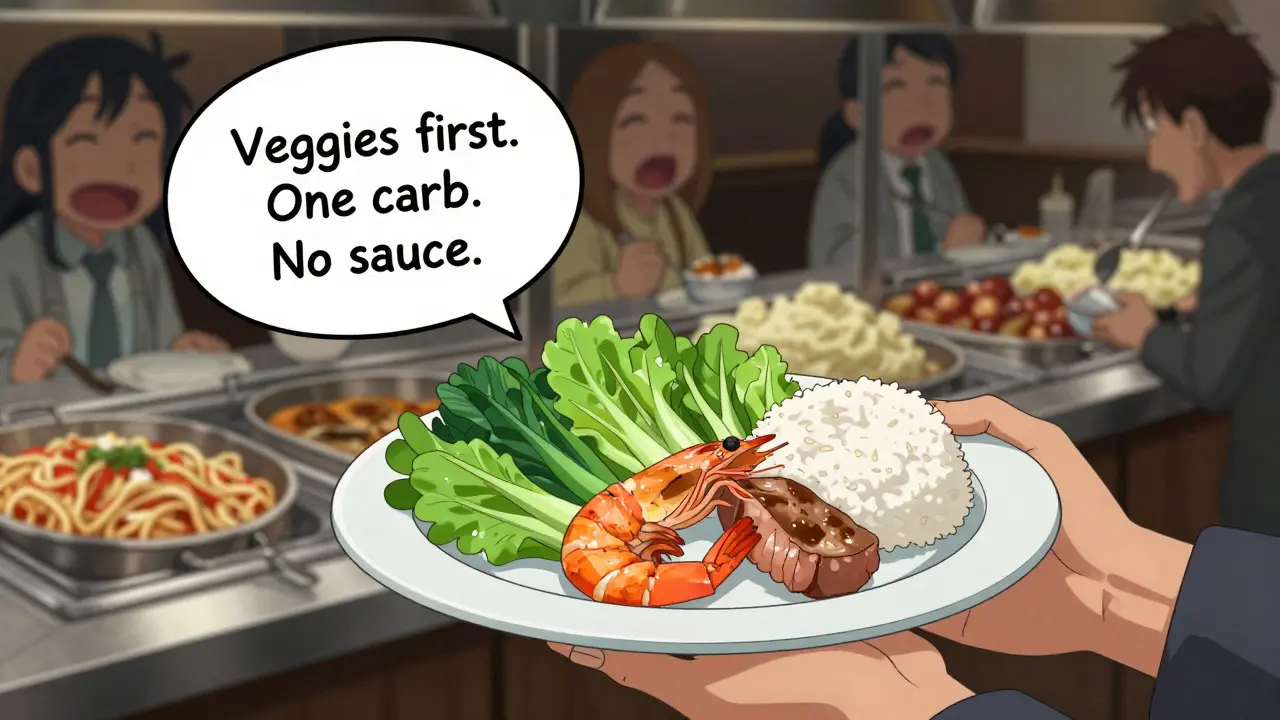
Buffets are a minefield. Unlimited access means your brain says, "I’ll just try a little of everything." But that little of everything adds up fast. A study from the University of Illinois found that people with diabetes had blood sugar spikes 65 mg/dL higher after buffet meals than after ordered restaurant meals.If you must go to a buffet, go in with a plan. Walk the whole line first. Don’t grab anything yet. Pick your plate. Fill half with vegetables-pick the ones that look fresh, not swimming in sauce. Then pick one lean protein. Then, pick one carb-just one. Maybe a small scoop of rice or one slice of bread. Skip the desserts, the pasta station, the mashed potatoes, and the sugary drinks. Drink water or unsweetened tea. If you’re still hungry later, go back for more vegetables, not more carbs.

Plan Ahead-It Makes All the Difference
The most successful people with diabetes who eat out regularly don’t wing it. They plan. Look up the menu online before you leave home. Most restaurants have their full menu and nutrition info on their website. Pick 2 or 3 options you like. Decide what you’ll order and what you’ll ask for. That way, when you get there, you’re not making decisions under pressure.One study showed that people who reviewed menus ahead of time were 42% more likely to stick to their carb goals. That’s huge. You’re not being picky-you’re being smart. And if you’re dining with friends, say something simple: "I’m watching my carbs for my diabetes, so I might ask for some changes. Thanks for understanding." Most people are happy to help once they know why.
Portion Control Tricks That Actually Work
You don’t have to eat less-you just have to eat smarter. Here are a few real tricks that work:- Ask for a half portion of the starchy side. Most places will do it, even if it’s not on the menu.
- Share your main dish with someone. Splitting a steak or pasta dish cuts your carb and calorie intake in half.
- Ask for a to-go box when your food arrives. Put half of it in the box before you even start eating. That way, you won’t overeat just because it’s there.
- Order an appetizer as your main. A grilled shrimp appetizer or a small portion of grilled vegetables can be a perfectly satisfying meal.
And don’t be afraid to ask. Restaurants are used to requests. "Can I get the rice on the side?" "Can I swap the fries for steamed broccoli?" "Can you hold the sauce?" These are normal questions. You’re not being difficult-you’re taking care of your health.
Bring Your Tools
Always carry your glucose meter and fast-acting glucose tablets (like glucose gel or 4 glucose tablets) when you go out. Meal service can be slow. If you’re on insulin, you might need to take your dose before the food arrives. But if the food is late, you could drop too low. Having glucose on hand keeps you safe.Also, keep a small notebook or use your phone to log what you ate and your blood sugar two hours later. After a few meals, you’ll start seeing patterns. That chicken curry you loved last week? It spiked you to 210. The grilled fish with veggies? You stayed under 160. That’s information you can use next time.
What About Dessert?
You don’t have to give up dessert entirely. But you need to plan for it. If you know you want a small piece of cake, skip the bread and the starchy side at dinner. Or share one dessert between two people. A small slice of chocolate cake is about 30 grams of carbs. If your carb budget allows, go for it. But don’t just say yes because everyone else is having it. Ask yourself: "Is this worth my blood sugar spike?"Some restaurants now offer sugar-free or low-carb dessert options. Ask. You might be surprised. A small serving of berries with whipped cream (unsweetened) can be a satisfying end to a meal with just 8 grams of carbs.
It Gets Easier
At first, eating out with diabetes feels like a lot of work. You’re thinking about carbs, portions, sauces, substitutions. But after a few times, it becomes second nature. You learn which restaurants are easy to navigate. You get better at estimating. You stop feeling self-conscious about asking for changes.Studies show that people who consistently use these strategies see their HbA1c drop by 0.8% to 1.2% in just six months. That’s not magic-it’s consistency. You’re not trying to be perfect. You’re trying to be in control.
And the restaurant industry is catching up. More chains now label carb counts. Some even have special "diabetes-friendly" icons on their menus. The American Diabetes Association’s "Restaurant Ready" app gives you verified carb counts for over 15,000 menu items. You’re not alone in this. There are tools. There’s support. You just have to use them.
Can I eat pasta when I have diabetes?
Yes, but portion size matters. A full plate of pasta can have 60 to 80 grams of carbs. Stick to half a cup cooked, which is about 20 grams. Choose whole grain or legume-based pasta if available-it has more fiber and slows down sugar spikes. Always pair it with a big portion of vegetables and a lean protein to balance the meal.
What’s the best way to handle sauces at restaurants?
Always ask for sauces, dressings, and gravies on the side. A single serving of creamy sauce can add 10 to 15 grams of carbs. Even "healthy" sauces like teriyaki or barbecue are loaded with sugar. Use only 1 to 2 tablespoons max. If you’re unsure, skip it. Flavor doesn’t need to come from sugar-lemon, herbs, garlic, and olive oil work just as well.
Is it okay to drink alcohol with meals?
Yes, but with caution. Alcohol can cause blood sugar to drop, especially if you’re on insulin or certain diabetes pills. Stick to dry wines, light beer, or spirits with soda water and lime. Avoid sweet cocktails, margaritas, or mixed drinks with juice or syrup-they can add 20 to 40 grams of carbs. Always eat food when drinking, and check your blood sugar before bed if you’ve had alcohol.
How do I know if a dish has hidden carbs?
Look for words like "crispy," "breaded," "creamed," "au gratin," "glazed," or "in sauce." These usually mean flour, sugar, or starch is added. Ask how the dish is prepared. If the server doesn’t know, ask to speak to the chef. Many restaurants will tell you if they use cornstarch in sauces or sugar in marinades.
Should I avoid restaurants altogether?
No. Avoiding restaurants means missing out on life-birthdays, dates, family dinners, celebrations. You don’t have to eat at home forever. With the right tools and mindset, you can enjoy eating out just like anyone else. It’s not about perfection. It’s about making smart choices most of the time. The goal is to feel good, not to feel restricted.
What to Do If You Overdo It
Sometimes, despite your best efforts, you eat more carbs than planned. Maybe the portion was bigger than expected, or you didn’t realize the sauce had sugar. Don’t panic. Don’t feel guilty. Check your blood sugar. If it’s high, drink water and move around-take a walk after dinner. If you’re on insulin and your doctor has given you a correction dose, use it as directed. Don’t skip your next meal to make up for it-that can lead to low blood sugar later.One meal won’t ruin your progress. What matters is what you do next time. Learn from it. Write it down. Next time, you’ll know to ask for the sauce on the side, or to split the pasta.
Eating out with diabetes isn’t about restriction. It’s about awareness. It’s about knowing what’s in your food and choosing what works for your body. You’ve got this.