
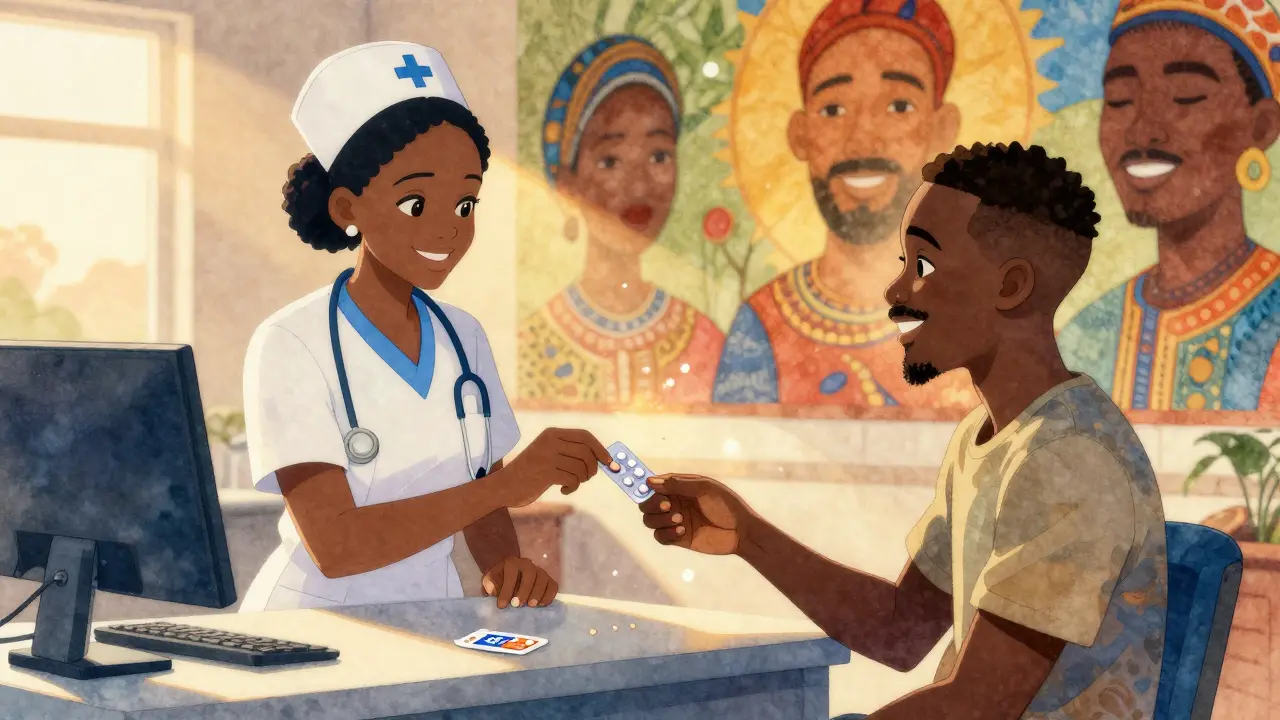
For decades, African countries relied on imported HIV medications - mostly from India - to keep people alive. The cost was high, the supply was shaky, and when global crises hit, like the COVID-19 pandemic, treatment gaps opened up. But something changed in 2025. For the first time ever, the Global Fund an international financing organization that supports programs to fight AIDS, tuberculosis, and malaria bought a first-line HIV treatment made entirely in Africa. The drug, called TLD a fixed-dose combination of tenofovir, lamivudine, and dolutegravir used as first-line antiretroviral therapy, was produced by Universal Corporation Ltd a Kenyan pharmaceutical company and the first African manufacturer to receive WHO prequalification for TLD, a company based in Kenya. It was shipped to Mozambique, enough to treat over 72,000 people every year. This wasn’t just a shipment. It was a turning point.
Why African-Made HIV Drugs Matter
Sub-Saharan Africa carries 65% of the world’s HIV cases, but for years, it imported around 80% of its medicines. That meant delays, shortages, and price spikes whenever global supply chains broke down. When the pandemic hit, many African countries couldn’t get enough antiretrovirals (ARVs). People missed doses. Viral loads rose. Resistance grew. The old system wasn’t just inefficient - it was dangerous.
Local production changes that. When a drug is made in Africa, it doesn’t have to cross oceans. It doesn’t sit in customs for months. It doesn’t get caught up in shipping delays or currency fluctuations. And because African manufacturers are building capacity specifically for African needs, they can tailor formulations - like making pills easier to swallow for children or combining drugs to reduce pill burden.
TLD is the new gold standard. Compared to older regimens, it’s more effective, has fewer side effects, and is harder for the virus to resist. Before TLD, many patients were stuck on older drugs that required three pills a day. Now, with TLD, it’s one pill, once a day. And when that pill is made in Africa, the cost drops even further.
The Breakthrough: WHO Prequalification and the Global Fund
Getting a drug approved for use in Africa isn’t just about making it. It has to meet global standards. That’s where WHO prequalification a process by which the World Health Organization evaluates the quality, safety, and efficacy of medicines to ensure they meet international standards comes in. It’s the gold seal that tells donors like the Global Fund: ‘This drug is safe. This drug works. This drug can be trusted.’
Universal Corporation Ltd became the first African company to get WHO prequalification for TLD in 2023. That opened the door. By May 6, 2025, the Global Fund placed its first order. It wasn’t a test. It wasn’t a pilot. It was a full-scale procurement - enough to cover 72,000 people annually. That’s the moment Africa moved from being a consumer of medicine to a producer.
Dr. Meg Doherty of WHO put it simply: ‘The procurement of the African-manufactured first-line HIV treatment by the Global Fund for Mozambique is a great milestone towards strengthening supply chain systems in Africa.’ This wasn’t charity. It was strategy. The Global Fund is now using its buying power to create demand - and that demand is pulling in investment, training, and infrastructure.
Beyond TLD: Diagnostics, Injections, and the Next Wave
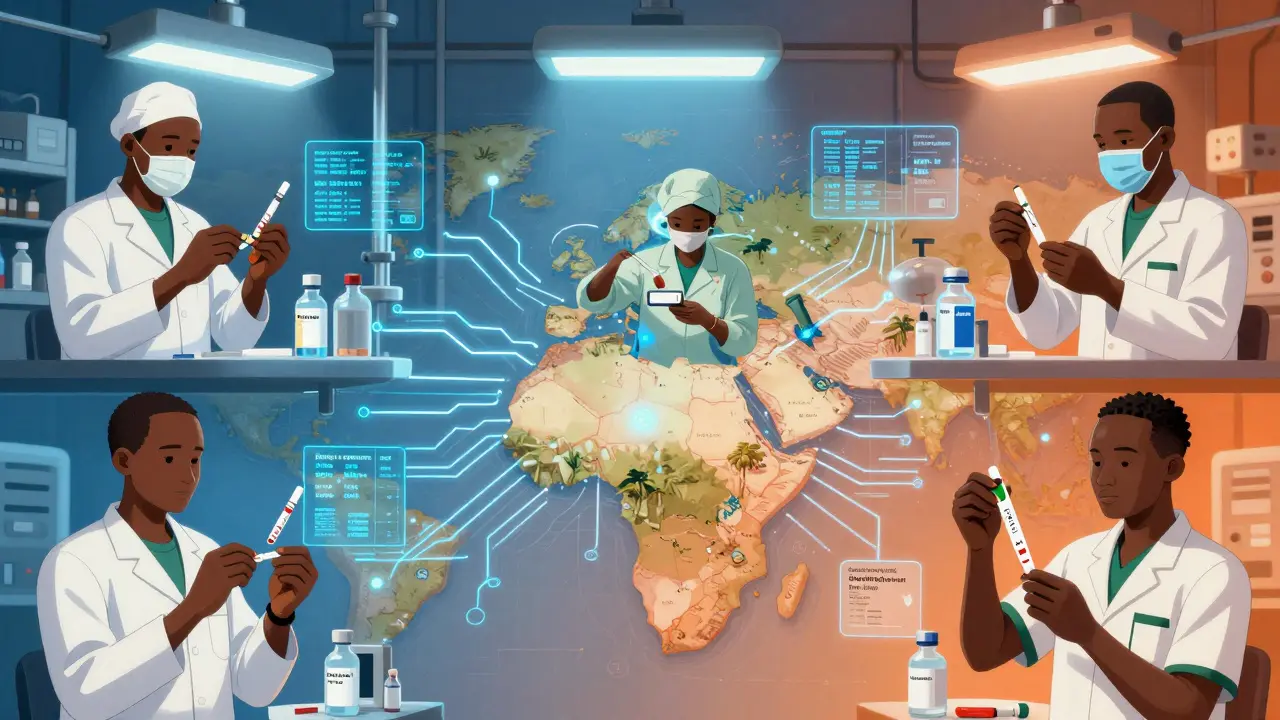
It’s not just about pills. HIV care needs diagnostics, too. In July 2025, Codix Bio a Nigerian in-vitro diagnostics company that now manufactures HIV rapid diagnostic tests through WHO technology transfer started making HIV rapid diagnostic tests (RDTs) in Nigeria. These are the same quick finger-prick tests used in rural clinics. Before, they were imported. Now, they’re made locally. That means faster restocking, lower costs, and better coverage.
Then came the injectables. In October 2025, South Africa became the first African country to register cabotegravir long-acting a twice-yearly injectable antiretroviral for HIV treatment and prevention. It’s a game-changer. Instead of taking a daily pill, people get two shots a year. For many, that’s easier. For others, it’s life-changing - especially those who struggle with stigma or remembering pills.
And it’s getting cheaper. Gilead Sciences licensed six African manufacturers to produce generic versions of this injection. Experts predict prices could drop by 80-90% compared to the brand name. That’s not speculation - it’s already happening with other drugs. In 2000, treating one person with HIV cost $10,000 a year. By 2015, Indian generics brought it down to under $100. Now, African production could push it even lower.
What’s Next? Lenacapavir and the Future of Prevention
Prevention is just as important as treatment. That’s where lenacapavir a long-acting antiretroviral for pre-exposure prophylaxis (PrEP) approved for HIV prevention comes in. It’s a new pill that works for six months. Gilead has signed deals with the U.S. State Department (PEPFAR) and the Global Fund to supply lenacapavir at no profit until generics arrive. They’re aiming to get it to 18 high-burden countries by the end of 2025, with full rollout in 2026.
This isn’t just about treatment. It’s about stopping HIV before it starts. And African manufacturers are already preparing to make generic versions. When they do, the price could fall below $10 per person per year. Imagine that: a six-month HIV prevention shot costing less than a cup of coffee.
The Bigger Picture: Health Sovereignty
This isn’t just about HIV. It’s about health sovereignty. For too long, African countries depended on foreign companies, foreign regulators, and foreign supply chains. That made them vulnerable. Now, countries like Kenya, Nigeria, South Africa, and Senegal are building factories, training technicians, and strengthening regulatory agencies. The African Union’s Pharmaceutical Manufacturing Plan for Africa (PMPA) wants to get local production from 2-3% of the continent’s needs to 40% by 2040.
But it’s not just factories. It’s about African leadership in research. Too often, drugs were developed for Western populations and then adapted for Africa. Now, African scientists are designing studies for African strains, African lifestyles, African health systems. That’s what ‘Africanizing research’ means - not just making copies, but building solutions from the ground up.
Challenges Still Ahead
There’s no sugarcoating it: the need is huge. Africa needs about 15 million person-years of first-line ARV treatment every year. The current African production capacity? Still a fraction of that. New factories are coming online by late 2025, but scaling takes time, money, and political will.
Regulatory systems vary. Some countries have strong agencies. Others are still catching up. Harmonizing standards across 54 nations isn’t easy. And while the Global Fund and WHO are helping, sustained funding is needed. The next phase - called NextGen market shaping - is about creating predictable demand so manufacturers can invest with confidence.
Integration is another hurdle. HIV programs used to run separately from other health services. Now, clinics are starting to combine HIV, TB, maternal health, and diabetes care. That saves money, reduces stigma, and makes care more efficient. But it requires trained staff, better data systems, and stronger leadership - all things still being built.
What This Means for People Living with HIV
For someone in rural Mozambique, this isn’t abstract policy. It means their clinic won’t run out of pills. It means their child won’t have to take three pills a day. It means they can get tested and get results the same day - no waiting weeks. It means they might soon get a shot every six months instead of a daily pill.
For the first time, the people most affected by HIV are no longer just recipients of aid. They’re part of the solution. African scientists, manufacturers, regulators, and health workers are leading the change. And that’s the most powerful medicine of all.
What is TLD and why is it important for HIV treatment in Africa?
TLD is a fixed-dose combination of three antiretroviral drugs: tenofovir, lamivudine, and dolutegravir. It’s now the global standard for first-line HIV treatment because it’s more effective, has fewer side effects, and is harder for the virus to resist than older drugs. For Africa, its importance lies in being produced locally - reducing supply delays and cutting costs. The first African-made TLD was produced by Universal Corporation Ltd in Kenya and prequalified by WHO in 2023, enabling large-scale procurement by the Global Fund starting in 2025.
How did the Global Fund help African ARV production?
The Global Fund played a pivotal role by placing its first-ever order for African-made antiretrovirals in May 2025. Instead of relying solely on Indian manufacturers, it used its buying power to create guaranteed demand for African producers like Universal Corporation Ltd. This market-shaping move gave manufacturers the confidence to invest in facilities, training, and quality control, knowing they’d have steady buyers. It also signaled to other donors and governments that African-made drugs are reliable and worth supporting.
Are African-made HIV drugs as safe and effective as imported ones?
Yes. Any drug produced for international procurement, including African-made ARVs, must pass WHO prequalification - a process that requires meeting the same strict quality, safety, and efficacy standards as drugs from the U.S., EU, or Japan. The TLD produced by Universal Corporation Ltd underwent rigorous testing and was found to be bioequivalent to brand-name versions. Independent reviews and real-world use in Mozambique have confirmed its effectiveness. Safety isn’t compromised - it’s enforced.
What role do diagnostics play in improving HIV care in Africa?
Diagnosing HIV early is the first step to treatment and prevention. For years, rapid diagnostic tests (RDTs) were imported, causing delays and shortages. Now, Nigerian company Codix Bio manufactures RDTs locally under WHO technology transfer. This means clinics can get tests faster, test more people, and start treatment sooner. Local production also lowers costs and allows for better stock management. When testing and treatment are both made locally, the entire care chain becomes more resilient.
How will long-acting injectables like cabotegravir change HIV care in Africa?
Cabotegravir long-acting is a twice-yearly injection that can be used for both treatment and prevention (PrEP). It removes the need for daily pills, which helps people who struggle with adherence or face stigma. South Africa registered it in October 2025, and six African manufacturers have been licensed to produce generic versions. Once generics arrive, prices could drop by 80-90%, making this life-changing option affordable across the continent. This could transform how HIV is managed - from a daily chore to a simple biannual visit.


