
When to Call Doctor for Drug Reaction
When you start a new medication, your body might react—and not all reactions are harmless. A drug reaction, an unexpected response to a medication that can range from mild to life-threatening isn’t always an allergy, but it can be just as dangerous. If you notice sudden skin rashes, swelling, trouble breathing, or a rapid heartbeat after taking a pill, patch, or injection, don’t wait. These aren’t normal side effects. They’re warning signs that your body is under stress from the drug, and calling your doctor immediately could prevent hospitalization or worse.
Not every itch or stomach upset means you need to rush to the ER, but some symptoms are non-negotiable. A allergic reaction to medication, a specific immune system overreaction triggered by a drug often shows up as hives, swelling of the lips or tongue, or wheezing. If you’ve ever had one before, you’re at higher risk for another. Then there’s severe drug reaction, a broad term covering conditions like Stevens-Johnson syndrome or toxic epidermal necrolysis, where skin peels off like a burn. These are rare but deadly. They start with flu-like symptoms, then a painful red rash that spreads and blisters. If you’re on antibiotics, seizure meds, or NSAIDs and feel this way, don’t Google it—call your doctor or go to urgent care.
Even if the reaction seems mild, it’s worth checking in if it keeps getting worse. A rash that spreads over days, persistent vomiting, yellowing skin, or confusion after starting a new drug? Those aren’t just "side effects"—they’re signals your body can’t handle the medication anymore. Some reactions, like liver damage from acetaminophen or kidney stress from ibuprofen, show up slowly. You might feel fine until your labs tell a different story. That’s why tracking changes matters. Keep a simple log: what you took, when, and how you felt. It helps your doctor spot patterns faster.
Many people stop their meds because they’re scared of side effects—but that’s often worse than the reaction itself. The key is knowing the difference between something annoying and something dangerous. Your pharmacist can help you sort it out. So can your doctor, if you give them the right info. Don’t assume your reaction is "just normal." If you’re unsure, it’s better to call and get it checked. Thousands of people avoid emergency rooms every year because they recognized the signs early and acted.
Below, you’ll find real stories and expert advice on how to spot trouble, what to tell your doctor, and how to avoid repeating the same mistake with future prescriptions. Whether you’re managing chronic pain, mental health meds, or a new heart drug, knowing when to speak up saves lives.
When to Seek Medical Help for a Suspected Drug Interaction
- Elliot Grove
- on Nov 26 2025
- 9 Comments
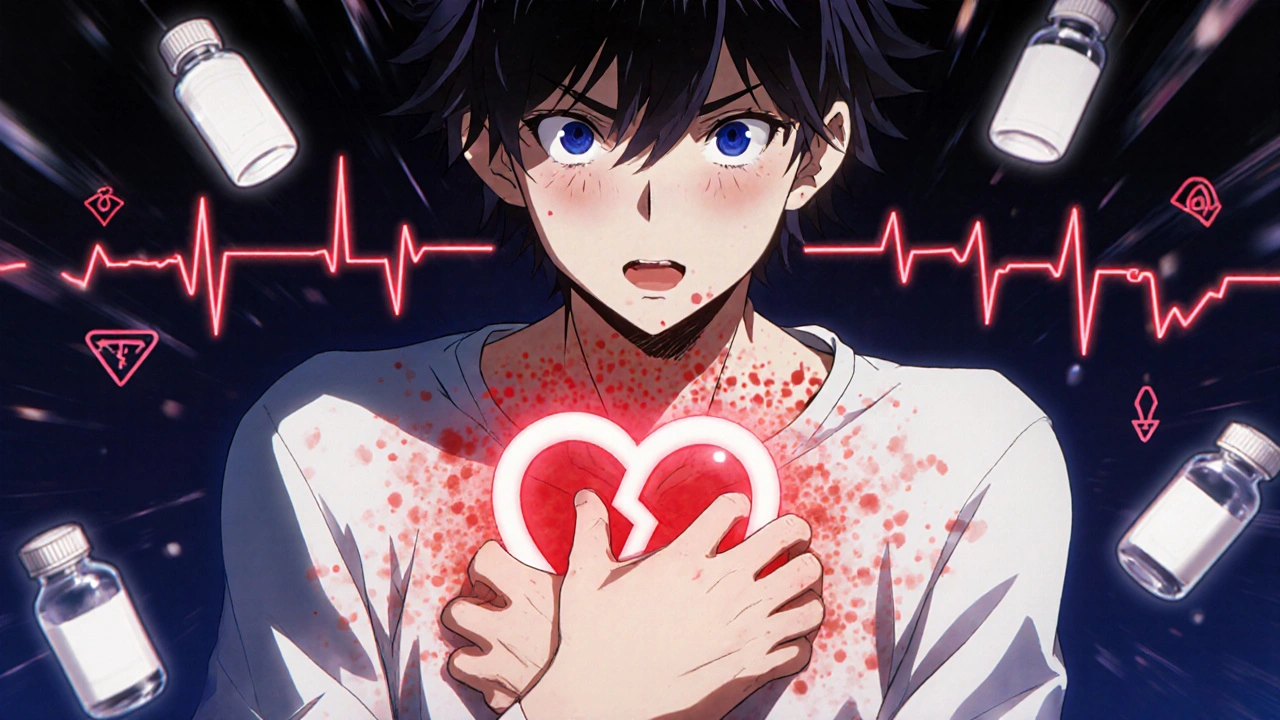
Learn when to seek emergency care for drug interactions - from life-threatening symptoms like trouble breathing and seizures to warning signs like rashes and fever. Know what to do before it's too late.